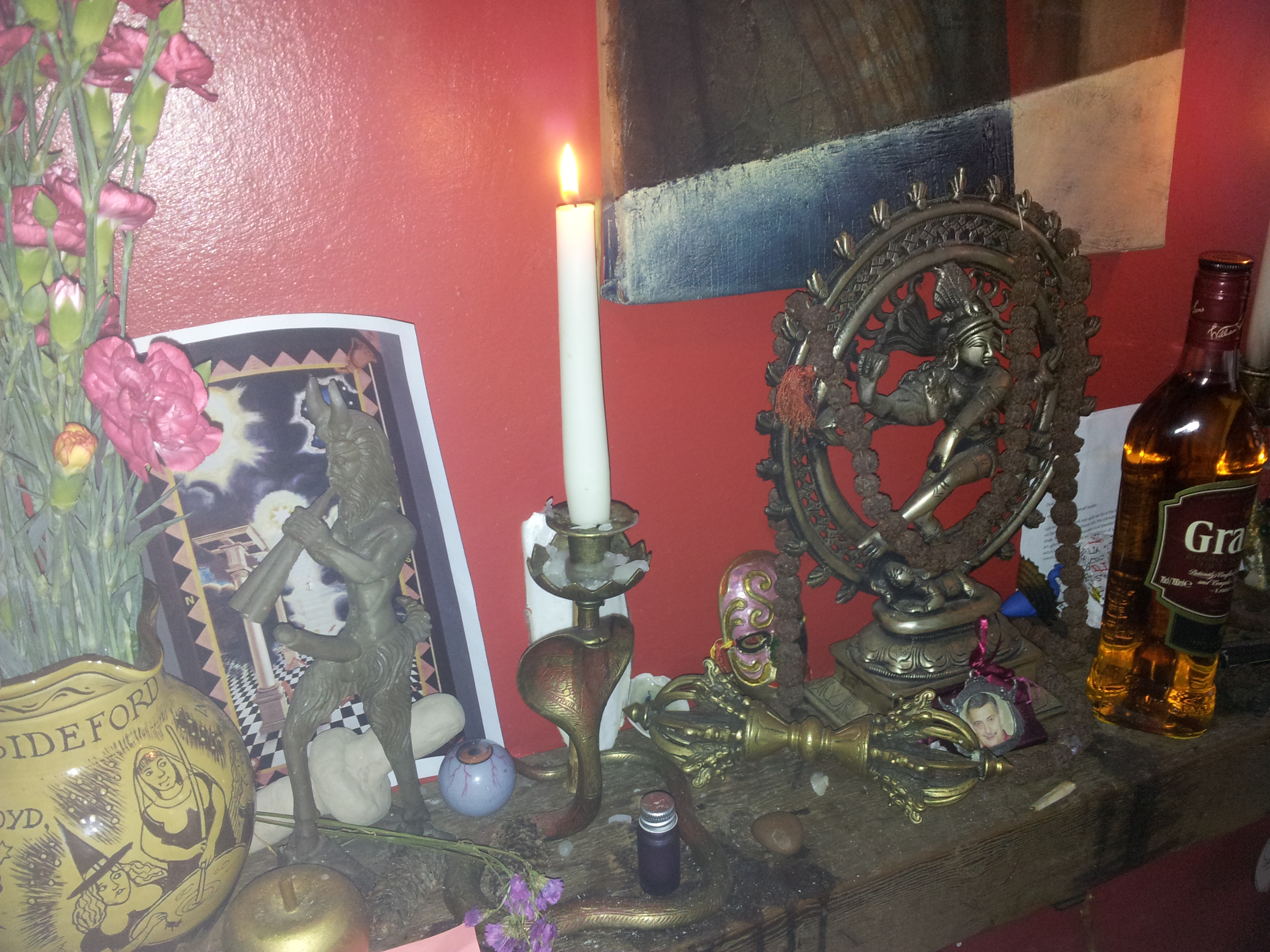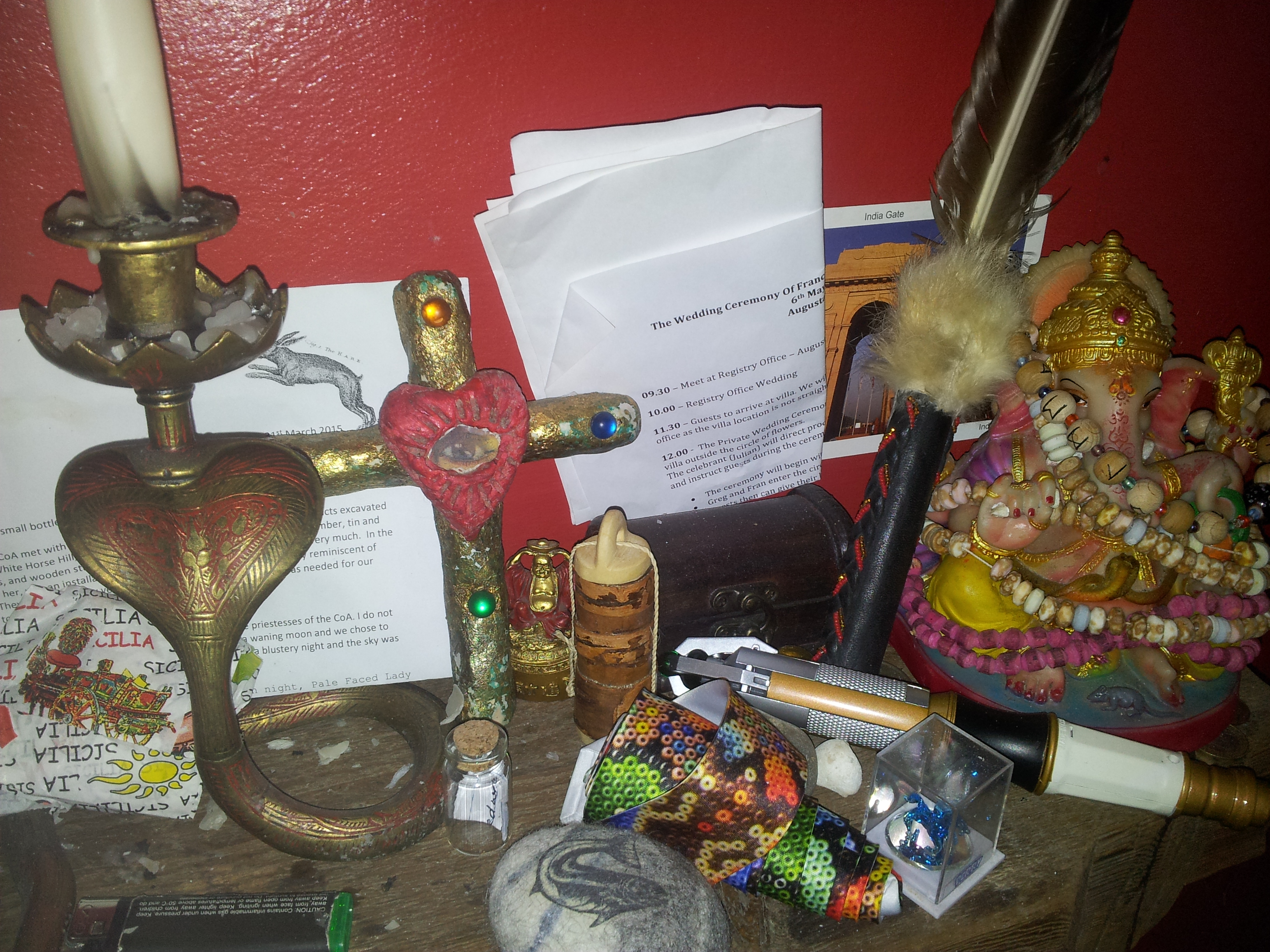
Recently I was honoured to be asked to be part of performing a handfasting ceremony for a couple of friends. We used the elements to bless them. As I waved the candle around their joined hands, and said words of blessing, there was a pause, as something tried to come out of my mouth, an idea half-shaped; instead of appearing on the beach, it has taken a few more parts of time to emerge. Here it is, for my friends, and for anyone else that cares to read it.
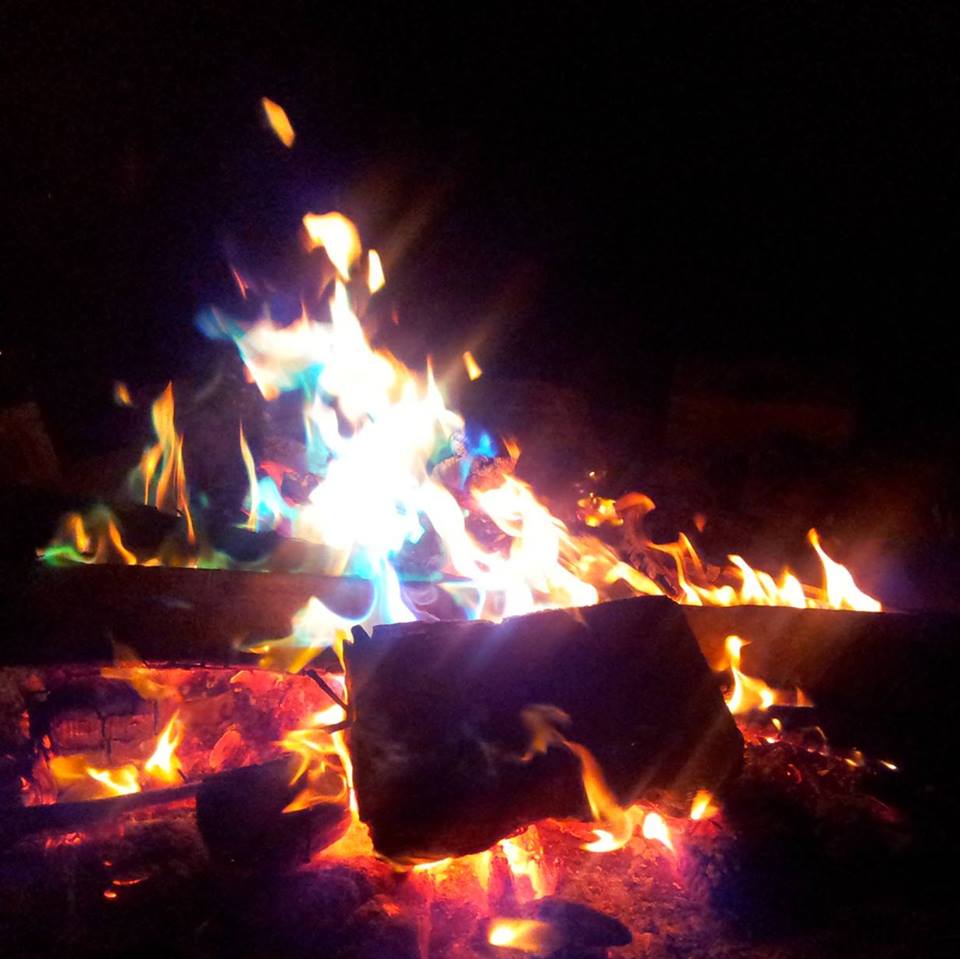
Home is where the hearth is
Fire, the element of action; of motivation, the spark that lights our fuse, burns steady in our hearths and hearts, bringing light to our worlds, visibility to our lives. Fire needs feeding, and as we collect and prepare firewood for the home fire, we can see the work required to tend the fires of lives, of our relationships. Keeping an eye on when it needs poking, and when it ought to be left alone to burn low and give those gorgeous glowing embers from which we skry visions of other worlds. We roam about, finding suitable materials to carry home, to provoke our senses and enthusiasms, words pictures tales, acts which shape our bodies and minds, sticks that we like the look of.
These materials are raw, and often need trimming, refining, cutting to length, stacking up as a pile with which we can later build the flames of entertainment or warmth.
To ignite our fires, we need a spark, a match. Kindling, whether twigs or papers, to catch the first flare and carry it to larger things, breath to give live to the growing crackling entity we conjure to manifestation. Carefully we add to our fire, feeding it, as experience teaches us when to add more, when to wait developments.
‘Doing fire’ can be viewed as a process, from the decision to gather a bundle of fuel, to clearing away the ashes. The time of manifestation of that flame makes the process have a tangible result, which is Fire. Symbolically though we must remember to include the larger actions, fire representing actions, as well as using energy. (NB Food transformation also forms a large part of the firey lore, but you can hopefully extrapolate that for yourselves.)
Our relationships follow patterns we could relate to this process, the gathering of raw materials as fuel for presenting to each other, and tools (skills) to tend our interactions and conversations. An easy remark, to spark a conversation, a sharing of each to the both of us. Bringing our attention to our partners especially, as well as other relationships, we ought to remind ourselves of how much time and effort it takes to maintain the glow of loving kindness, and of how worthwhile that can be.
Light from these flames can illuminate our current behaviours, cast shadows upon our living room walls, flicker on loved faces as we share the contents of our times and heads.
[At this time of year (in this part of the world), outside hearths come into their own, whether in our gardens or in more transient settings; sitting around a fire with friends has to be, for me, the most convivial of all places. I should make an effort to do it far more often…]
Put your trust in Magick; but mind to keep your matches dry, and your kindling plentiful.
NW