“The only clear view is from atop the mountain of your dead selves.” PJC (1953 – 2026)
When Liber Null was first published in 1978, Peter J. Carroll was only twenty-five. It is difficult now, in an occulture where chaos magic has been absorbed, diluted, declared dead, memed, and endlessly repackaged, to fully appreciate how stark and strange that text felt on first encounter. It did not read like a grimoire in any traditional sense, nor did it resemble the more baroque occult literature circulating at the time. It was lean, austere, it was a manual not a mythos.
Its authority did not derive from appeals to some imagined Natural Law, ancient tradition or ministering Angel. Instead, it opened audaciously with a diagram: a flowchart of global magical traditions converging into a single box marked with the gnomic inscription IOT. Those who read further discovered this stood for the Illuminates of Thanateros, a shadowy magical order that seemed to exist somewhere between fiction and recruitment pitch. This approach, where the assumed authority to do magic was disposed of in a single chart, stands in stark contrast to Doreen Valientie’s Witchcraft for Tomorrow, also published in 1978. In that book Valiente spends hundreds of pages detailing a witch cult hypothesis mash-up before finally presenting a Book of Shadows, including a rite of self-initiation for would-be witches, at the end of the text. While I like Doreen’s work, and am myself an initiated Wiccan, the point here is that while Carroll’s approach recognised his magical inheritance, his attention, like that of ‘scientific progress’ was firmly on the future.
There was a brash, Machiavellian, science-fiction vibe in Liber Null, one that would persist throughout the voluminous writings that Pete would produce over the next five decades of his life.
I didn’t encounter Carroll’s writing until some years after Liber Null’s first appearance. My route towards this radical current was through the Leeds occult scene, via The Sorcerer’s Apprentice esoteric supply store run by the idiosyncratic Chris Bray, and through my connection with Phil Hine, who was then part of the experimental magical group that Catherine Summers and I ran in the mid-1980s. I had already been involved in magical work for some time. I’d started young, sixteen when I first entered that world and I thought I had a reasonable sense of the terrain.
But Liber Null felt different.
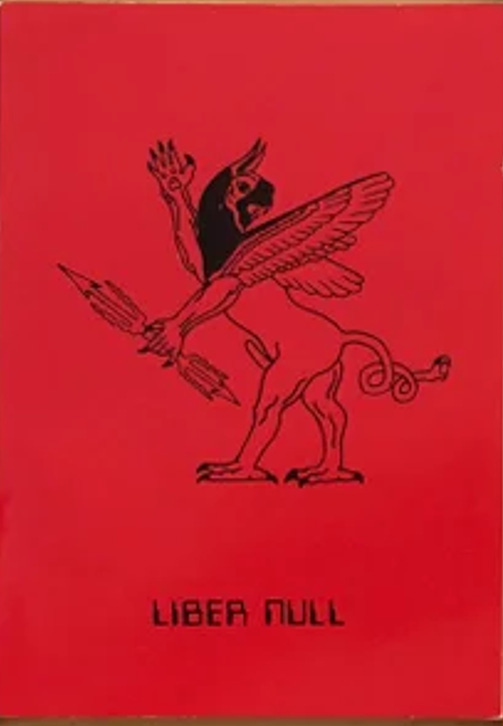
It had an edgy, iconoclastic quality, a refusal to ornament esotericism with the usual layers of obscure theology. It stripped magic back to something functional, almost procedural. Then there were the diagrams in Psychonaut (first published 1982) strange, quasi-scientific schematics drawing loosely on catastrophe theory. While the term ‘chaos magic’ itself would not appear until later (Carroll would use it explicitly in Liber Kaos, 1992), the sensibility was already present: non-linear dynamics, fractal thinking, an emphasis on experiment and results, a postmodern willingness to dismantle inherited systems and reassemble them in new ways.
Chris Bray, especially in the pages of the ‘zine The Lamp of Thoth, of which he was the editor, was an enthusiastic advocate for this emerging current with its distinctive, edgy, dark, intellectually provocative vibe. There was something of the goth about it, certainly, but also something we would now recognise as proto-cyberpunk, a fascination with systems, with hacking reality, with reprogramming belief. This all seemed great but it also, if I’m honest, sounded a bit macho; all runes and blokes shouting at sigils, and perhaps it was for that reason that I didn’t get in touch with Carroll et al. I stayed closer, at that time, to the unfolding story of Paganism. It would be many years before I met Peter J Carroll, and years after that before I joined the IOT.
It has been said many times but bears repeating; the core of Carroll’s contribution was the idea, expressed clearly in Liber Null, that belief is not a truth to be defended, but a tool to be used. Magic operates within paradigms, systems of belief, and the magician’s task is not to find the ‘correct’ one, but to become adept at shifting between them. (It should of course be noted that none of this sprang fully formed like Athena from Carroll’s head. Rather he was the writer who articulated ideas being developed by a community of practitioners.)
The concept of paradigm shifting stood in stark contrast to the staid Christian inheritance of ceremonial magic, the folkish duo-theology of Wicca, or the prophetic religiosity of Crowley and Thelema. Chaos magic, in its early articulation, treated magic as a method, a technology, something that could be practised without requiring adherence to any overarching metaphysical doctrine or ethical position.
You didn’t need lineage. You didn’t need permission. You didn’t need to wait for your Holy Guardian Angel to make contact. What mattered was doing the work, or to use a more modern idiom; fuck about and find out.
The youthful energy of Carroll’s writing is palpable throughout Liber Null, along with the kind of confident, occasionally swaggering pronouncements about what an adept should or should not do that perhaps only comes naturally at twenty-five. Even his examples of sigil work carry that tone. The desires given as examples; to obtain a copy of the Necronomicon, to restrain an adversary and to encounter a succubus in a dream, tell us much of what might need to know about this irascible young sorcerer.
Alongside paradigm shifting was his emphasis on ‘gnosis’, a somewhat idiosyncratic use of the term, to mean the altered state in which the usual mental chatter falls away. Whether reached through stillness, intensity, exhaustion, or ecstasy, gnosis allows intention to bypass the filters of the everyday self. For Pete, this was the fuel of magic. Everything else ritual, symbolism, belief was a means of containing and engineering that state.
Looking back, it’s clear how influential that combination of concepts was. It offered both a method and a meta-method: not only how to do magic, but how to change the framework within which magic itself is understood.
By the early 1990s, Catherine Summers and I were producing a monthly pagan zine, Pagan Voice which in its heyday had a print run of 1000 copies a month. I remember running a short piece noting that Pete had stepped back from leadership of the IOT “to spend more time with his familiars.” It was a line that made me smile, lightly irreverent, slightly absurd, and entirely in keeping with the tone of chaos magic, which always seemed to oscillate between the serious and the playful. Pete has told me that he was leaving the IOT (of which I was not yet a member) soon after we met following my move to Bristol.
At that time he was running Amphora Aromatics. Initially a small store in the centre of Bristol which, over time, would change premises as it expanded and moved uptown. This wonderful smelling apothecary existed when such things were not yet ubiquitous in culture. It was filled with oils, incense, resins, and all manner of exotic materia magica.
We would hang out in the shop and talk. Pete had a way of moving easily between the technical and the speculative. One moment he might be discussing an incense ingredients, the next outlining some theoretical extension of magical practice. He would sometimes press things into my hands; substances, ideas, fragments of whatever he was currently exploring. I remember him once giving me a bottle of caprylic acid, describing it, with evident satisfaction, as “pure essence of goat.”
Around 1995, I found myself in a somewhat liminal phase of life, renting out the flat I owned on the outskirts of Bristol while spending time in the centre of the city with a new partner, saving for a round-the-world journey. Pete and his wife had done something similar years earlier, and his travels in India had clearly left their mark. He spoke of it as both fascinating and, memorably, “the most venal country” he had ever visited.
At that time, I was living in a shared house with artists and musicians at one end of a street; Pete lived at the other. One spring day, I ran into him outside. He was in an avuncular mood. After a brief exchange, he said, “I’ll show you my wizard’s lair,” and ushered me into his house and down into a large, darkened cellar.
There were, as one might expect, all manner of occult objects ritual implements, symbolic artefacts, curious pieces whose provenance I didn’t fully grasp. But what caught my attention most was something else entirely.
Rows of meticulously painted gaming miniatures.
They were arranged with extraordinary care figures, units, formations the kind of thing I had briefly obsessed over as a youth during my own flirtations with table-top and imaginal games like Warhammer and Dungeons & Dragons. Seeing them there, in that context, was unexpectedly revealing. Because to understand Pete, I think, you have to understand his relationship to games.
Pete did not approach games casually. For him, they were systems structured environments in which forces are balanced, rules are tested, and outcomes emerge through interaction. Strategy, modelling, world-building: these were not hobbies so much as extensions of his thinking.
Those miniatures in the cellar were not just nostalgic artefacts. They were clues to the nature of this wizard.
His father had fought in the Second World War, and Pete carried with him a fascination with militarism not necessarily in any straightforward political sense, but as a language of organisation, hierarchy, and the deployment of power. He once suggested that human conflict might be traced, in part, to the evolutionary consequences of opposable thumbs (see Liber Kaos, War Magic) a remark both absurd and oddly characteristic. One is tempted to point out that lemurs and koalas manage similar dexterity without global warfare, but such was Pete’s style: provocative, speculative, not always concerned with empirical neatness or the wider philosophical context.
You can see this fascination reflected in the structure of the IOT itself; where semi-autonomous ‘Sections’ (a military term) form its distributed but coordinated network. It was apparent in his online magical school Arcanorium College (the website for which one could have been forgiven for thinking was some kind of Lord of the Rings style game). In that space developed ideas including ‘The Knights of Chaos’ and the ‘Chaos Jihad’, attempts to mobilise magical practice to address global issues including climate change. You can see Pete’s love of war-games in his later writing too, which often drifted into speculative designs: imagined spacecraft, political systems, theoretical models. The same impulse runs throughout to construct a system and observe how it behaves.
Seen in that light, Liber Null begins to look less like a mystical text and more a way to gamify reality.
Pete’s intellectual reach was considerable. He ranged across cosmology, speculative physics, and what some might call para-physics, always with a sense that there might be an underlying mechanism to uncover. His background in chemistry informed this, even as he expressed a certain disdain for the discipline.
“Biologists study life, physicists the nature of the universe,” he once quipped. “Chemistry is just cookery! Bombs and drugs are the only interesting part of it.”
It is a characteristic statement: irreverent, both literarily and literally incendiary, but not entirely unserious. It also captures something of his sensibility.
He cut a distinctive figure: tall, long-haired, bearded, often in a leather jacket, a kind of biker-mage look, though, as far as I know, without ever passing any kind of driving test. There was a theatricality to him, certainly, but it was grounded in genuine curiosity and creative drive.
He had a gift for epigram. “Enchant long, divine short,” he advised. “Laughter is the only tenable attitude in a universe which is a joke played on itself.” And that again, with explosive metaphor, that having children was a great way to “throw bombs at the future.”
For some sixteen years until his death in April of this year, Pete was involved with the Order of Bards Ovates and Druids, and the creative dimension of Druidry suited him. He was a maker not just of ideas and magical orders, but of objects. A look through his blog turns up several miniature model spacecraft from imagined worlds, crafted using a range of both bought and found materials.
The Epoch or Portals of Chaos deck (2014) is a good example of his creative ambition realised in collaboration with the artist Matt Kaybryn. Oversized, elaborate, unmistakably his, another game-like, not-tarot card system. The deck depicts deities derived from multiple mythologies, ordered according to their planetary resonance, with a side helping of H.P Lovecraft’s Elder Gods. I’m proud to appear in the deck as the model for Mercury. Pete, who managed to avoid having clear photographs of himself widely circulated during his lifetime, can be found in the deck as a deity at his forge. (At the launch of The Book of Baphomet in Glastonbury in 2012 at which Pete spoke, I even found myself asking the audience not to photograph him, explaining with only slight exaggeration, that he was terribly shy. I suspect he enjoyed his visual anonymity.)
Pete was deeply influenced by the work of Terry Pratchett, whose Discworld novels combined humour, satire, and a sophisticated engagement with magic. Carroll’s system of eight colours of magic, developed in Liber Kaos, includes Pratchett’s invention of ‘octarine’, the indescribable colour of magic itself.
Pratchett’s own relationship with occultism ran deeper than his public statements suggested. Pete, I suspect, wasn’t aware of this. But my oaths of initiation, and a general sense of discretion, prevent me from saying more.
The same applies to some of the more outlandish stories about Pete. Those who are curious might consult The Book of Baphomet for one of two of them. Others, including the cautionary tale of the belladonna jam, will have to wait.
Pete was, like many significant figures, a bundle of contradictions, a curious conspiracy of selves. Politically, he leaned conservative free-market libertarian and supported Brexit, yet he also maintained a commitment to ecological thinking and recognised the reality of anthropogenic climate change.
On a personal level, there were tensions too, questions of identity, of control, of the ability to let go. There was a certain bombast to him, certainly, and at times that could harden into something more rigid. He wasn’t at home with that whole kinky, queer, psychedelic side of occulture. This is perhaps unsurprising in someone whose favourite means of gnosis was summoning feelings of rage and anger. The culture which developed within the IOT and chaos magical generally did not always suit its founder. Like many who create something powerful, Pete eventually found himself at a distance from his creation
I was once browsing in a store and saw an image of Baphomet on a skateboard deck, that iconic figure of Éliphas Lévi’s which Pete wove so closely into the chaos current. Instead of solve et coagula, the arms bore the words Carroll and Crowley. This felt entirely appropriate: the magical lineage of the 20th century acknowledged and reworked with a certain irreverent flair presented as a hip youth product.
Pete Carroll was not a conventional occultist. He was not a traditionalist, nor a rigid system-builder. He was something more dynamic, he was a disruptor, a designer of frameworks. Cantankerous, occasionally irritating, often very funny, sometimes unexpectedly warm, and always creative.
Like all of us, he was imperfect. But he was also one of the most significant magicians of the late twentieth century, an iconoclastic irritant within the oyster of the Western Esoteric Tradition, around whom the spiky black pearl of chaos magic formed.
He leaves behind not a doctrine, but a set of tools. Not a fixed system, but an invitation to practice and to pursue The Great Work of Magic.
He will be missed.
Julian Vayne
Courses and workshops
This Is Chaos: The Past, Present and Future of Chaos Magic Thursdays, May 21 & 28, 2026
7:00 – 9:00pm ET (NYC Time)
“Born out of the experimental ferment of the 1970s occult revival, Chaos Magic has grown into one of the most influential and iconoclastic movements in modern esotericism. In these workshops, Julian Vayne—historian and initiate—will lead us on a deep dive of the evolution of this magical current from its anarchic beginnings in post-punk counterculture to its impact on today’s digital and psychonautic subcultures.
Drawing from his 40 years of experience as a practitioner and his role as a senior member of The Magical Pact of the Illuminates of Thanateros (IOT), Julian will explore how Chaos Magic dismantled dogma and tradition, reframing belief itself as the magician’s primary tool. We will examines how techniques such as sigilisation, paradigm shifting, the colours of magic and media-based sorcery have evolved alongside technology and culture, and what the future of magic might look like in the age of AI, post-truth and virtual spaces.”
Sex, Sorcery and the Sacred BodyTuesdays, May 26 & June 2, 2026
7:00 – 9:00pm ET (NYC Time)
“Join occultist and author Julian Vayne for an illuminating exploration of the magical uses of sex, pleasure, and the body across cultures and centuries. From the ancient fertility cults of Europe and India to the experimental frontiers of Thee Temple ov Psychick Youth and Chaos Magic, this two week class expires eroticism as a potent current of spiritual power, a force capable of dissolving dualities, transforming consciousness, and awakening the divine within the flesh.
Drawing on his experience as an initiate of AMOOKOS, The Arcane Magical Order of the Knights of Shambhala—a Thelemic-Tantric order that bridges Eastern and Western esoteric lineages—Julian traces a living current of practice that celebrates embodiment as the very ground of illumination. Rooted in the ninth-century Nath tradition of India and infused with the radical individualism of Thelema, this lineage honours the body as both vessel and revelation.”
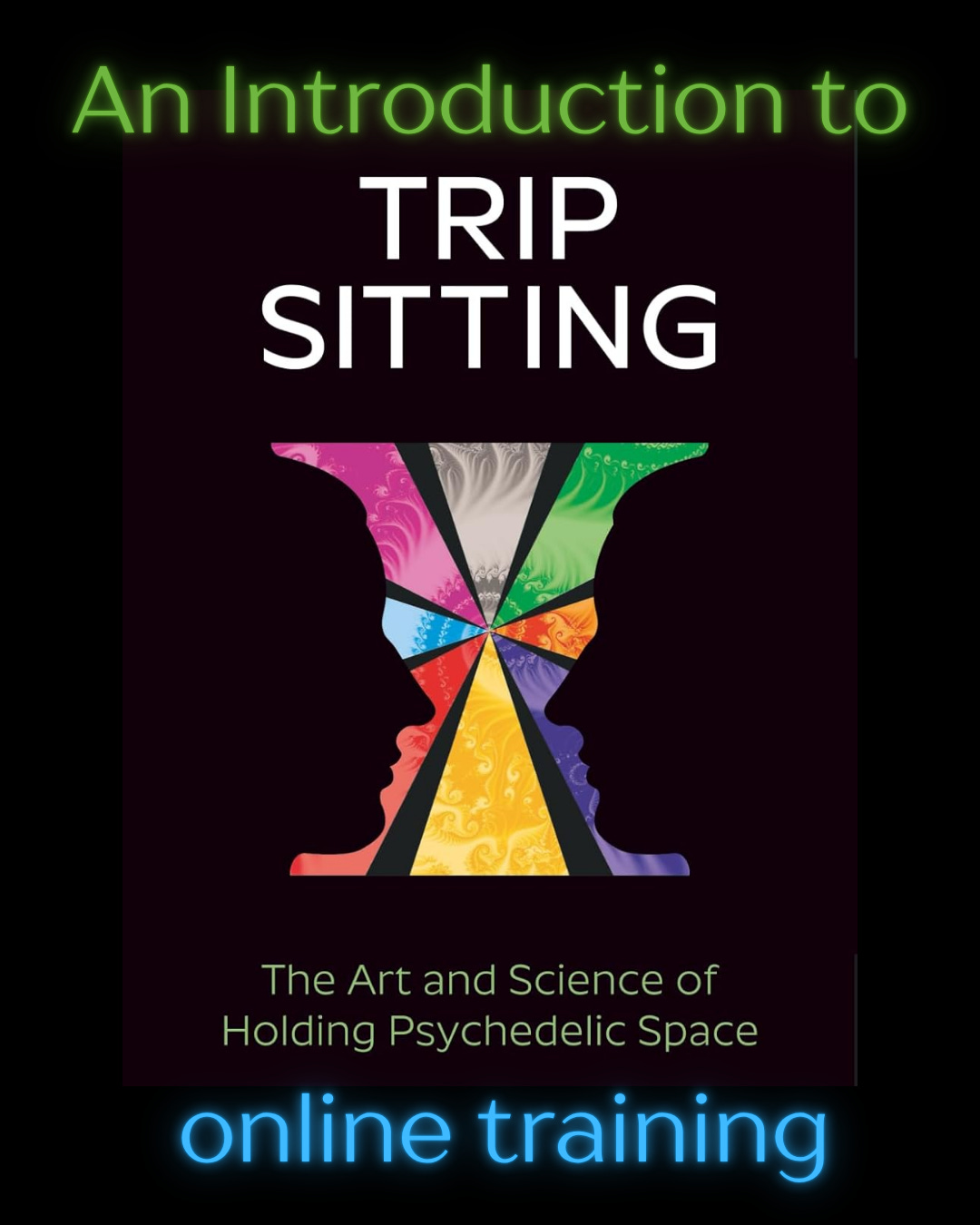
Supporting psychedelic experiences with Care, Competence & Responsibility
with Nurse Jo, Richard Tyo & Julian Vayne
5-week online course
Thursdays 7–9pm (UK time)
Live sessions with recordings available
Begins 24th of September 2026
About the course
As interest in psychedelic experiences grows, so does the need for people who can support others safely and responsibly.
This course offers a structured introduction to psychedelic sitting — the role of providing calm, non-directive support before, during, and after altered states of consciousness.
What you’ll learn
Over five weeks, you’ll explore:
- What the role of a sitter involves
- The current landscape: clinical research, community practice, and differing approaches
- How to prepare properly, including screening, consent, and boundaries
- How to create a setting to maximize benefits and mitigate risks
- What it means to remain present during difficult or intense experiences
- How to approach integration and aftercare in a responsible way
Teaching approach
The course brings together three complementary perspectives:
- Nurse Jo— care planning, co-ordination and curation of therapeutic environments.
- Julian Vayne — combining scientific, cross-cultural, and esoteric approaches
- Richard Tyo — psychological understanding, somatic practice and integration
This course will draw on the extensive work of Richard and Jo in licensed psychedelic theraputic settings as well as nauralistic environments. It will bring to life the skills and knowledge contained in Julian’s seminal works Getting Higher: The Manual of Psychedelic Ceremony and Trip Sitting: The Art and Science of Holding Psychedelic Space. This course is the perfect for those interested in joining The Fellowship of Psychonauts, especially people who will be joining our next training retreat in November 2026.
Click here for details
Forthcoming classes with Treadwell’s Books, online and in-person in London.

Forthcoming classes with The College of Psychic Studies online.


Peter truly transformed my life after I read one of his books. I had already been consuming related content, but it was often written in a style that was too dense and not very practical. Few books have resonated with me as much as Liber Null.
He is certainly a pivotal figure in the world of magic in recent times. In fact, here in Brazil, I believe that after Crowley, he is by far the most significant figure in popularizing modern magic as we know it.
Posthumous thanks to Peter! I was born in 1984 and only encountered his work in 2014. Gratitude!