DMT is an iconic substance; one of the central ingredients of the magical potion ayahuasca, fuel for the entrancing soliloquies of Terence McKenna and the beautiful art of Pablo Amaringo. This powerful psychedelic was also the one that the fabulous Nikki Wyrd was injected with at the winter solstice last year – for science!
Nikki was a participant in an experiment conducted at Imperial College, London. In due course I’m sure she will publish exactly what happened, but she can’t share much at the moment because the experiment is ongoing (and no one wants to mess up the data). Both physiological and psychological information was collected, as subjects had the chance to take this often highly visual psychedelic in a clinical setting. The aim is to understand more about how this substance operates, its potential to help us explore how the brain (and mind) works, and the mechanisms by which it exerts its possible therapeutic effects.

Actual pics of Ms Wyrd as psychonaut to follow once the research is complete!
Now anyone who has been paying attention to the fact that substances such as DMT have regularly proved (for millennia) both philosophically useful (in terms of helping people explore consciousness) and healing (in various ‘traditional’ psychedelic cultures) may wonder why we need such research? There are several answers to this, including the strategic one; that increased licensed use of psychedelics may lead to a wider social acceptance that these are valuable, rather than dangerous, substances. Another reason is that detailed scientific studies (this year will see researchers injecting people with DMT whilst inside fMRI brain scanners) can help us measure and understand exactly what happens to DMT in the body.
Science helps us to learn real data, supportable facts, which sometime challenge our assumptions. For instance; in the case of DMT it now considered something of ‘fact’ that it is produced in the pineal gland. The notion that this most visionary of chemicals is made in the third-eye chakra is a pretty cool one. This idea may have originated as a conversational suggestion from Rupert Sheldrake, and appears as a conjecture in Rick Strassman’s seminal DMT The Spirit Molecule. It’s an idea that is not without merit and it has to be said that today, 20 years after Strassman’s work, there is still research to be done on the chemistry of the pineal (at least judging by a kitchen conversation between Ben Sessa and David Luke I was party to a couple of weeks ago). However even if the pineal gland does make DMT, it appears unlikely that it could be the main source of endogenous DMT. That honour, it seems, belongs not to the ajna chakra but instead to the lungs.
A chemical cascade involving the enzyme INMT, which is always present in the lungs, could produce DMT in amounts sufficient to create significant alterations in consciousness. The location of DMT production in the lungs also points towards an answer for why we have DMT in our bodies (and the bodies of many, many other living things) in the first place. It could be, as per the mythology, that DMT is there in order to let us crash into a universe of elves in order to impressed by their dazzling non-Euclidian architecture. It could perhaps have been encoded into us by some ancient alien race from Sirius or wherever, or sharpening Occam’s razor, or it could be something much more pragmatic and important to our biology.
What DMT is for in the body is the subject of some fascinating research by the charming Dr Ede Frecska. If you watch his video (filmed at Breaking Convention in 2015) you will get to hear what, for my money, is one of the best opening lines of any presentation on psychedelics: “I have a dream to have DMT in an ampule for IV use in every operating room, every intensive care unit, and every emergency vehicle.”
It appears that DMT acts to stop cells dying, it slows damage caused by oxidative stress and that’s why it is one of the few substances which are actively transported across the blood-brain barrier in humans (the others are glucose and vitamin C). As Ede explains in his engaging lecture there is a clear (and testable) chemical pathway, focused around the lungs, for our bodies to make DMT and for it to be rapidly absorbed by the brain for its neuroprotective benefits.
This scientific insight has lots of fascinating consequences. It means, for example, that we have a clear physiological mechanism by which the body could be flooded by psychedelic DMT at birth, perhaps at death, and when the body is under oxidative stress. Knowing this perhaps adds an additional layer to our understanding of the power of breathwork. Ritual practices such as full immersion baptism and many other body technologies for changing awareness may also make use of our endogenous DMT, encouraging the lungs to allow this psychedelic to persist in the bloodstream from where it is actively gobbled up by the brain.
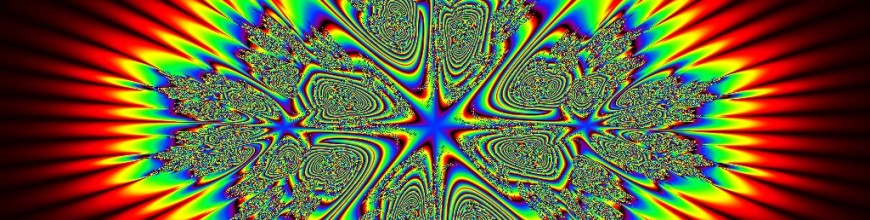
I wonder whether the subjective effects of DMT echo what is going on at a cellular level? I wonder whether all those fractals, faces and, for some, the deep sense of the reality of the experience, is something that serves to stimulate us when we are in trouble? Small amounts of exogenous DMT certainly increase attentiveness, so maybe the call to ‘sit up and pay attention’ in the DMT trance is a turned up version of a biologically rooted ‘hey! Pull yourself together!’. At higher levels of endogenous DMT, the creation of an internal landscape, of the type we might encounter in the exogenous DMT trance, could be a property that serves to keep the operating system of consciousness running (i.e. awareness of an apparently objective external world) while the hardware (the brain) is under stress. Maybe DMT space is what the brain does until it can reboot, a hyperdimensional screensaver before normal consciousness comes back online? It is also interesting that current research suggests that DMT may have a directly healing effect on the brain (probably through its effect on the sigma-1 receptor).
Whether the effect of DMT on subjective experience is something that has been evolutionarily selected for, or whether it’s just one of those wacky epiphenomena (or the work of hyper-dimensional aliens…), is open to question. What is perhaps more certain, given recent research, is that those visitations by Guardian Angels, ancestors and other imaginal beings in moments of physical crisis (such as near drowning) could be visions made accessible by the production of DMT in the body. (Note, this isn’t the same as saying these things are not ‘real’ – whatever that means, see my article on the subject).
Many wonderful scientific insights into psychedelic substances will be presented later this year at the mother of all psychedelic conferences Breaking Convention. The lastest scientific investigations, funded by groups such as MAPS, The Beckley Foundation, and others, will bring cutting edge information to the conference. Add to this a goodly assortment of psychonauts, independent researchers, historians, shamans and others, and you’ve got a powerful psychedelic potion indeed! I’m pleased to know that some of the scientific data I’ll be hearing about will have been gathered with the help of practising spiritual psychonauts such as Ms Wyrd (who, probably, as a result of many years spent in meditation, was able to remain perfectly still during her DMT assay, producing electroencephalogram readings that were, according to the researchers, ‘impeccable’).
Finally, I hope and indeed pray that we can, as psychedelics ask us to do, keep our minds open as science and magic meet in our renewed quest to understand how best to use these marvelous substances.
Ahoy!
JV
STOP PRESS! More science news; a few hours before releasing this blogpost, a paper revealing the crystal structure of the human 5-HT2B receptor bound to LSD was published. Yet another speck to add to our ever-growing pile of knowledge.