Recovering the Healing Ecstasy – The Return of Psychedelic Medicine (to the West)

These days have been called the ‘Psychedelic Renaissance’ and for good reason. Over the last few years licensed research, conferences, publications and (positive) mainstream media coverage about psychedelics has been popping up like, well, magic mushrooms. There are less well publicized contributory factors to this in the underground too. Across the world the Medicine Community (i.e. people making use of psychedelics as entheogens or sacraments in their own spiritual practice) has been dramatically increasing in number. The gathering of tens of thousands of people in Oregon for the recent total eclipse is just one example. Elsewhere the underground is currently blessed with the availability of excellent quality MDMA and LSD (so I’m told). The recent draconian and bonkers legislation against psychoactives in the UK has been shown to be deeply flawed… can this Third Summer of Love get any better?

The answer is ‘yes’!

gathering

Fulfilling the prophecy of the Eagle and the Condor.

Something major, indeed an event of seismic proportions, has just happened. In the USA the Food and Drug Administration (FDA) has recognized MDMA therapy as a breakthrough treatment for Post Traumatic Stress Disorder (PTSD). This amazing leap forward for (legal) psychedelic medicine has been brought to you by the Multidisciplinary Association for Psychedelic Studies. The cultural space in which this remarkable volte-face (from the American criminalization of MDMA in 1985, to its recognition as a valid, safe and highly effective therapeutic agent) has been nurtured by many organisations and individuals; from research bodies such as the Beckley Foundation, pressure groups such as Transform, and many individual acts of advocacy and (to use a religious metaphor) people bearing witness to the value of the psychedelic experience (even at great personal risk).

The announcement by MAPS (covered here by CBS) marks a sea-change in the story-line of Western medicine, one that picks up the amazing work being done by researchers in the early days of late 20th century psychedelic science. More broadly the recognition of MDMA as a breakthrough therapy represents an official validation of what I would describe as a shamanic practice. The point about MDMA therapy is that it’s not a case of prescribing Ecstasy to patients and letting them get on with it. The therapeutic protocol developed by MAPS researchers includes both ‘MDMA assisted’ and non-MDMA psychotherapy sessions. MDMA theapists are given this empathogenic and entactogenic medicine as part of their training, gaining an experiential understanding of the space their patient will be in. (I’m not sure how many psychiatrists have tried electroconvulsive therapy in order to better understand their patients experience).

With one or more skilled healers present, the sessions, both psychedelic and non-psychedelic, are carefully supported and guided. This process, the intelligent management of psychedelic Set and Setting to promote healing, is exactly what a shaman does. In the case of treating PTSD the therapists help the patient to remember their trauma and to find new ways to orientate themselves in relation to past difficult experiences. Whether this process is imagined as a species of shamanic soul retrieval or a way of inducing the optimum arousal state for therapy, the point is that the therapists are accompanying the patient on a psychedelic-supported healing journey. They are psychedelic shamanic psychopomps; and the FDA recognizes that this process works!

This announcement is significant in that it will hasten the development and deployment of MDMA assisted therapy in the USA and hopefully in Europe too. It also marks the return of not only legal psychedelic research but of approved psychedelic therapy. With the exception of the first wave of research, following the discovery of LSD, this return is the first time since the days of the Eleusinian mysteries that mainstream culture has openly embraced the healing potential of the psychedelic journey. Given the record-breaking levels of mental illness in our culture the return of this profound and very effective method of healing has come (to quote Terence McKenna) ‘not a moment too soon’.

The great irony of this story is that a medicine that entered our culture at the end of the 20th century, which made people want to dance and love each other, is only now being permitted back into legal use because so many in our society are damaged by abuse and war. There is a black humor in this, or perhaps a magical, alchemical narrative. But however we understand what is going on, and whatever our preferred terminology, this Third Summer of Love may finally be a time when our culture honestly engages with the healing potential of the psychedelic experience.

To again quote Mr McKenna, “we’re not dropping out here, we’re infiltrating and taking over’.

JV
Divine Androgyne (Part 3): Monstrous Alchemy

The impact of Queer experience on the ideal of androgyny is a truly disruptive one. Gone are our neat Kabbalistic flow charts and clear cut Neoplatonic stages of descent. In contrast to these linear sequences, this Queered Androgyny is an ever oscillating, multi-directional chaos-star whose many rays can be simultaneously moving both outward in expression and engagement, and inward in reflection and self-nurture.

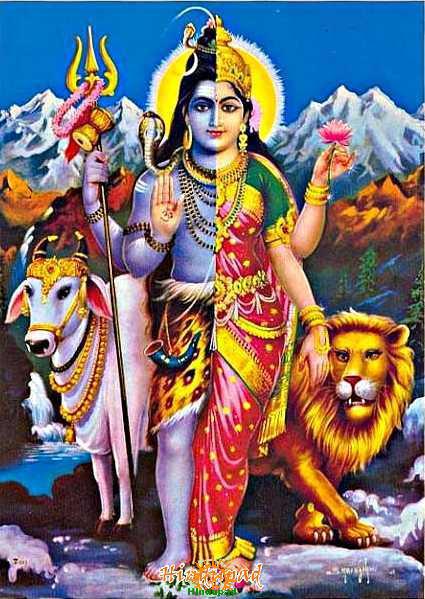
This principle of Androgyny is fed as much by the lived experience of unique, individual Androgynous people as it is by the realm of aspirational metaphysics. It as much as about the creativity of the Radical Faery and Butch Lesbian as it about Adam Kadmon or Ardhanarisvara. For me, to work with this form of Androgyny means to acknowledge both a dialectical process that seeks to capture the world of ideal forms, while at the same time experiencing a dialogical reality in which a multitude of positions need to be held together without a necessary resolution.

Ardhanarishvara

‘Can’t tell if you’re a boy or a girl’

To seek deep benefit in engaging with these ideas and images seems to require that we tolerate a certain degree of uncertainty. So often this form of doubt, confusion and psychological tension is seen as a negative or a hindrance to spiritual development and yet I believe this does not need to be case. For those of us seeking to walk an occult path, we are often called upon to make use of emotions and methods which our exoteric cousins view as dangerous or retrograde. If however we are able to engage consciously with the sense of resistance experienced in grappling with the complexity of such dialogues, then this very tension can bring about alchemical change.

If the stated aim of magical work is to create change, it would seem somewhat odd to then resist the transformation when it comes; and yet in my own life this has so often been the case. Change can happen at many levels and impact both how we experience ourselves and how we engage in relationships with others. Often the routes to change are manifested in dilemmas, loss and conflict, and the keys we need are to be found in attending to the strangeness of our dreams and the currents of the unconscious made manifest in our Art.

This is the unconscious territory that the Surrealists were so adept in exploring in their work, with the strange often jarring images revealing aspects of self that were bizarre, blurred and often monstrous. In alchemical terms this connection to the unconscious and the shadow represent the stage of nigredo or “blackening”. For the surrealists such territory was vital to their artistic inspiration and similarly for our magical work to have any really depth or sustained power, we must tap into this libidinal black flame of inspiration.

carrington

Leonora Carrington Inn of the Dawn Horse

We have already explored something of the fertile intersect that exists between Surrealism and the artistic deployment of occult ideas and images. Themes as diverse the etheric double, the daemonic and the Witches’ sabbat were explored to varying degrees and there seems to be a significant connection between this use of magical themes and the often weird animalistic characters with which they populated their artistic landscapes.

The link between the magical, the animal and the potentially Queer is present in much Surrealist work and for me the most engaging aspects of such exploration, lies in the way in which it seems to capture that zone of liminal strangeness and mystery. The Surrealist imagination was alive to potency to be found in understanding the animal (whether actual or in more mythic forms) as a way of recontacting the sensual and instinctual realms that weave through the body. For me this wilder magic seems to connect to an almost pre-verbal stage of development that resonates with Spare’s idea of “atavistic resurgence”.

The folklore of the Lycan and Vampyre point us towards a magical worldview in which we can explore the vitality gained through a deeper connection to the visceral. Similarly the Witches’ animal familiar the “Fetch”, or the animal-dimension of Norse soul-lore breach our polite attempts to conceive of a humanity devoid of wildness.

In contrast to the clean, vertical fusing of Ardhanrisvara, the truly Queer genius of Levi’s depiction of Baphomet is partly located in the way in which the animal sits alongside the male and female. In trying to work with our own processes of dissolving and coming back together, Baphomet’s animal dimensions remind us of the power, joy and danger that can be accessed when we risk tuning into the whole of ourselves.

My own attempts to access these states has come via bodywork, dance/shaking states and prolonged trance drumming. I have also had a great deal of pleasure revisiting Gordon MacLellan’s excellent book Sacred Animals which provides some excellent practical guidance for exploring these themes. The ability to inhabit these places feels vital for those of us seeking to embody both freethinking and the magic of the Queer. These places beyond binaries and old certainties rarely allow prolonged rest, but they are undoubtedly transformational!

SD