Sometimes it’s good to get away from facebook and the ceaseless barrage of emails, to retreat in order to advance (as they say in Tai Chi). Slipping into the deep data-stream of the landscape refreshes the mind, the heart and the soul. So for Easter this year I travelled down to West Penwith in Cornwall to hang out with my dear friend Greg Humphries the ‘Wizard of the Woods’.
While chaos magic has been characterised by some as being a predominately urban style of occulture, the emphasis on gnosis (in the sense of direct, unmediated experience) meshes very well with practices such as seasonal celebrations, psychogeography and wild landscape inspired magics. In fact one of the earliest (and now rarest) of the first wave of chaos magick writings included a volume which one might argue was a spiritual forebear of the Chaos Craft project. The Cardinal Rites of Chaos details a series of seasonal ceremonies, calling on deities including Baphonet, Babalon, Eris and others. The use of multiple models of reality which is so essential to the chaos magic approach is clearly articulated in this text;
Chaos is the raw material with which we work. Cosmos
represents belief structures within that randomness and, as
such, is con- stantly changing. This was the first thing that
became clear when our group was started. A magician cannot
afford to use only one model of his relationship with chaos; he
needs different models for different functions and although it
would be convenient if these models were complementary they
often turn out to be contradictory.
The first leg of my journey deeper in to the west country begins with a visit to my artist friends and their burgeoning family in North Cornwall. In the morning, outside in a little glade, I make my petition to Pan as God of the magical British landscape, that me, my family and friends be blessed with fabulous and nourishing Easter holidays. (The wording of my spell, which included tobacco prayers and offerings of music and poetry from memory, is important. ‘Fabulous’ is from the latin ‘fabulosus‘ meaning ‘celebrated in fable’. Thus my intention is experience an Easter about which we could tell stories in years to come. These stories are imagined to emerge from ‘nourishing’ experiences, rather than being tales of woe.)
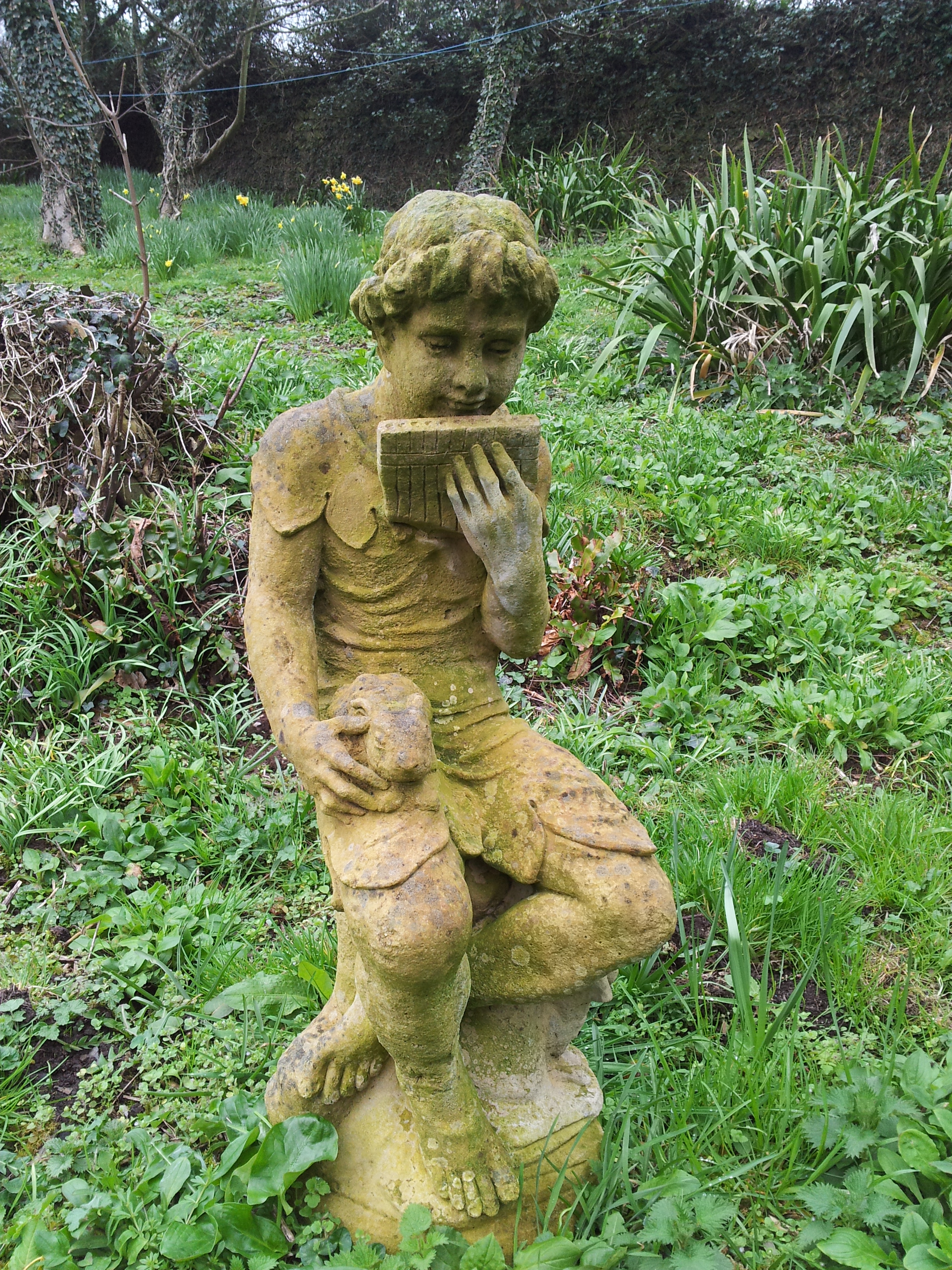
Piper at the Gates of Dawn
Our sojourn in West Penwith itself was punctuated by delightful walks with my friends and children, through muddy footpaths and woodlands, along streams and over moorlands. In the evening the fire roared and we watched movies and ate good food (on one night prepared by me and my eldest son).
On the West Penwith peninsular the sea is never far away and the sculpted forms of trees record the howling winds from the roaring Atlantic. The grass glows a vivid green and the sulphurous yellow of primroses spills wildly into the emerging season. Everyday we went out exploring, forging for wild food (one of the skills I’m pleased to possess), spotting plants and tracking animals.
Greg, me and my kids also spent one day building. At a local eco-friendly campsite that Greg helps manage we all set to with pruning saws, bill hooks and other tools. We cleared some land and cut back trees, making a space which would be used as a communal area for people camping on the site. Our plan was to erect a goal-post looking structure (some 3 metres high) and to use this as the main frame over which a tarpaulin would be stretched and tethered. The tarp would be sufficiently high and well ventilated so that a small fire could be safely lit beneath it. After a days work the space was clear and the chestnut poles had been prepared. Greg and I lifted these into position and packed the earth around them, stamping round and round in circles, pushing the earth down so that the structure was secure.

We made this
In common with most well adjusted kids my children really enjoyed this day. They knew they were free to leave and return to Greg’s house (a matter of a few yards away and occupied by his partner) whenever they wanted (or go elsewhere on the site to explore and play). However the prospect of building a shelter was a really appealing one and they spend over half a day, working hard, to help.

Completed wild camping space
A few days later, during the full moon of Easter Friday, Greg and I were able to put our psychogeographical skills to good use. We have been on numerous walking adventures together (ranging over much of the North Cornish and Devonian coasts and to more exotic locations such as Nepal, where, in a Himalayas, we met the Secret Chiefs, but that, as they say is another story).
Walking out under the full moon (an eclipse moon for some of us on the planet) the air was still. The spring winds had dwindled and it was obvious that the next day would dawn bright and cold. Greg and I installed an Easter Egg hunt round the village. The first clue (to be discovered by the children in the living room of the house, along with various handy bits of advice and a compass) would lead them to the church yard to discover their first cache of eggs and another cryptic instruction. This would direct them to a green woodworking studio space that Greg uses. Having found the next set of eggs, and clue, they would set off to find the ‘fairy tree’ behind the local holy well. Rewarded with more eggs, further cunningly worded instructions, would direct them up the hill, towards the great stones which crown the nearby moorland. There they would find yet more eggs and a clue indicating that they should return to the house for the final prize (some big Easter Eggs of high quality organic chocolate hidden in Greg’s woodshed).
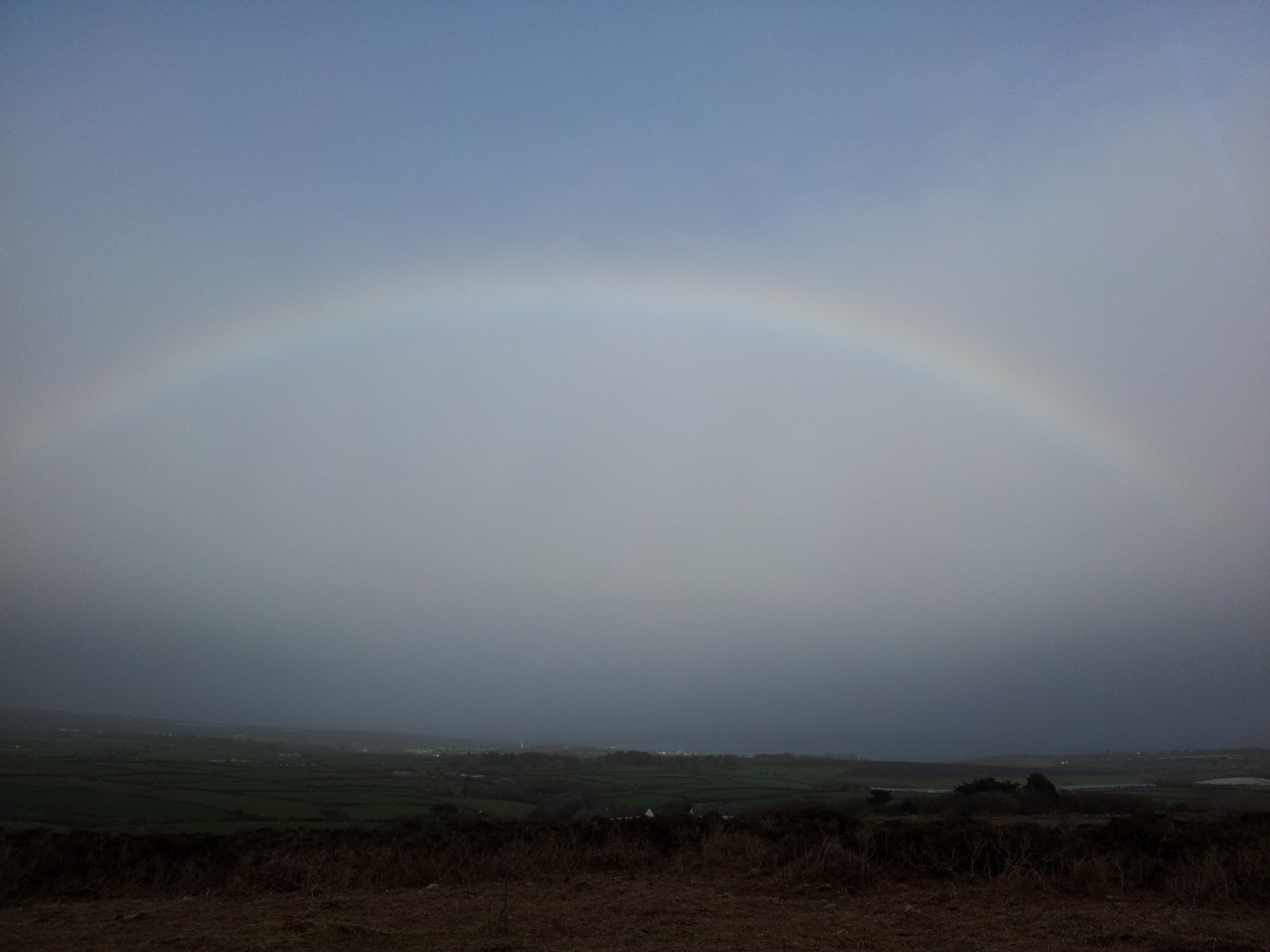
The colours of magic over West Penwith
The children (my two and Greg’s daughter) know their way around the village very well. They rose early (unsurprisingly) and set off on their adventure (I woke too in time to see them leaving, with my youngest son the proud bearer of the backpack to collect eggs) setting off into the pale morning mist under the blazing sun. The tiny village is of course a safe environment for such an excursion and it wasn’t long before we heard them returning into the main part of the house, bearing large quantities of chocolate.
By setting up this trail Greg and I were, I hope, transmitting in an embodied way the way we both sense landscape. For us it is a numinous thing, when approached correctly. These sleepy Cornish villages (or the little Devonian town in which I live) can be magical places, where characters such as Pan and the mysterious deep magic of nature (expressed so eloquently in the work of Alan Garner, Louise Lawrence, Susan Cooper and others) is very much alive.
Upon their return the children had one final request made of them. They were given an egg to hide for us adults and asked to provide us with a clue to its location. (We soon tracked it down in some bushes behind the bus stop just outside the house.) In this way, as two fathers, Greg and I were sharing our attitude to the universe, as a place of fun, exploration, curiosity, quest and magic in way that was fun and engaging. Moreover we were acknowledging the value of passing on this joyous, creative approach to others.
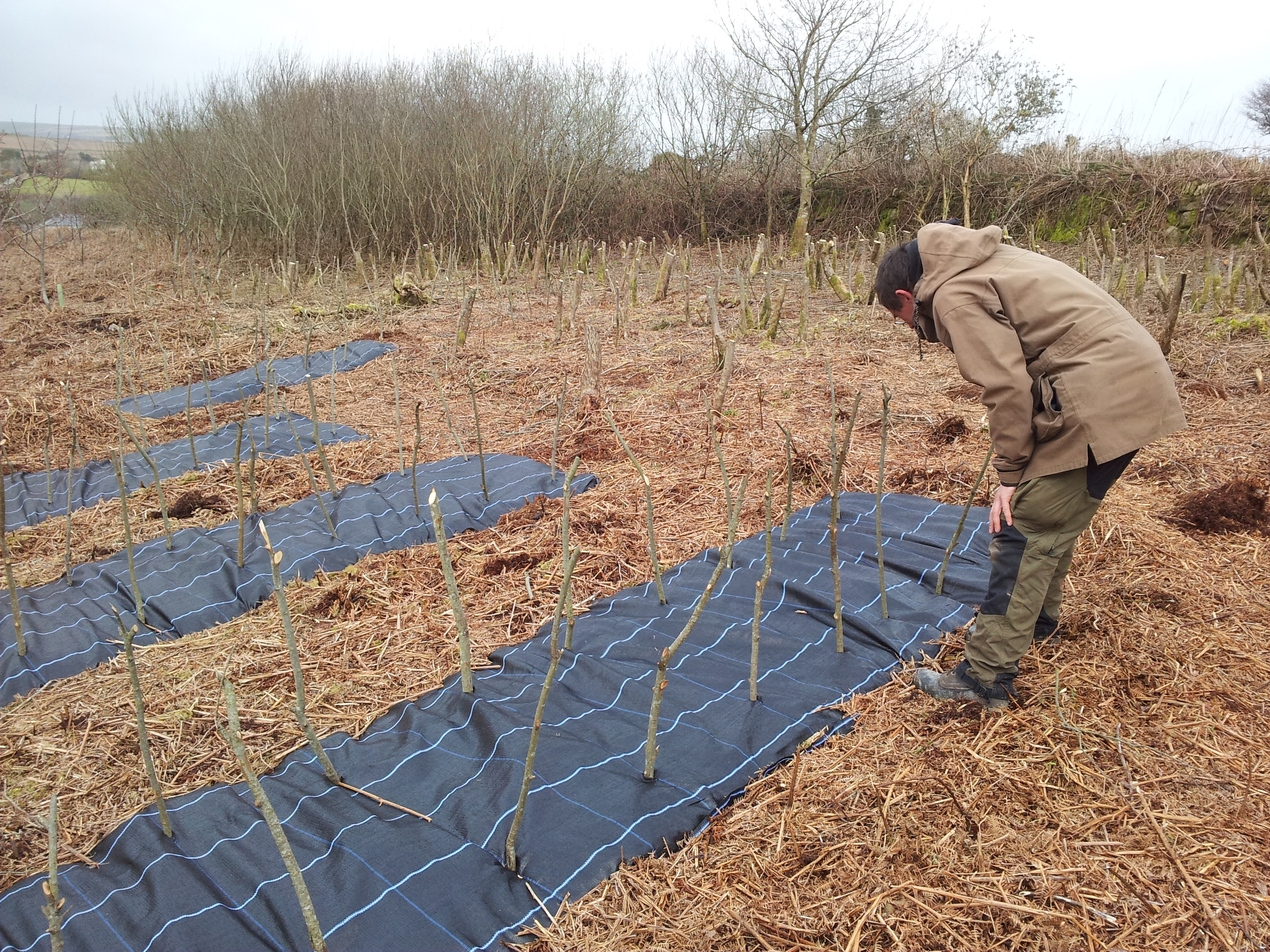
Greg inspecting one of his tree nurseries
Later that day I sat with Greg as he instructed me in how to make fire by friction. We went through in great detail the bow, the drill, the ash pan and the simple and cunningly fashioned technology needed to make fire in the way our ancestors did. Using Greg’s fire set I had a go. The bow of the kit, beautifully carved, along with the block that holds the drill. Trying to get each component into alignment, balancing, pushing, pressing and moving the bow. ‘Slow long movements…you’ve got it going…now keep going, another twenty strokes…’ Carefully the burning ember was tipped into a ‘nest’ of newspaper and blown. I had made fire and we had just sufficient time to capture this moment on camera.
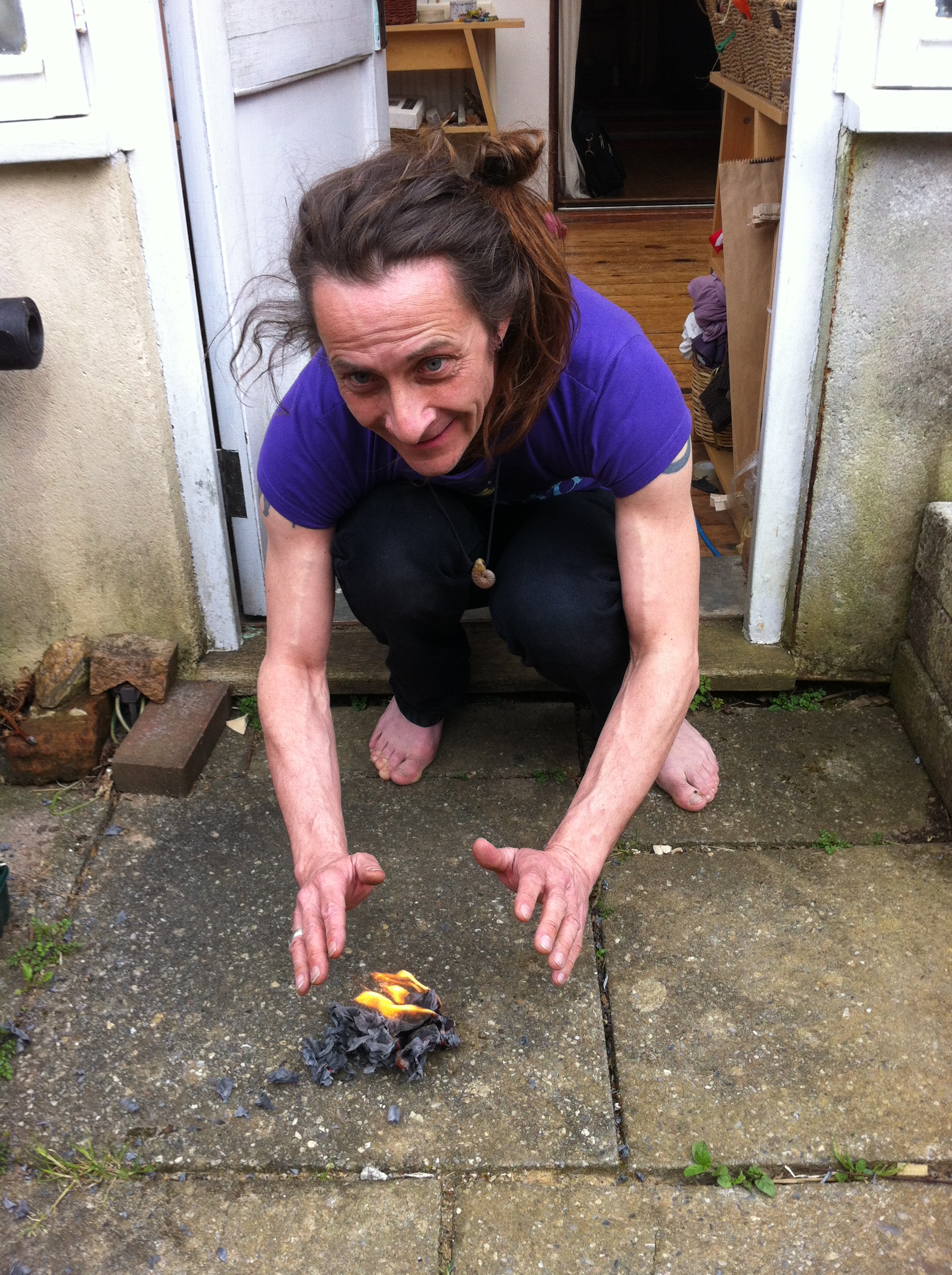
Man make fire
The next day we returned to Devon and there spent more days relaxing and enjoying the warm spring weather.
During this time I did a little explicitly esoteric practice; some mindfulness meditation, a little yoga and tai-chi, some prayers of thanks to the Great Spirit. But on reflection there’s a lot more magic here than simply just those moments, and certainly Pan had smiled on us. We had all been enriched by this time and came away with stories to tell. Now in my house a half-made fire lighting set sits by my own hearth. When I’ve completed it I’ll be able to make fire by friction. This may not be a tale of spooky goetic demons and high strangeness (though those things have their worth) but for me learning to make fire using a method that my stone-age ancestors would have recognised; now that’s magic.
JV