Bardic Inspiration

I remember the first time I really got turned on to poetry; it was while listening to “Sergeant Pepper’s” when I was in my early teens. Here was this fantastic world of opulence and decadence where sitars swirled, acid was dropped and Aleister Crowley stuck out his baldy head amongst the starlets and icons. Those moustachioed boys in their lurid band suits captured the spirit of the age not only via their music but also the lyrical vibrancy contained in tracks like “Lucy in the Sky Diamonds”, “Within, Without You” and “A Day in the Life”. This album had a truly magical impact on me, and has shaped the direction of my spiritual journey in ways that few books ever have.
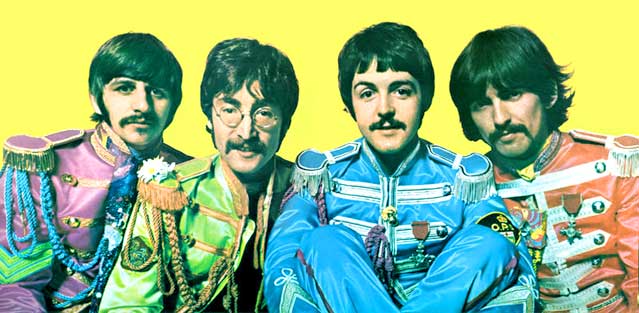
Occultnik hipsters from the previous century

Occultnik hipsters from the previous century

In thinking back to my own beginnings in paganism and magical practice, I was initially drawn to the path of Druidry and the emphasis on poetic inspiration that is found in the role of the Bard. Sadly many early druid revivalists (most probably influenced by Freemasonry) projected a rather linear grade system onto Strabo’s observation about there was three groupings or classes within the Celtic priesthood, and had placed the Bard at the bottom of the heap. Thankfully many contemporary druid Orders while retaining a three grade system to enable a holism in magical training are re-emphasising the mythic and historical centrality of the poet as custodian of tradition and inspiration.

Within the Druid tradition the idea of poetic expression is innately linked to the concept of “Awen” or Spirit of inspiration. Mythically speaking, Bardic inspiration and the Awen are inextricably linked to the tale of the great poet Taliesin who ingests this spirit via a magical elixir. As the brew was intended for dark Cerridwen’s son not the nascent Bard, she pursues him in a fit of pique. With the elixir on board he’s not so easy to catch, and so ensues the now legendary shape-shifting show down as she pursues him across the verdant Welsh landscape.

Regular readers of this blog will be familiar with the way in which we as magicians are seeking to describe the circular relationship that exists between magic and art.  Shifts in consciousness can be accessed through art and the creative expression itself can entail the same internal processes as more formal meditative or ritual practices. Whatever the medium employed- be it dance, web design or good cooking, the connection between human creativity and spiritual aspiration feels fundamental. Unfortunately the need to keep reminding myself of this often highlights the sense of disconnect many of us get caught in as we lose sight of the sense of spontaneity and “Flow” that we can experience when we truly immerse ourselves in the act of creation.

The idea of “Flow” (see the work of Mihaly Csikszentmihalyi) – that sense of relaxed productivity that enables us to express our Self can extend out to all areas of life where creativity and fluidity are of benefit. For me this idea of Flow also connects to the tantric concept of “Sahaja” or naturalness and spontaneity.  This idea of seeking to experience ourselves as more fluid and shifting can often help as adapt to our Postmodern world-seeing the self more as a river moving through an ever changing landscape rather than a pool in which its parameters are fixed.

Now this is all well and good, but how do we access this state of creative flow? Going back to the tale of Taliesin and the druid tradition, I think that there are a couple of pointers that can aid our journey:

  1. The Role of Stillness – Of course I’m going to mention mindfulness practice! Cerridwen employees the young Gwion Bach (who was to become Taliesin) to tend the cauldron containing the elixir for a year and a day. So he sits, and he sits-listening to the wisdom of the old man Morda as they tend the cauldron together.
    From the perspective of aiding the flow of the poetic this represents a profound listening to the self. In contrast to those traditions that promote a distrust of our intuition, the path of Bardic inspiration is one in which the deepest stirrings of our souls need to be attended to, be it Walt Whitman’s sense of nature mysticism or Rumi’s longing for the beloved. We are more likely to contact the poetic if we are able to access the fires of our passion.
  2. Driven by Darkness – Once He has imbibed the Awen, Taliesin flees the on-coming wrath of Cerridwen. Cerridwen as the dark mother pursues him and doing so forces him to access those shamanic states that make transformation possible. The darker aspects of ourselves are often store-houses of poetic power that we need to access in order grow and develop. Into the Shadow we not only repress those aspects of our lives that we fear, but also the best parts of ourselves that we cannot acknowledge. The glory of Art is that it often provides a conduit via which out darkness can flow without overwhelming us.
  3. Connection to the Elements and the three realms – In a way similar to much tantric technology, the arising of spontaneous, natural flow often comes through an increased awareness of the natural world and the body. Perhaps unsurprisingly then, most contemporary Druid orders include in the foundation of their training a thorough focus on the elements and the three worlds (earth, sky and sea). As Taliesin seeks to escape his pursuer it seems significant that the animals that they shift into embody each of these three realms.
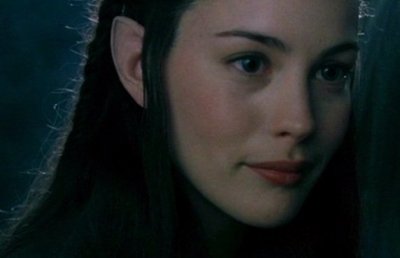
Arwen elf action

That’s ‘awen’ not ‘Arwen’  though elves are cool…

Most of us are acutely aware how barren our lives can feel when we feel the absence of flow and creative juiciness in our lives. To contact our own darkness and connection to the body involves commitment-for Gwion Bach to become Taliesin meant job loss, dealing with confrontation and the transformation of his body. Dangerous I know, but worth the risk. As they say in the British Druid Order-“Be the Awen!”

SD

Opening as Octarine

Twelfth night. Yule itself and Christmas too have come and gone. Family gatherings have happened, we’ve comforted ourselves in the darkness with rich foods; roasts, figs, chocolate, wine and more.

Now our group turns its attention to the symbolism of Octarine – the colour of magick, the north & midwinter. We gather for these rituals by the hearth of the Covenstead. In the corner of the room the Christmas tree twinkles its little lights. A large reproduction of Atu XV – The Devil, Lord of Misrule and capricious midwinter goat – graces the temple. There are drums and rattles for music (an essential component for our meetings) and the altar glitters with peacock feathers, holly and festive lights.

Breaking open the head

Breaking open the head

‘The colour of magick that can be described is not the true colour’. Octarine sits outside of our symbolic categorisations; it is beyond what we know and, more directly than the other ray of the chaos star, points towards the ungraspable nature of the Mystery.

We open the temple with the Gnostic Chaosphere Ritual (version 1.8), and pass a cup of ginger wine round the circle, which summons a warming, seasonal glow. The first ritual is the ‘Octarine Pineal Gland Working’. In this practice we install a homunculus in our brains, a miniature visualisation of ourselves, sat in the core of our brains, massaging our pineal bodies. The internal adept gently rubs the gland and from it the octarine secretions are released, flooding through the whole being. This magickal fluid opens us to the transcendental. Causing the brain to unfolds like a flower blooming in the night, unfirling like a receiver to cosmic consciousness.

The Brother leading the ceremony plays the singing bowl and thingshaws, and we sit for a while under the winter stars, bathed in octarine radiance.

In the next rite we conjure ‘The Chalice of Becoming’. Our Sister has drawn water from the sacred spring of St. Aldhelm, and this is poured into a silver cup. Using gestures and sounds at each direction the elements are called. The chalice is carried round the temple as we move to each quarter, the sacred water absorbing the words of power that we speak, quivering in sympathy with the moments we make.

We sit while a singing bowl sounds; meditating on what it is that we need, what we feel the drive to Become. When the meditation is done we each speak our desires aloud into the water, pronouncing our words over liquid so that it absorbs the vibrations of the sound.

We leave the temple and, in the garden, pour the clear (or is it octarine?) fluid onto the cold, dark earth.

Our next ritual is part of an on-going series of workings, delicate political magic and not something I can go into too much detail about at present. As Princess Irulan remarks in Frank Herbert’s Dune ‘A beginning is a very delicate time’. Suffice it to say that ‘the colour that must not be named’ was summoned to create a bridge between our group and the spirit we want to work with. It is perhaps lawful to provide a link to the music used for this rite HERE.

The final ceremony of the meeting concerned the impossibility of containing the Mystery. I’d been enjoying the work of an American fundamentalist preacher and considering how all his spiritual knowledge was refrenced to the King James version of the Bible. Understandable but still strange how we seek to limit, to know, to create certainty, even in our dealings with the Mystery, or God or whatever one wants to name it.

Still skyclad from the previous rite, we pulled the powers of the eight directions into our circle. Asking for illumination from each of the eight colours of magick, from the sabbats and energies  associated with them.

I wanted to call on the power of perhaps one of the earliest spiritual frames of reference, and to this end, had been researching the Yezidi and their key symbol of The Peacock Angel Tawûsê Melek. The Yezidi religion looks very like an ancient paganism of the middle east, wrapped in almost as old wrapper of text and tradition which (arguably) reaches back to the deep time of Göbekli Tepe and Sumer. The lustrous shine of the peacocks tail reminded me of octarine and of course the irridecent transformative stage of alchemy. Then there is the suggestion that the Yezidi (in common with Wiccans and Heathens) hold the north as the most sacred direction of the compass.

We made prayers. These had to be from memory and so for many participants they were those from the Christian tradition, the framework for the sacred that many of us learnt as children.

I then read the words of Tawûsê Melek, as given in the Kitab al-Jilwa, The Book of Revelation:

I lead to the straight path without a revealed book; I direct aright my beloved and my chosen ones by unseen means. All my teachings are easily applicable to all times and all conditions. I punish in another world all who do contrary to my will. Now the sons of Adam do not know the state of things that is to come. For this reason they fall into many errors. The beasts of the earth, the birds of heaven, and the fish of the sea are all under the control of my hands. All treasures and hidden things are known to me; and as I desire, I take them from one and bestow them upon another. I reveal my wonders to those who seek them, and, in due time my miracles to those who receive them from me. But those who are without are my adversaries, hence they oppose me. Nor do they know that such a course is against their own interests, for might, wealth, and riches are in my hand, and I bestow them upon every worthy descendant of Adam. Thus the government of the worlds, the transition of generations, and the changes of their directors are determined by me from the beginning.

Then we sat again in meditation, considering for ourselves the spontaneous, surprising and unlooked for moments in which we had each encountered the Mystery. Moments perhaps arising from ceremony or other spiritual work, but particularly those times where these experiences, of gnosis, of ecstasy, had appeared unbidden. We remember those times when our revelation over-turned our expectations and previous beliefs. The times where the octarine Mystery burst the banks of our paradigm and inundated our reality.

We take a moment to listen for the unstruck sound in the deep midwinter.

Moving from this space. We now open ourselves to the wild delight of Mystery, of the midwinter goat, and dance to the words of our fire-and-brimstone preacher, re-purposed as an invocation to Baphomet HERE. The god who has no myth, the deity without fixed form, the freakish hybrid of unknown possibility – Io Baphomet!

There is food and music and delightful conversation later that night (and another sermon from our favourite pastor, this time testifying about the pineal gland and illumination HERE). The year turns towards the light and, with full bellies, thankful of our riches and curious of the unknown nature of the year ahead, we step into the Mystery.

Yuletide glitz

Yuletide glitz

JV