Human Givens – Sex, Drugs, Spirituality and the Olympics

The war is far from over, but at least there appears to be some glimmer of hope for an end to hostilities on the horizon. The war I’m talking about is the ‘War on Drugs’, often described on the’ War on (some) Drugs’ or indeed the ‘War on (some) People who take (some) Drugs’.

I’m not going to rehearse the backstory of the conflict, I guess most people reading this blog will know it all too well. The epic battle between cotton and hemp producers, an economic conflict in which the cotton rich Southern USA successfully deployed the spectre of a reefer smoking underclass against the hemp farmers of the Northern States. Leary, Kesey and the acid revolution. There were the Reagan years, the Zammo generation, the plaintive cry of ‘just say no’.

Scag scallywag

Scag scallywag

But the times they are a-changing. The increasingly acceptability of medical and now recreational cannabis use in the USA for instance. The legalisation of marijuana in Uruguay is another part of this sea change, and interesting to note that this law has been enacted first in this fiercely secular Latin-American nation. Liberalised drug laws in Czech Republic, Portugal and elsewhere with changes in the legislation bubbling just under the statute book in many other places.

Within the medical field we are finally entering a time when psychedelic medicine is once again a realistic possibility. Research is being conducted worldwide with ketamine, psilocybin, MDMA and a range of other molecules. Using the latest brain imagining techniques we can drill down into the deep layers of the neuronal substrate of awareness and look in minute detail at how these drugs work. In clinical settings the deployment of psychedelic assisted therapy is actually happening and getting good results (for instance check out the current research listed HERE).

With these changes are also intelligent notes of caution, often sounded by members of the ‘entheogenic’ community themselves. The naive position; that these substances are a universal panacea (either for medical, social or spiritual healing), is heard much less often these days. Take for instance the work of Ben Sessa, who manages to intelligently look at the mental health dangers associated with cannabis without being in any way blinded to the benefits of this or any other psychoactives.

There are other pressures emerging that are challenging the War on Drugs. Spiritual and sacred use of various medicines or sacraments, notably peyote and ayahuasca, have led to some critical legal and cultural challenges over the last few years. Moreover I detect a broader cultural understanding that these religious traditions are real as just that, legitimate spiritual practices, and not just ‘an excuse’ to bosh a big load of drugs.

Yet it seems to me that a key problem remains and that is money. While we have seen the liberalisation of laws (in some nations at any rate) governing some aspects of human behaviour (such as homosexuality), drugs are still problematic. They are ‘stuff’, they can be manufactured, harvested, bought and sold. Historically they have been the economic engines of many nations (especially the British Isles, what with the trade in tobacco, sugar, tea, coffee, chocolate and opium) and (the proposed revolution of molecular 3D printing notwithstanding) this is likely to remain true for years to come. Certain drugs can be grown in many environments and on small scales (cannabis), whereas others have niche ecologies (Erythroxylum coca likes sun, prefers high altitude and you need 100kgs of leaf to produce 1kg of hydrochloride of cocaine). Then there are those chemicals that are solely the product of laboratory processes. Understanding how our cultures can successfully integrate the economic side of our biological drive to change our minds pharmacologically is a big but not insurmountable challenge.
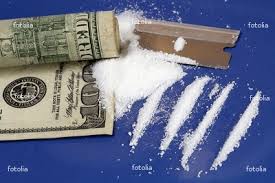
A few of our favourite things

A few of our favourite things

The fact that this desire, our need, to change awareness with drugs, is a ‘human given’ is a vitally important point. Although some drugs are privileged while others are castigated (in particular cultures) there is, in my view, an intrinsic human desire to get high. This behaviour can be observed in many other species beside our own; from reindeer drunk on Amanita muscaria through to cats rolling in catnip. The same might be said of homosexual behaviour which, given the forthcoming Winter Olympics in Russia, is very much in the news. While different cultures may have different social mores about homosexuality as to whether it is ‘moral’ or not, the fact is that this behaviour is ubiquitous in human cultures (though obviously acknowledged to greater or lesser degrees). And like drug use this behaviour exists within many other species. There is therefore a good case to say that both psychoactive drug use and homosexuality are both ‘natural’ features of being human, and that attempts to suppress these behaviours (whether justified through religious or political ideologies) inevitably manifest as social control, scapegoating and violent repression.

Repressive social controls, one might argue, are themselves ‘natural’; social species like ours are geared up, in evolutionary terms, to protect members of our in-group against outsiders. We all embody processes whereby we engage in cathartic community acts by expelling individuals – kicking the shit out of the Catholics, the Jews, the queers, the muggles and the rest – basically to make the rest of us feel better. But if the magical idea of The Great Work is to have any social meaning (a Greater Vehicle Great Work rather than a purely self-centred ‘becoming one with’, or ‘as God’ trip) then it must mean intelligently appreciating our humanity. (The model of The Great Work as ‘becoming more fully human’ or ‘soul making’.) We acknowledge our feelings; the desire to change our minds with drugs, to love members of the same gender, and our war-like, gang culture simian heritage. Then, knowing ourselves, we can explore social relationships that celebrate, and where necessary mitigate, our essential human characteristics .

Getting off our heads on drugs is a normal, natural desire, and for many people, even in legally problematic environments such as Britain, this desire is something that enhances rather than damages lives. Understanding the problems associated with drugs in culture means appreciating that addiction to them is most importantly a function of environment. The simple fact is that it’s really easy to get a rat (or a human) addicted to cocaine when it’s in an impoverished environment (a bare cage in a lab or a run-down ghetto in a city). But take that animal (rat or human) and put it in a richer more interesting environment where it still has easy access to drugs and, unsurprisingly, it will tend to do much less coke. Knowing these facts; about drug use and abuse, gives us a firm place to stand when we make demands for more liberal and humane drug laws and a skillful means for dealing with the problems of economics and addiction that are entwined within the drug narrative.

By the same token the pressure being brought to bear on Russians anti-gay legislation at the moment is spot on. Sure the focus is on that nation because of the Olympics, and there are lots of countries that have as bad, and in some cases a far worse record on gay rights than Russia. But by acknowledging homosexuality as a ‘human given’ I believe we can kick aside the wringing of hands about cultural relativism and, while acknowledging our own short comings (in places such as North America and Britain), know that it’s still right that we call on Russia to continue to liberalise laws concerning gay people. And in current international law what I’m calling on as the need to accept ‘human givens’ is re-framed as ‘human rights’.

From Russia with love

From Russia with love

Meanwhile owning our own (social and individual) tendency towards mob violence (another human given) we put into place systems such as the rules of evidence, impartial (as far as possible) judges and juries, expert witnesses and other processes to prevent abuses of power through the apparatus of the State. Secondly, we need to encourage political and social engagement by people in all walks of life to ensure that our political systems are not allowed to become tyrannical and plutocratically elitist. Thirdly, we should seek to encourage techniques (such as mindfulness meditation) that support our to ability engage emphatically, to discover compassion for ourselves and others (especially by the people who we select as the leaders of our states and corporations). Finally, we need to find ways to transform our desire for conflict through the alchemy of processes such as sport and other non-lethal pursuits. The Olympics is one example of this sublimation.

And as we address all these difficult issues we must do so in a way that is predicated on the knowledge that we are one human family, thus far stuck on this single, small planet. We owe it to ourselves, our ancestors and our children to find good ways to be here together.

JV

Mindful Means in Dark Days

Hooray, Imbolc is here; St Brigid’s feast day, the time of returning light. Here in the British Isles spring flowers are starting to show, buds on trees beginning to green, thoughts shift towards the future after the review of the past year. 2013 is now history.

November and December were not like that though.

They were dark days, with much time imprisoned indoors to reflect upon the previous months. Xmas comes to test our reserves; how well have we actually done in terms of cold hard cash? Can we reward ourselves and our loved ones with food and festivities, gifts? Does this material judgement test have real value if it falls short? Does anything we make, therefore, really matter?

My own 2013 dénouement did not go well in many ways. Financially I was struggling (though managing) to keep my head above water. Mood wise I was low, hectic summer and autumn months had left me exhausted and with a few trivial injuries that twinged every time I moved. My own worst critic, I reflected on the many ways I could have done better, made different choices in hindsight. A long term battle to defend my friends and myself had ended, favourably for us, but the relief was immediately followed with vast amounts of analysis: Why had it happened? Could I have chosen other paths that avoided it? Had I done my best?

People around me were having their own troubles, dealing with grief, with poverty, with career disasters, and crises of conscience and spirit.

I had a lot to think about, initiatives to take, and no confidence in my ability to cope with any of this; I couldn’t even afford significant presents for my daughters or loved ones, nor did I have creative powers to draw on at this time. What kind of person had I become? I couldn’t, for a while, even stand up straight due to a bad back caused by injudicious exercise (ambitious yoga). I was worthless.

So I did nothing. Well, nothing beyond my comfort zone. No important tasks for other people. Nothing where any mistakes would disappoint anyone other than me.

Not an ideal choice, when one has responsibilities to others to meet. Especially for a self-employed person. Earnings went to near zero. Everything seemed daunting, impossible, doomed.

Throughout this time, I kept meditating. Grounding, focussing on the small beauties of daily life. I was intellectually aware that my depressive state was due to events, and somewhere within my confused guilty and trouble moods I knew I had done as well as I could. The main issue I kept coming back to though; was that good enough?

Mindfully, I acknowledged this thought. Then I let it fade. In order to live, I needed to act, not overthink ever tiny detail in advance for fear of messing up. So I let the anxiety settle, didn’t worry about being worried.  Got on with the domestic tasks I felt I could do; this had a knock on effect of my home becoming sorted beneath the surface. Cupboards were emptied out and rearranged. Long ignored piles of papers gone through and filed. I looked into ways I could help those injured parts of my body, with movement, posture and medicine. I kept going with the flow, as well as I could, through the bleak landscape of this time.

Stream of consciousness

Stream of consciousness

And as the days began to lengthen, my spirits slowly lifted. I was able to discuss my dark mood with several others, having a somewhat detached perspective on it myself from the mindful meditation sessions gave me an objective take on it. I saw it as me, yes, but not the core of me. By not identifying as it, by seeing it as mine but not Me, conversations about ‘it’ were possible. I allowed myself to accept the offer of a massage for my poorly back, trusting in another to offer their assistance to me.

The feedback of ego boosting positive comments, some small acts of kindness, coupled with a thoughtful acknowledgement of both my flaws and skills from those others (most of whom practice some form of meditative process), started my healing process. They recognised and told me how much I had done at certain points, even when I was beset by external distractions, including the support I had been able to give in their times of darkness, the practical behavioural tricks that see us through in times of troubles. They reminded me of the advice I had passed on to them from other sources:

Appreciate the beauty of the world around us. What we see, hear; those glimpses of perfect scenery. Making nice food for oneself even when there is no one else to cook for; self-love starts with basic self-care. Sleeping enough, going outside every day, drinking water. Some amount of physical exertion each day, so we can feel we have done something. Laughing, with warm humour, about the human condition, the silly things we do. Noticing synchronicities, with a casual interest. Paying attention to the things we like, instead of always only drifting back to the Bad Stuff. Making an effort to go out to meet with friends, even (especially?!) when we feel like staying in. Be gentle with ourselves. Let sadness happen; when loved ones are dying or lives changing, it is all very well to talk about the past & future to put these things in perspective but, right at that moment tears can be the only response. Live those moments fully too, or we shut ourselves away from times of joyful presence.

This is where my take on awareness meditation differs from some esoteric schools; if we merely use meditation to distance ourselves, then yes that frees us from the wheel of suffering, but it simultaneously shuts us out from the wheel of experiencing other life states. One cannot have it both ways; if sadness is denied, then joy is unreal also. Both conditions have intrinsic value. They teach us empathy with others, and ultimately they are what our lives consist of. By entering all emotional and experiential states fully, without getting lost in them to the exclusion of the rest, we can engage with this world as fully integrated persons. The fractal patterns of dual good/bad exist at many levels, with experiences measured in years, months, fortnights, weeks, days, hours and minutes all providing places for the shifting poles of the ends of spectrums; the relative nature of the answer to that eternal question “How do I feel?” often depends on comparison rather than innate position.

So, my winter was not nice. I was sad, lonely, felt incapable, distressed by many of my past and present choices. I achieved little of any worth by most standards (including my own). But that was how it was. I sat (literally and metaphorically) with that, I allowed myself to feel bad, and I learnt from that. I had times of pleasant interactions, times I enjoyed the environment I found myself in, even did a few things to improve that, when my sphere of influence had closed in to the purely domestic. I was unhappy.

As with all emotions, I knew that this too would pass.

The lifting of the gloom happened easily, without any effort; I noticed, during one evening while I was at a friend’s house, that I was talking about future plans, and felt able to do so without any pangs of fear. I noticed this casually to myself, and let that noticing be enough. And so the awareness of (and belief in) my own ability to do things well had returned, quietly and effortlessly.

This is mindfulness in action. Those formal periods of sitting and watching, are practice for the mundane moments we utilise it in.

This is living magick.

NW

Postscript: Since that time, things have shifted in many ways. My financial situation, I have discovered, is not so dire as I thought it was. Offers to do talks during this year have arrived from several places. I have sought out opportunities for work I would never have dared imagine doing a few weeks ago. My mood is far more cheerful. I can believe in myself again, as a person of worth. I have been writing again, and editing manuscripts, with enjoyment. I still criticise myself, but lightly, as a spur to better efforts. People around me have meanwhile made their own plans and achievements, emotionally and materially they are building worlds, and of those who were down, many are pulling themselves out of their sloughs of despond as 2014 rises to meets them. Not all is totally wonderful, but enough is going well that the vicissitudes of life can be met with spirit. To all those magical meditators, including those who do not identify as such but nevertheless do this, thank you for sitting so patiently. And, many thanks to the inventors of names for times, so that we can move through this eternal now with landmarks to guide our meanderings.

The rewards of knowing, in a Gnostic sense, that we are alive here and now, prove so valuable when appreciating the fleeting passage of time, and when remembering (both looking back and forwards in time) other parts of our lives too.

Onwards. This, to quote the song lyrics, is the moment in which we can do.