Space; the Final Frontier

One of my earliest spiritual experiences was one in which I became clearly aware of my smallness in the Universe. As a fledgling meditator of 12 years of age I panned back from my room, my street, and my country until I felt as though I was looking down on a distant blue ball suspended in the dark vastness of space.

I was recently reminded of this experience as I watched Neil Degras Tyson describing the unfolding story of the Universe’s development. In listening to his wonderful reworking of Carl Sagan’s “Cosmos”, I was left awe struck at the scale of the Universe both in terms of its expanding dimensions and the relative brevity of human evolution when mapped against known time.

As I gaze out at the night sky, I find myself unable to find lasting meaning in any prevailing Metaphysical position, be it a theistic one or that of the strict rationalist. The mystery and expansiveness of space seems to empty me of the trite and obvious. My sense of awe seems to both induce a sense of mild panic as I glimpse the limits of my control and understanding, while at the same time beckoning me onwards into the depths of the unknown.

Maryhill Stonehenge Monument on the Columbia River in Washington, photograph by Ben Canales.

Maryhill Stonehenge Monument on the Columbia River in Washington, photograph by Ben Canales.

While I personally find little of value in the astrological preoccupations of many ancient civilisations, I can appreciate the sense of power and significance that they attributed to the movement of heavenly bodies against the silent blackness of the night sky. In the midst of life’s busyness and apparent chaos, the steady track of the stars told us stories of an on-going struggle and cosmic return.

The occult sciences as an expression of our humanity, have attributed an almost endless array of complicating correspondences. Whether the planets become gnostic archons or we are trying to glean the significance of “Saturn being in Taurus”, in our attempts to invest meaning and divine causation we may be in danger of producing even more cognitive clutter.

If we can set aside our constructs and schemas in order to embrace a Zen-like “beginner’s mind” what might we find ourselves encountering? Far be it from me to dictate your experience, but in gazing at the darkness of Space, I continue to experience a sense of vastness, transcendence and terror!

In grappling with the limitations of what we can perceive, we cannot help being moved by vastness. Concepts and control are threatened by the limitations of our knowledge and the sense of mystery that Space seems to hold. My friend Aingeal has shared some of her helpful thoughts on vastness here.

I heartily agree regarding her insight that our longing to explore these realms mirrors the initiatory drive to create and explore a greater sense of spaciousness within ourselves. Such exploration has been a key part of my own spiritual journey, and the rationale for integrating Zen sitting into our Hearth meetings has been to allow our entry into such expansive realms. The integration of such apparently disparate pagan and Buddhist inflected perspectives aims to enable us to both embrace the Self while acknowledging the benefits of loosening our hold on certainty.

Gazing upwards at the Cosmos, at that which appears spatially “up” and beyond our lives in all their messiness, our creative engagement with Space can also fuel our longing for the transcendent. In both Ken Wilber’s integral teachings and Gurdjieff’s neo-hermeticism, the Cosmic (or Kosmic) represents a move away from the temporary material realm and toward the unified and eternal.  Personally speaking, while I tend not to buy into such dualism, such spatial metaphors can provide us with potent psychological tools for triggering personal transformation. The sense of “otherness” and potentiality that the Cosmic “up” can represent, need not be a move away from our Earth and our bodies, but it can act as a catalyst in driving us on toward those hopes or aspirations that currently feel so distant. Cosmos contains within its “spaces” the chaotic potentiality of the void; as we shape this dark matter through the skilful application of will, so strange new things become possible.

While my star-gazing has thus far has sounded quite chirpy, it can also be terror-filled. To experience a sense of our smallness and brevity can trigger all sorts of existential despair! No one ever promised that the process of waking up was either easy or pain-free. Unsurprisingly, I am not the first gnostic explorer to make such observations and one could hardly imagine a chaos current without the horror filled vision of Howard Philips Lovecraft.

For me the world of Lovecraft embodies our sense of terror in response to the Universe’s vastness and uncertainty. The monster-gods of the mythos – Azathoth, Nyarlathotep et al provide us with a potent set of shadow archetypes that give form to our profound sense of dis-ease. On one level “the mythos” seems to have little sense of comfort or redemption, but I wonder whether they, like wrathful Buddha-forms, can be sat with and glanced at side-ways. By naming our terrors and giving them shape, arguably we accomplish some degree of containment. They may well still lurk in the stygian depths or between the blackness between the stars, but giving them form may make them (slightly) more manageable. For those wanting to explore this territory further, I commend to you this post by Nikki and the recently reviewed Epoch by Carroll and Kaybryn.  Ia! Ia! Cthulhu Ftagn!

The vastness of Space invites us to both wonder and explore. Despite the fear that we might experience, its allure and mystery call forth the adventurer within that we might “boldly go where no one has gone before….”

I’ll conclude with some words of wisdom from the awesome doom-metallers Neurosis:

“Recognise this as your own nature

Abandon the fear

Abandon the terror you project

Let your mind rest beyond flesh and bone

Look from a place of understanding

Your mind is a conduit

Your mind is as vast as the universe

Rest in this

In the clear light of existence

This light is divine.”

“Prayer” from the Sovereign E.P.

SD
Exploring Thelema and Chaos Magick, with Pete and Sef (Part 4)

Reply to Sef.

Thank you for your exposition of ‘True Will’ Sef. The stoical or detached attitude to duty advocated by the Hindus seems admirable in some ways but it has also propped up the caste system for millennia. If your birth dictates that you will shovel shit for an entire lifetime and so will your children, then just get on with it. If tradition dictates that you must throw yourself on your husband’s funeral pyre then just get on with it, you will reincarnate in a better position as a result.

‘Pure Will’ ‘unassuaged of purpose’ sounds like it can mean anything, everything, or nothing. I consider that people consist of the totality of what they do (which of course includes what they think). The idea of their having some sort of ‘being’ separate from their doing, or for that matter some sort of ‘will’ other than their total doing seems superfluous to me. I can however appreciate the idea that doing some things may tend to give better results than doing others, and to this extent I can understand ‘Do What thou Wilt’ as an exhortation to do the very best of what you can possibly do and love to do, as so many people settle for mediocrity and lousy compromises.

My dear old friend Gerald, the alcoholic Thelemite, really wanted to write and he could write brilliantly at times about things he loved. He wrote a book on boxing described as world class by those who like that sort of thing. I think perhaps that his attachment to Thelemic orthodoxy inhibited him from writing more widely about magic but he did do a rather good little book on the tarot. Tragically he decided that he would try and write trashy thriller novels full of gore and violence and sex. He always admitted the stuff was trash but he said he needed the money. I felt that he developed a rather excessive attachment to the personality cult of Crowley and to that of Hemmingway as well. After a number of years sat at a manual typewriter with a bottle of gin and a carton of senior service to dull the pain of prostituting his art he ended up wrecked (and still more or less penniless). I think he just made some bad career decisions and compounded his mistakes by believing the bad compromises he made served a ‘higher’ purpose.

And now to your question:

‘What misconceptions about Chaos Magick, and yourself perhaps, would you like to set straight once and for all?’

Basically Chaos Magic says that nothing may have absolute truth and that anything may remain possible. Thus by relaxing certain constraints and beliefs and trying others we may achieve surprising results. I have suggested experimenting with such ideas and beliefs as: – arbitrary symbolism to taste, synthetic barbaric languages, relaxing strict material causality, the assumption of indeterminacy, multiple selves, multidimensional time, synthetic servitors, retroactive enchantment, manufactured gods, heretical cosmology, and so on, to see if we can make them give useful results.

Chaos Magic offers toolboxes of ideas and techniques rather than cannons of dogma and occult mysteries.  Some Chaoists do write in an authoritative style when they think they have come up with a more useful idea or technique than has existed before, but usually in the spirit of trying to provoke or challenge the reader, not to solicit blind faith, although it can sometimes sound otherwise.

Some wannabe chaotes seem to think Chaos Magicians worship Chaos. We don’t. We acknowledge and respect its creative and destructive power and we try to use it, and to nudge it, and to make the stochastic best of what it throws up.

Chaos Magic has its own versions of the romance of sorcery, often it presents itself as an esoteric science with a somewhat cavalier and jocular attitude to traditional notions of sanctity, and spirituality and it has an emphasis on results magic. This can lead to accusations of flippancy, materialism, and nihilism or black magic. However I would assert that you can only find or choose your own meaningful path in magic by actually doing it to find it, without reference to other people’s definitions of what they think ‘spiritual’ means.

Some people have mistaken experimental beliefs for truth. For example the idea of reincarnation contradicts the idea that we have no ‘real’ immortal self or soul; however both ideas have their uses if applied separately, as do the wave and particle descriptions of quanta.

Chaos Magic thus thrives on experimenting with misconceptions and alternative conceptions and I wouldn’t try to set any of them straight, don’t believe me, argue with me, find your own chaos magic, I act as agent provocateur, heretic, and devil’s advocate.

As to misconceptions about myself(s), I don’t actually have horns and a forked tail, this sometimes disappoints.

Some left wing people think I have right wing opinions, and vice-versa. I’ve often faced the question ‘how can you sound so conservative about this matter but so liberal about that matter’. (Or vice-versa). Well I have opinions across the whole spectrum about various matters; I don’t feel the need to conform to other people’s expectations of consistency or groupthink mentality.

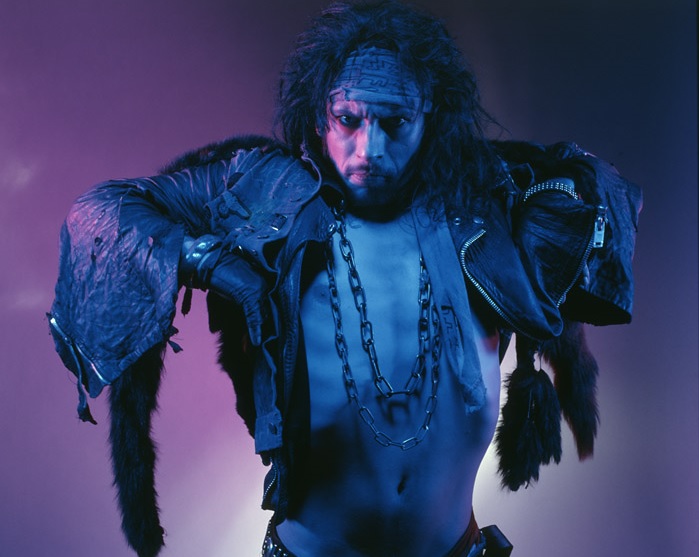
"I got a left wing, I got a right wing. I'm an angel, man." -- Zodiac Mindwarp

“I got a left wing, I got a right wing. I’m an angel, man.” — Zodiac Mindwarp

Plus I relish a certain amount of creative confusion, disinformation, and protective camouflage. No pictures of me appear on my books or the internet; half the people who know me have no idea of my metaphysical interests. My usual appearance of old hippy surfer or biker does not match my daytime profession. I tend to regard suits as formal dress for telling lies in. I tend to catch the bus or walk or cadge lifts because I find it more interesting than using a chauffeured limo, plus it has a smaller carbon footprint.

I would not describe myself as an unqualified libertarian. As Douglas Bader quipped “Rules are for the guidance of wise men and the obedience of fools.” Unfortunately not everyone can handle the freedom to question all the rules and assumptions. I would not advocate Chaos Magic for most of the world’s inhabitants.  Often the introduction of some surprise variables, or randomness, or an antinomian perspective, or some Chaos to a system requires careful planning and premeditation or mere Entropy (destructive chaos) rather than Apophenia and Obdaxazongaga (creative chaos) may result.

So now to my next question to you Sef: The HGA.

I’ve always wondered if seeking The Knowledge and Conversation of the Holy Guardian Angel seems like a good idea. The procedures for discovering it seem functionally indistinguishable from recipes for creating an obsession. It looks like a suspiciously monotheistic belief and thus a self-contradictory and limiting obsession with an ideal that has become effectively unattainable. You said that even with Crowley you follow the message not the man.  Does the OTO acknowledge anyone as having ever attained it?

All the best, Pete.