In recently reflecting on the way in which Punk has inspired my own process of awakening and self-understanding, I’ve also been prompted to consider how such self-actualization also asks us to question the norms and rules we inherit. Whether via my exploration of the Gnostics or the Thelemic-Tantra of the AMOOKOS work, the path of magic for me has always been linked to a project of self-sovereignty and a desire to explore what “Peace, Freedom and Happiness” mean as I live this life.
In our pursuit of occult heroism it can be easy to imagine that any sense of progress will inevitably entail some form if icy, isolate uber-human state. While our insights will often require that we question those norms adopted by both family and wider society, the deeper challenge may be to consider how we can radically reimagine and express our relationship with others.
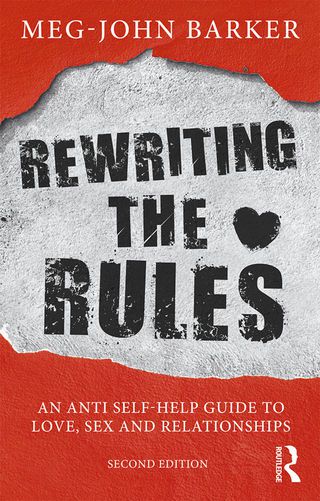
One of the most helpful books that I’ve encountered in recent years that reflects on our connections to others is Rewriting the Rules by Meg-John Barker. As the second edition of this book is about to hit the marketplace, I thought I’d share with you a review I wrote for the first edition that I published on Phil Hine’s fantastic blog…
“All of us inherit sets of rules and scripts about how we think we should behave and who we should be in relationships. Such beliefs often have their genesis in our families of origin, the cultural trends we imbibe and the shaping provided by our own experience and emerging sense of identity. In the process of trying to make sense of the pain and dislocation that many of us experience in seeking closeness and relationship, it can be tempting to “buy into” a set of apparent certainties. Recent trends in self-help literature have tried to make of the confusion by playing “The Game”, “The Rules” or by mapping gender difference according to planetary allegiance. While I can understand the impulse of such books in trying to find a cure to what ails us, I must confess to being highly unconvinced by their over-simplicity and gender stereotyping.
Rule book
In their book Re-writing the Rules Meg-John Barker provides a refreshing antidote to such works and a highly thoughtful and compassionate book that they describes as an “anti-self-help book”. For Barker the starting point in developing more healthy relationships comes not via seconding guessing the maneuvers of the desired “other”, rather it comes via a relationship with self in all its complexity. Self is presented as both an on-going process of change and also as a plurality of differing aspects that dialogue with each other. Barker’s insights are offered in spirit of openness and wondering-an attempt to explore the right questions rather than providing pat answers.
Part of the helpfulness of this work lies in the way in which the author focuses in on the nature of human relationships and current dominance of discourses around romantic intimacy. Barker skillfully weaves in both contemporary cultural references and philosophical acumen in critiquing the centrality of both heterosexuality and genitally focused intimacy. We are invited to move from a position of certainty and polarity, to one in which we seek to cultivate sensitivity to nuances and subtlety. Sexual minorities are not exempted from the danger of losing touch with our desires; the demands of identity politics often asking for a degree of labeling and certainty that some may feel less than comfortable about.
The structure of each chapter begins with a thoughtful reflection on the issues under consideration e.g. the rules of attraction, the rules of gender and then moves on to an exploration of the current set of beliefs that many of us find ourselves operating under e.g. “Relationships should be sexually and emotionally monogamous.” Barker then gently begins a process of questioning and deconstruction that ask us to re-evaluate. Meg-John’s own background in mindfulness practice and existential psychotherapy seem very evident during this process given the acute sense of awareness they display and the degree of compassion towards self and others that runs throughout.
The richness of this work defies detailed description in this context, but the chapters on sex, gender and monogamy resonated deeply with some of my own personal exploration. The chapter on sex examines the way in which insights from the Queer and Kink communities have challenged not only the linearity of “foreplay as a starter, intercourse as the main event”, but also the centrality of genital sexuality itself. In thinking about how gender effects how we do relationships together, Barker artfully unpacks Judith Butler’s thinking on the performance of gender and how we might loosen the tyranny of binary thinking.
One of the most enjoyable aspects of this book is the depth of its meditation on the nature of friendship. The chapters on the nature of love and commitment rightly question the qualitative distinction that we make between how we relate to “Friends” and “Lovers”. How might our relationships improve if we let go of the assumptions we make and unrealistic expectations that we often demand of those we have sex with?
Given the centrality of existential psychology within the book, themes regarding endings, loss and transition are thoughtfully and thoroughly addressed. Barker is highly aware that in times of pain we may naturally seek to retreat and defend ourselves, with this in mind they provide many helpful exercises and strategies with a view to developing greater presence, flexibility and compassion. As with the other discussions in the book, the aim of such work is not to prescribe a new “hipper”, queerer orthodoxy, rather it seeks to explore how we might experience a greater sense of freedom, both for ourselves and those to whom we are connected.
I highly recommend this work to anyone interested in a philosophically and spiritually engaging examination in how we challenge and re-write the stories that we have inherited about how we “do” intimacy. Meg-John has managed to produce a book that is at once contemporary, engaging and entertaining, while at the same time providing depth and vivid insight.”
Steve Dee




 The Blog of Baphomet