Today the first frost of winter has arrived in North Devon. The air is clear and cold. Low-angled, brilliant sunshine glints off the ice. The black limbs of the trees stand stark against the blue sky. The Wheel of the Year turns, in the northern hemisphere, towards the winter solstice.
The Pagan Wheel of the Year, an evolving hybrid of seasonal festivals, is one of my core maps of the magical universe. This cycle may be conceptualised in multiple ways: as the contention of the Oak and Holly Kings, the stations of the sun and the pulses of the moon, and as a modern re-imagining of ancient pre-Christian festivities. This Wheel, which turns and turns again, is the magical circle.
All the spiritual traditions I’m aware of yoke their practices to moments in time. Some of these rhythms are daily: three prayers in Judaism, four in Thelema, five in Islam. Others move with the annual seasonal changes; the inundation of the Nile around which Ancient Egypt religion was structured; the Vernal Equinox when light begins its slow ascendance over the dark; the coming of the blessed rains in other lands.
In my own spiritual practice, the Wheel of the Year is about tuning into the tides of the external and internal worlds, As Above, So Below. As these seasonal shifts occur, I pay close attention to the everyday rituals of life and how these change: the heating goes on; more layers of clothing are needed; it’s time to wear a hat. Other processes are culturally determined and invite deliberate ceremony, remembering our beloved dead at Halloween or celebrating our sexuality at Beltane.
Alongside, or perhaps at right angles to this Wheel, many spiritual traditions also posit a Tree, a vertical axis of spiritual progress. This may be imagined as the Great Chain of Being in Hermeticism, the sequential opening of the chakras, or the world trees of Mayan, Norse, or many other cosmologies; this is the axis mundi.
The Wheel teaches us the eternal return. The Tree invites us to consider a sequential unfolding, often imagined as a progression, a movement toward wholeness. In some systems the aim is to climb the Tree, leaving the earth behind, ascending to escape the change and decay that we experience within the Wheel of time. Other traditions emphasise the possibility of finding a deeper unity; not of escaping the material world but instead transmuting the lead of suffering into the alchemical gold of illumination, and in doing so to apprehend the divine nature of all things, from the height to the deep.
The Tree I’m most familiar with is that of the Hermetic Qabalah, which I began studying some forty years ago. That Tree has its roots in the fertile soil of esoteric Judaism, and over the centuries all manner of theological, symbolic, and occult elements have been grafted onto its ancient stock. Modern occult versions of the Qabalah are the result of many happy accidents where the syncretic grafting takes very easily. The convenient correspondence between the 22 letters of the Hebrew alphabet and the 22 cards of the Major Arcana of the Tarot is a great example of this. Having grown for millennia, the Qabalah has accreted a vast and sometimes overwhelmingly complex canopy of shifting symbolic layers.
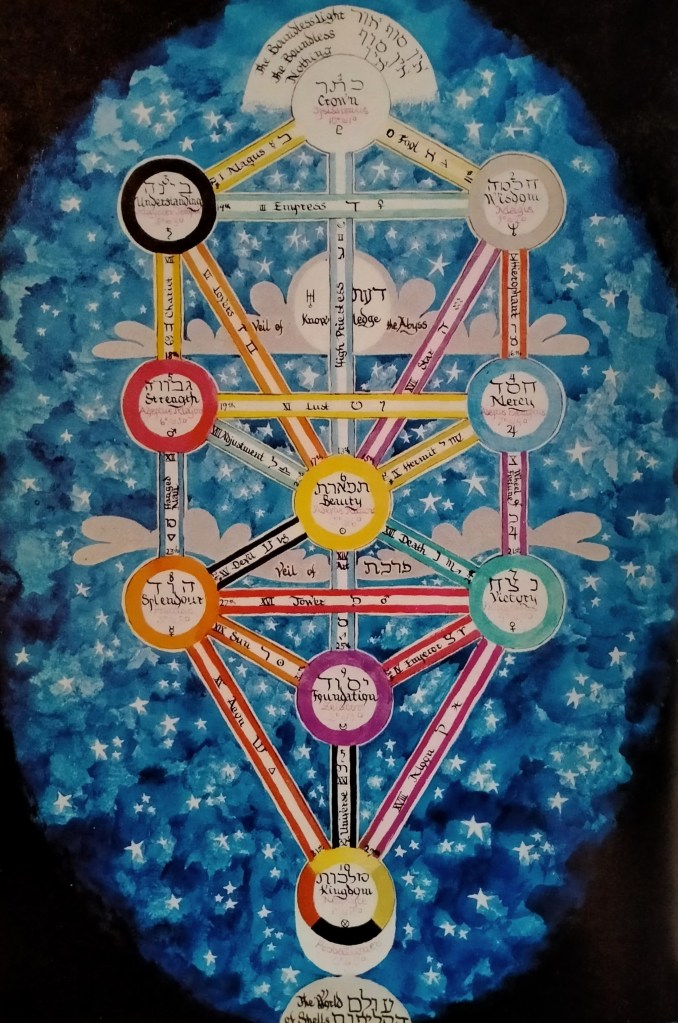
Over the last four years I’ve been steadily developing a tool to address this difficulty—an approach that helps students gain direct experience of the system without needing to memorise long lists of correspondences, colour-key scales, Hebrew letters, and so on. My method resembles the way we learn our native languages: we begin by speaking and listening and can become remarkably competent users of a language without consciously knowing anything about its grammatical structure. Of course, it’s wonderful to explore the deeper architecture and etymology of a language once we’re fluent, and that understanding may help us learn other languages too. But in magic our first teacher is always experience; my aim is to support that experiential process.
The approach I’ve created is called Paths to Inner Power, commissioned by the fabulous Treadwell’s Bookshop in London. It consists of a series of guided audio journeys or pathworkings designed to be used multiple times, and accessible for those with only a beginner’s understanding of Qabalistic symbolism. This is an experiential initiatory tool, not a collection of feel-good wellbeing meditations. Don’t expect, for example, the guided visualisation of the path of The Tower or the sephira of Geburah to be easy! People who purchase the audio downloads will also receive a transcript of each recording to help them decode the symbolism should they wish to go deeper.
Early in 2026 I’ll be doing plenty of more teaching with Treadwell’s Books, as well as with The College of Psychic Studies and Morbid Anatomy. I’ll also have the opportunity to be a student myself, by undertaking a professional Tantra Massage course with the excellent Sarah Sophia, in-person over four weekends in Glastonbury. Early-bird tickets are still available until the end of December if you’d like to join us. Check out the full listing on the Southwest Tantra website for details.
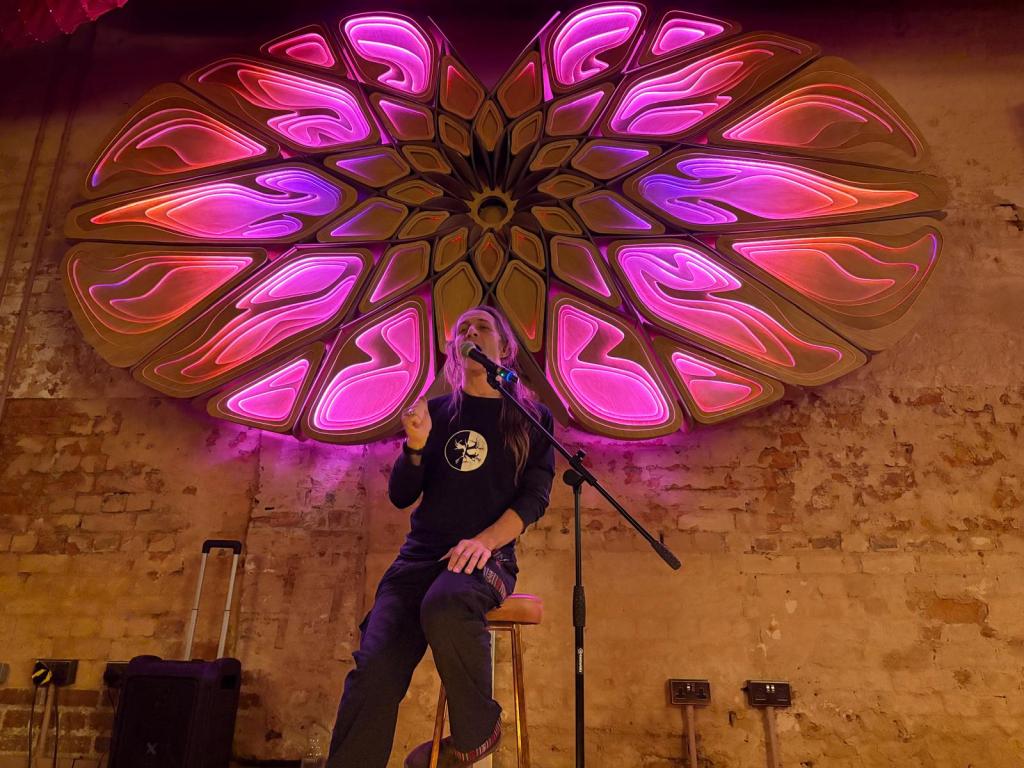
I’ve been overjoyed that my new book Trip Sitting: The Art and Science of Holding Psychedelic Space has been very well received. I hosted a launch event in London earlier this month in collaboration with The Psychedelic Society, and I’ll be doing more events with them both in person and online in 2026. Trip Sitting is available from Psychedelic Press and from Amazon, with an ebook version arriving in the next few weeks. We also have one signed copy of Trip Sitting still up for grabs for anyone who can successfully identify who is shown in silhouette on the cover. Answers on an email please to contactdeepmagic@gmail.com
I’d like to take this opportunity to thank all the people who’ve written to me this year with kind words about my teaching, mentoring, writing, and art. I feel deeply blessed to spend my time both exploring my own magical practice and sharing what I’ve learned with others. It’s still pretty weird being a professional (psychedelic) occultist — but it’s also exactly what I wanted to be when I was a child.
I remember a journey I made with my grandparents in the summer of 1982. They’d asked what I wanted to do during the school holidays, and I told them I wanted a road trip to Stonehenge, Avebury, West Kennet Long Barrow, Wayland’s Smithy, and a handful of other ancient sacred sites. Bemused but game, they loaded me into the car and we set off through the warm, seemingly endless English summer.
We visited the Vale of the White Horse to see the great ancient chalk figure. I remember standing on Dragon’s Hill a small, bald mound near the vast, sinuous horse carved into the hillside. I walked across the sun-soaked grassland to the head of the Uffington White Horse. Crossing the threshold of its rectangular head, I stepped into its eye.
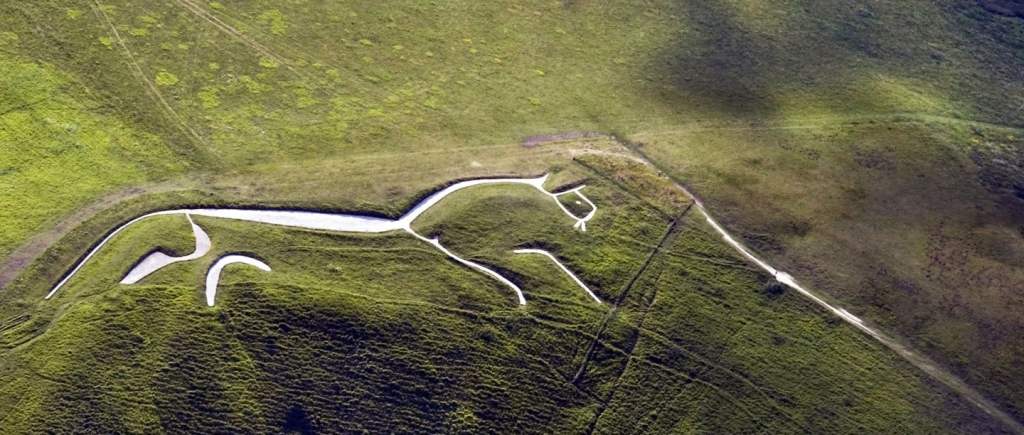
I had read somewhere that to stand in the eye of the Horse, turn around three times, and make a wish was a potent spell. So I did. And I wished to be a magician.
A self-fulfilling prophecy, perhaps, but one nourished not only by my will, but by the great good fortune of drawing so many good spirits, good teachers, good allies and good friends to me along the way. Thanks for being there team, I really couldn’t do it without you 💜
As the Wheel of the Year rotates around the Tree of Life, the magical X and Y axes of the universe, we follow the spiral pathway of our lives which combines them both. We traverse the World Tree, from birth to death, from separation to wholeness, cradled and nourished by the ebb and flow of the earth on which we live. Let us aspire to make this, our unique spiral journey, one of curiosity and kindness, of knowledge, power and pleasure. In doing so we honour those ancient teachings and carry the living, changing tradition of magic into the future, for us and all of our relations.
December 2025
December 4th & 11th Trancing in the Dark In this 2-part online workshop, I’ll explores methods to harness the dark for magical and spiritual purposes.
December 15th, I’ll be teaching a guest tarot teacher for the La Società Dello Zolfo as part of their Academy of Esoteric Tarot.
January 2026
8th, Opening the New Year, magical methods for welcoming in 2026 – from cleansing and banishing the old, to making room for the new.
10th, The Art of Magic – In person at The College of Psychic Studies, London, discover a variety of approaches to esoteric art-making in this workshop. Exploring traditional symbolic methods as well as automatic and natural processes.
13th, Cleansing, Banishing and Centering, creating sacred space for others or ourselves, sweeping away bad vibes, and discovering our still centre of power.
14th, Advanced Elemental Magic, in this foundational yet profound online workshop, we’ll explore the elements with the ‘four powers of the magician’.
20th & 27th, Magical Energy, a magical map of the invisible realm, teaching you the fundamentals of working with energy through in-depth discussion and hands-on methods
Februrary
12th & 19th, The Holy Guardian Angel, exploring a core practice from ceremonial magic: how to contact the spirit known as the Holy Guardian Angel
March
6th-9th, Hypogeum in Holland, psilocybin retreat with Nurse Jo, me and other members of The Fellowship of Psychonauts.
17th & 24th, Scrying Skills, the art of seeing visions in a crystal ball, black mirror or a flickering candle flame.
18th & 25th, Tarot Magic, beyond divination the tarot offers a complete symbolic system for meditation and magic.
April
1st, The Magical Fool, tracing the lineage of sacred foolishness from the medieval court jester to the cosmic pranksters of modern chaos magic
8th & 15th, The Angel and the Beast – Crowley and The Book of The Law, a deep dive into this short, explosive channelled work: its poetry, philosophy, magical techniques and enduring influence.
28th, The Magic of Place (Psychogeography), exploring the diverse methods to connect to the spirit of the land under one’s feet, whether in the city or countryside.
29th, British Folk Magic, a spirited tour of British folk-magical traditions, from ancient charms and witch bottles to cunning-folk spellwork and seasonal rites.
May
5th, 12th, 19th, 26th & 2nd June, Working with Spirits; From Angels to Elementals, a five-week experiential journey through the vast spectrum of spirit work, blending theory, history and hands-on practice. Together, we will explore the deep ontological questions about the nature of the spirit world, while also engaging in practical methods to meet and collaborate with these beings safely and meaningfully.
7th & 14th, Sex, Sorcery and the Sacred Body, an illuminating exploration of the magical uses of sex, pleasure, and the body across cultures and centuries. From the ancient fertility cults of Europe and India to the experimental frontiers of Thee Temple ov Psychick Youth and Chaos Magic.
21st & 28th, This Is Chaos: The Past, Present and Future of Chaos Magic, a deep dive of the evolution of this magical current; from its anarchic beginnings in post-punk counterculture to its impact on today’s digital and psychonautic subcultures, in both theory and practice.
And there’s more to come, stay tuned to my social media for updates.
As the Wheel turns around the axis of the magical tree I wish you a wonderful end to 2025 and a blessed arrival in the new year.
With all good wishes,
Julian
🍄💜🌈🙏
XxX
 The Blog of Baphomet