Gnostic Musings – Part 3, When Archons become Aeons…

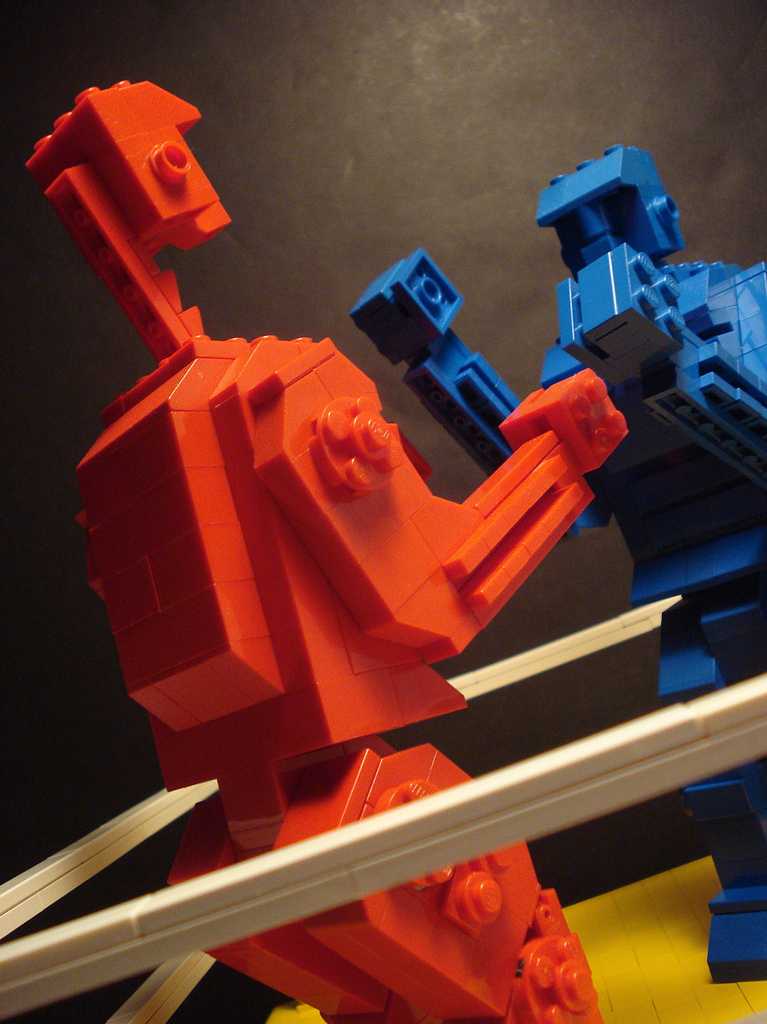
In part 2 of this series I was experiencing serious flashbacks to part of my day job as a family psychotherapist. In seeking to grapple with the dynamics at play within Gnostic cosmology it didn’t feel that dissimilar to the issues that arise in the therapy room. In one corner we have the Pleroma as the somewhat distant father figure, seemingly critical of his wayward son’s attempts in the other corner, to make his way in the multiverse (“Dad you just don’t understand! I just want to create and make stuff happen!”). In the middle of this conflict we have a somewhat care-worn Sophia trying to mediate between these two. It’s not easy being caught in the middle between numinous perfection you respect and a wayward but creative rebel you don’t want to lose.
Is there really only one way to find out…?

Like most families however, drawing in the perspectives of the wider system can bring new and interesting insights that provide balance and richness to stories that can easily get swamped with focusing on difficulty (a “problem saturated narrative”). In the case of Gnostic mythology, I was wondering whether the Aeons and Archons might help.

As intimated at the beginning of this series, Gnostic cosmologies are notoriously complicated and for much of the time it’s hard enough to know what’s going on, let alone what it might signify!  At the risk of over-simplification, Aeons tend to be viewed as extensions or hypostases of the Pleroma (and generally therefore viewed as the good guys) while the Archons are seen as having their origin from the realm of the Demiurge and connected to the “challenges” associated with the material realm. In some Gnostic schemas, those of us awakened to the divine spark within (the “Pneumatic”) must ascend through a number of layers or hierarchies associated with the Archons in order to reunite with the Pleroma. The methods employed on such a journey are manifold – magical passwords may be sought in order to level-up, and groups such as the Sethians seemed to have a complex system of baptisms used for opening up these realms.

For those of us with any connection to the wider Western magical tradition this will hopefully feel like familiar territory. With its heady reliance on Neo-Platonism, the Qabalistic tree of life and various systems of yogic psycho-physiology (Chakras any one?) most “Western” magicians will probably have a fairly ingrained sense that they should be either ascending or descending to something. While the use of such maps may be prone to the danger of getting stuck in taking either them or ourselves too seriously, they can provide helpful tools in seeking to avoid premature maturation.

While we could expend much energy debating whether enlightenment is a gradual or immediate experience of a non-dual nature, I’ll cut to the chase and let you know that it’s probably both 🙂 We may have glimpses of Samadhi or angelic epiphanies, but human nature usually dictates that we want to explore and “unpack” the significance of what such experiences might mean and how we should then live. This idea of a gradual unfolding also permeates psychological models such as Maslow’s “Hierarchy of Needs” and Erik Erikson’s “Stages of Psychosocial Development” as they grapple with the challenges we often need to meet in being alive.  Developmental research such as that done by Paul Gilbert (cf. The Compassionate Mind) also point towards the reality that our need to examine such complexity from a multiplicity of angles, is innately connected to the evolution of the human brain as it has sought to understand and prioritise the competing needs of human existence.

Our engagement with these different stages can take either an adversarial or integrative approach, depending on our chosen worldview. The archonic model can be helpful in that it provides us with a means for understanding the pervasive influence of “the spirits of the age” in perpetuating the dominant discourses of the cultures we are situated within. The Gnostics were often keen to resist these forces in that they were viewed as compounding the Demiurge’s imprisonment of human consciousness. Via the adoption of anarcho-magical strategies (including both asceticism and antinomianism) the Gnostic explorer actively sought to limit the impact of these forces so as to realise their true pneumatic nature.

Rulers can be useful

Rulers can be useful conceptual devices

While such an approach may be understandable from a more dualistic perspective, we may want to question its wisdom in relation to our psychological well-being.  If we view these challenges as being largely archonic and problematic, while a combative approach may provide an initial burst of anger fuelled resistance, we may rightly wonder about the sustainability of engaging in such conflict.

In this series of posts we have already touched on the way in which radical dualism was incorporated as one voice within the Corpus Hermeticum, and for myself  it is within the broader Hermetic and Western alchemical traditions that we find a potent synthesis of the integrative and adversarial positions.  Via the process of seeking to transform lead into gold, the practitioner works with resistance at both a macro and microcosmic level so as to bring change. Magicians are often those who choose to walk the treacherous path of transmuting those substances which others seek to avoid. The initiate’s vows of “Daring, Willing, Knowing and keeping Silent” challenge them to confront those obstacles within themselves formed by either genetic make-up or environmental conditioning. Arguably part of the ‘Great Work’ that we pursue in daring to “immanentize the eschaton” is the transformation of our Archons in order to make them Aeonic opportunities of becoming.

SD

Intent, Consequences and Virtue

The use of the Statement of Intent is a common feature of most rituals. This can be couched in Pagan terms ‘We meet here today to celebrate the festival of Samhain…’, in NLP savvy results magick style, ‘We rejoice as the project of fracking is abandoned in the British Isles’ or Buddhist friendly lingo, ‘We dedicate the merit of this practice to the liberation of all beings’. And though it’s undoubtedly important to spend time divining and formulating what it is we want our magick to accomplish, it’s also important to appreciate the rule of Unintended Consequences. There are lots of examples of this principle; the inadvertent increase in bio-diversity in some war ravaged parts of the world, or the increased use of fossil fuels as smoke free pubs put heaters outside to warm their patrons now banished into the chilly night.

Sure as eggs is eggs...

Sure as eggs is eggs…

Living as we do, in a complex world of every shifting inter-connected events, the idea of saying ‘I want X’, can never be the whole story by any measure. In fact I’d suggest that most of our magick operates as much through us, as something that apparently emerges from us. In those ritual moments, where we become conscious of the process we’re engaged in (celebrating Halloween, doing results magick or a spot of Tonglen), we’re actually pointing back towards the on-going process of our lives, reminding ourselves of what we’re doing just as much as casting our desires into the future.

Let’s say that you do a protection ritual for someone. The way in which the ritual is framed will emerge from your psychological state at that time. Do you choose to mirror the nasty stuff coming at you, returning it to it’s apparent point of origin? Do you attempt some cursing sorcery or ill-wishing antics? To generalise; the former policy (setting up protective wards, working to support those who are under threat and make them stronger, deploying blocking and binding spells), these betoken a much more nuanced, long-term and intelligent way of dealing with the problem than wildly stabbing at poppets or similar histrionics.

If you’re a poppet stabber chances are also that you’re caught up in a view of the universe characterised by fear and hatred. In such a state that old chestnut Lust of Result (assuming you think it applies in your model of magic) will probably be at a maximal value. It’s also likely that the law of Unintended Consequences will get you. This isn’t some kind of re-writing of karma or three-fold return but the simple fact that if you set out to do harm you’re quite likely to find quite the reverse taking place.

I saw a great example of this recently following the unpleasant trolling of friend where the anonymous emails sent her way actually galvanised a great up-welling of support on her behalf. This included messages of care and assistance from people she has previously had had minor disagreements with. In swinging his metaphorical club around the troll has stirred up a support group for their intended victim. This process included inadvertently calling allies with specialist computer skills, ideal for tracking down the miscreant. The actions of the nasty troll (who of course made some claims of curse-wielding powers) had had the unintended consequence of summoning a bunch of particularly helpful spirits to my friends aid!

Droll Troll

Droll Troll

Does this cut both ways? What if you act all starry-eyed and trusting in the universe? What of the unintended consequences of becoming a door-mat for those opportunistic, confused or just plain psychopathic people out there? There’s nothing in principle to stop that happening however this is where the idea of Virtue comes in. Developing a Virtue is the deliberate cultivation of a dynamic equilibrium between extremes of behaviour. There is, for instance, the virtue of courage. At one end of the continuum of behaviours we have foolhardiness, and at the other cowardice. Courage stands somewhere between them. By cultivating our virtue we seek to place ourselves in a balanced, yet dynamic relationship with the world, and in practice this means we usually have a wider field of perception. We’re better able to notice the unintended consequences (both positive and negative) or our actions and reactions to the world. We’re more flexible and more likely to be successful in what we do (and able to meet the lessons from our failures more honestly). (My favourite model of virtue is described in Character Strengths and Virtues by Christopher Peterson and Martin Seligman).

The person fixated on getting their way in the universe (bellowing Barbaric words at the top of their voice in the street and relentlessly pushing their monolithic interpretation of the world) is likely to be very far from virtuous. They miss the positive unintended consequences of their actions (from which they might theoretically capitalise) and the negative consequences (which could inform them to change tactics). Their obsessive desire makes them quite ignorant of what’s actually going on around them and, amusingly, the more they dig themselves down into their rut the easier it is for the unintended consequences – especially those that diametrically oppose what they want – to proliferate. They literally invoke their own downfall.

Both our daily lives and formal ceremonies may have all kinds of consequences, some of which we will never know (check out the excellent movie Cloud Atlas for a beautiful exploration of this idea). The aim of the wise magician then is to cultivate an on-going project of developing their virtue. This is a pragmatic sorcerous strategy to get us what we want (see my article HERE). Our virtue is reflected in our spells, in what we choose to pray for, and how we choose to act in the world. Those who spend their time Working to screw up the lives of others tend to end up friendless and screwed up themselves. Those who Work for wisdom, justice and humanity in the world actively create the conditions for those experiences to manifest. Such people are better able to weather the storms when times get tough. Moreover when the storm is done they’ve got plenty of capacity in themselves to enjoy the sun, and many loved ones around them with whom they can share it.

JV