Those of us who live far to the north of our planet are keenly aware that the dark is rising. Almost at the longest night of the year, this is a time that many people find both joyous and challenging. There are celebrations with family and friends and those poignant reminders of loneliness and loss, all stirred up in a whirlwind of eating, drinking, gift-giving and other revelry.
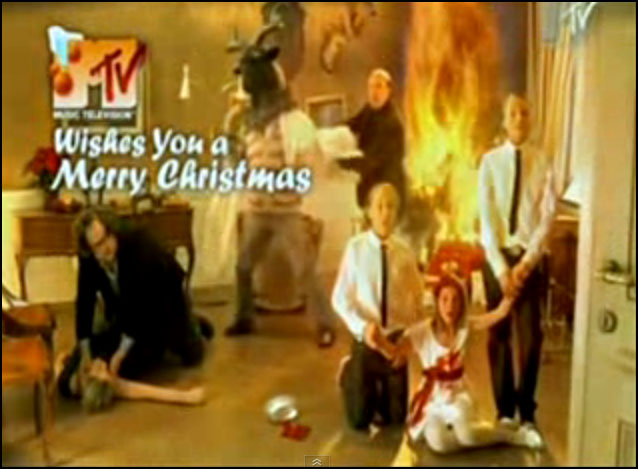
Illuminating Xmas Party
This is a perfectly chaotic time of the year. Where we are both madly excited party-goers and quiet sitting-by-the-fireside people. Where for some the ribald rituals of Saturnalia (whether enacted as a sly kiss under the mistletoe or the out-of-control wildness of the Office Xmas party) are to the fore. Yet for others; bereft of loved ones, hungry and alone, this is indeed the darkest of seasons.
As ever there are many forces aboard demanding that we tune in to their ‘true’ version of the Christmas message. Defining it primarily as a time for charity, or perhaps for conspicuous consumption. Actually a Pagan festival, or really a celebration of the mythopoetic birth of Christ.
In the Chaos Craft system that we’ve been developing Yule is connected to octarine, that mysterious hue described by Terry Pratchett in his Discworld novels (and perhaps alluded to also in the work of H.P.Lovecraft). Octarine is sometimes imagined as ‘greenish-yellow purple’ which, given the colour opponent process by which the human eye apparently works, should be impossible to perceive. The idea of octarine goes beyond our polarised structures, hinting at the possibility of other realities outside of our usual frame of reference.
Octarine, as well as the Yuletide season itself, can serve as reminders of the complexity and diversity of the world. A world where we can imagine that impossible colour of magic. A world in which Christmas can mean roast turkey, James Bond movies, football played on a pitch in no mans land a century ago, and much more besides. So rather than seeing the festival of midwinter as something rooted (like that German style Xmas tree) in one authentic truth or tradition perhaps we might imagine it as a multiple structure? This kind of multiplicity is what Deleuze and Guattari in A Thousand Plateaus call a rhizome; a branching, horizontally moving network structure (like couch grass or the mycelium of a fungus). The rhizome model is designed to counteract our tendency to see the world in predominantly arborescent terms. Not that there’s anything wrong with trees, but if we only use that one model, without questioning it, we can get horribly stuck in a limited perception of the world. (Especially if we are feeling a bit paranoid. Check out at all those inverted tree diagrams in the writing of conspiracy theorists.)
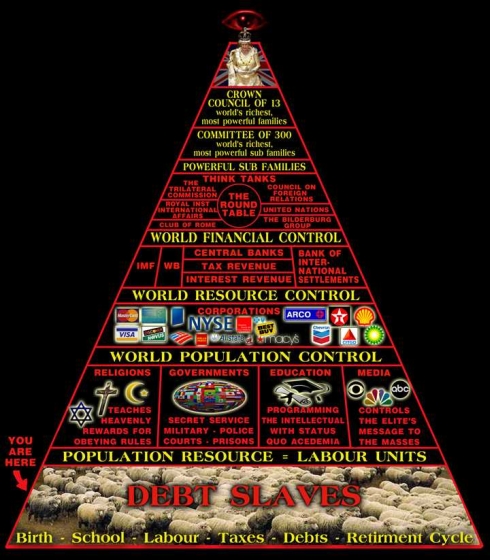
Architecture of a conspiracy
The evolutionary relationship of living things is often presented using the tree paradigm; a few weird worm things with long Latin names at the roots, with a picture of a human at the top. Then there are linguistic trees, trees to explain the development of political movements, of magical Orders, and of course your computer filing system can be described as a tree, with the root of C: and its branches.
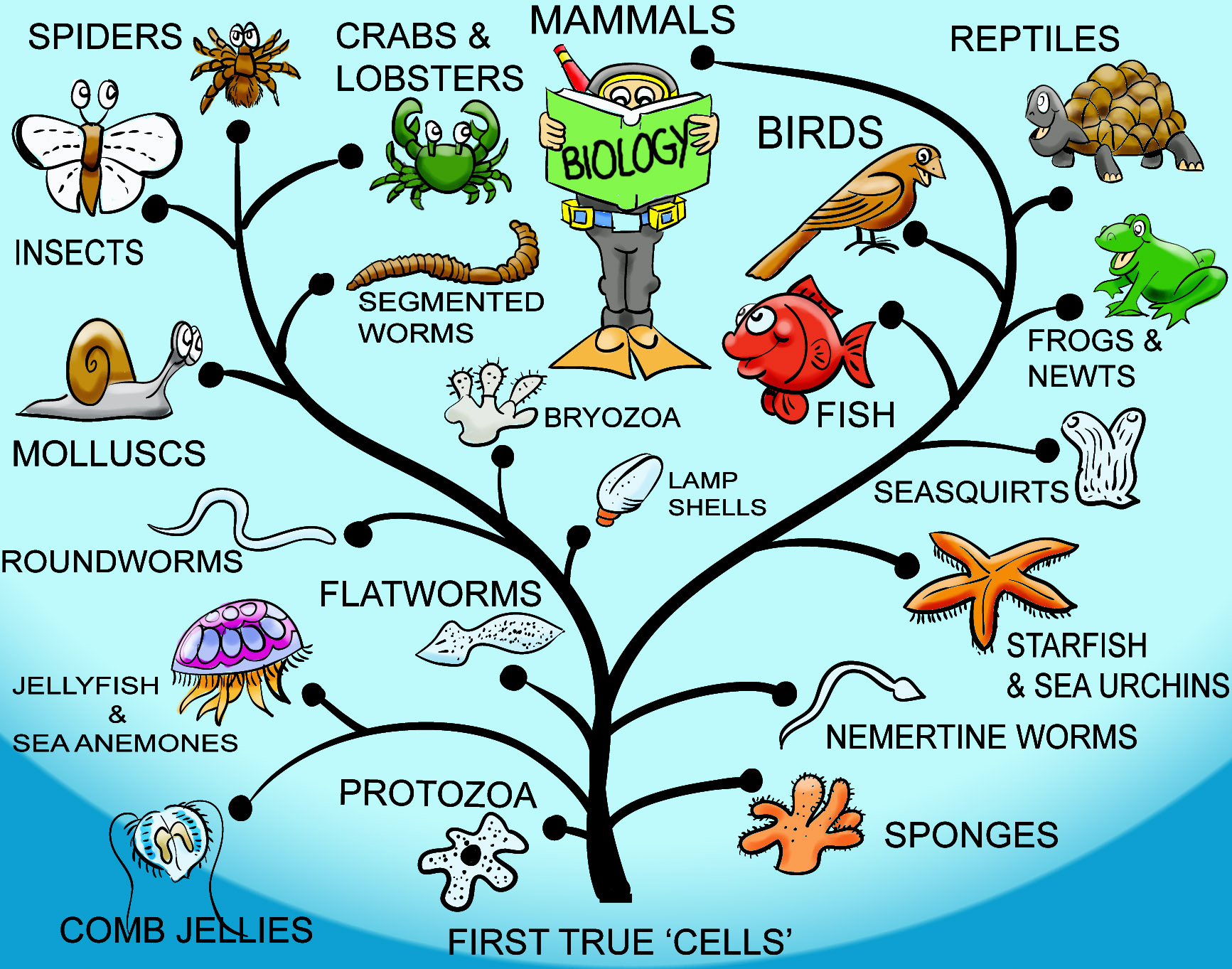
Simplified Tree of Life
Such models tend to emphasise the idea of origins; the root creates a trunk that splits into dendritic profusion. The ‘ten-thousand things’ can be traced back to a single Ur language, or cell, or whatever. But sometimes it’s good to think outside of the box (or tree). This is especially true when we look at human culture which can easily appear like Deleuze and Guattari’s rhizome; a multitude of words, traditions, neurons, transactions, and hypertext – with any part of the system capable, in principle, of connecting to any other.
In this rhizomatic model there is no ‘true meaning’ of Christmas, anymore than there is a definite shade to the colour of magic. Rather there is the ‘plateau’ of this season which anthropologist Gregory Bateson defines as ‘a continuous, self-vibrating region of intensities whose development avoids any orientation toward a culmination point or external end’. This view of reality stresses the and rather than the or – it’s non-dual in a multiple, polymorphous kinda way.
Using this model of the nonhierarchical network we can move like nomads in cultural spaces like ‘Christmas’. We don’t need to get fixated on trying to own this festival by claiming the primacy of its Pagan origins. Nor to get cross that Mithras rarely gets a mention these days. We can enjoy eating and drinking and also be aware of the importance of goodwill towards the less fortunate represented by this time of year. And more than this, we do not need to see these things in terms of simple oppositions but as part of a whole interwoven network of relationships.
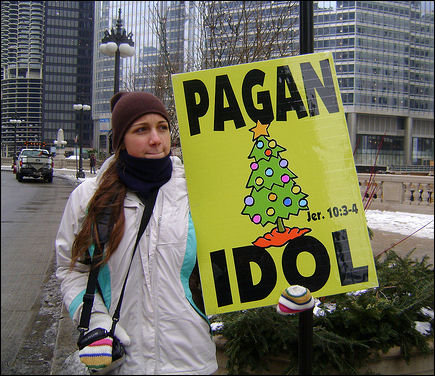
Tree worship
So enjoy being with your family this festive season. Be mindful of those who will experience this dark time without their loved ones. Eat, drink and be merry! Prepare to be terrorised by the ghosts of the old year, and welcome the December solstice as new light dawns in the North!
And, as we chaos magicians like to say, “Merry Christmas!”
JV


 The Blog of Baphomet