
Spiritual Knighthood

The challenge to find meaning in the midst of our lives can at times feel as elusive as a search for the Grail. Not only are we struggling to find out the location of such a desired relic, but we are also troubled by the suspicion that we are not sure whether we would recognise it if we did stumble upon it! In the midst of such uncertainty it can be tempting to abandon the quest as we feel overwhelmed by the multiplicity of paths on offer and their competing truth claims.

The desire to take up such a quest often indicates the beginnings of our awakening. As our dissatisfaction with the “answers” provided by family and society grows stronger, the hero within needs to separate themselves from the anesthetising effect of such dominant discourses. Some will be upset by our distancing behaviour and others may rage at our rebellion, but when we feel the inner-flames of purpose ignite, we know that psychic atrophy will result if we fail to pay heed to such stirrings.
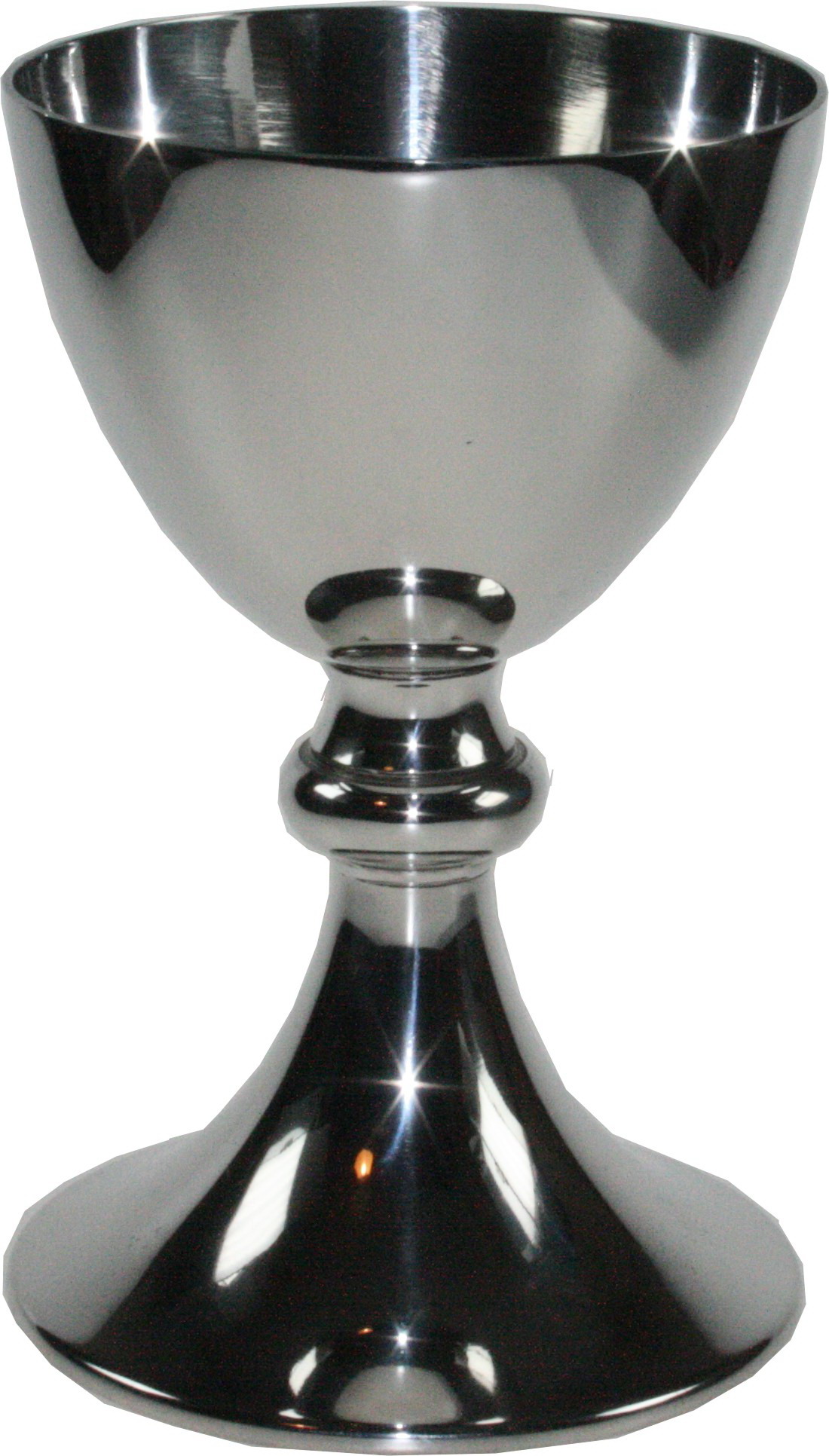
Whom does it serve?

Whom does it serve?

I have recently been reading Lindsey Clarke’s excellent modern adaptation of Wolfram Von Eschenbach’s Parzival, and within I have found deep wells of insight for those of us seeking to cultivate spiritual heroism. In the tale, Pazival’s mother seeks to protect her son from the demands of the world and the allure of knighthood by keeping him in state of naive ignorance. When he eventually meets three knights from Arthur’s court, he is so overwhelmed by their radiance, that he mistakes them for Gods. He is awakened by the brilliance of the sun reflected upon their armour and even the grief of his mother fails to divert him from his desire to pursue his destiny.

This idea of spiritual knighthood is an interesting one in that it offers helpful paths of transformation while also being fraught with dangers if not understood with considered subtlety. History is strewn with examples of groups and misguided individuals who have used the martial, combative focus of the knight in an externalised fashion. The recent horrors in Norway at the hand of Anders Breivik provide a sobering example of what happens when concepts of “honour” and “defence” are appropriated by the fearful or psychopathic. If we fail to see that our sword strokes need to focus on our own ignorance, then we may be prone to projecting our fear of ourselves onto some scapegoated “other”. Some may feel that the martial focus of knighthood is innately unhelpful, but it could be argued that our need to both attack and defend are so primal, that we need a means for transforming such desires.

As Parzival journeys along the road he finds that his certainties and self-perception are repeatedly challenged as he seeks to find the meaning of true knighthood and what it might mean to be worthy of the Grail. When he begins his quest, the literal and the masculine provide him bench-marks for how he should be in making sense of his universe. His first guru Gurnemanz is more than adept in teaching him the use of the lance and shield, but when considering matters of the heart and deep pain he is sadly lacking. It is this “stiff upper-lip”, don’t ask questions attitude that causes his initial failure when confronted by the wound of the Fisher King.

In keeping with the longings of the troubadours and the idealisations of courtly love, Von Eschenbach views the embrace of feminine wisdom as being critical in the transformation of our hero. The story of Parzival is full of wise female voices, and his struggle to integrate their insights is central to his endeavour to become a true Grail knight. Such transformation can be a far from gentle process as Parzival encounters women as wise-equals rather than as a protective mother. When he seeks to minimise his initial failure at the Grail castle, his cousin Sigune’s reproach of him opens up a sense of despair that drives his initiatory purpose deeper.

This process of seeking balance and necessary complexity is mirrored within the development of Tantric and Sufi traditions at similar points in history. The parallels between these traditions and the Grail mythology could be framed as a shared emphasis on psychological alchemy and a more nuanced understanding of gender roles. Time, hardship and mimetic evolution may have lead to the development of gender identities that are increasingly subtle and congruent with our inner yearnings, but I believe that the validity of these stories remain as expressions of how the dance of perceived polarity gets worked out.

Knights come in many forms

Knights come in many forms

In the same way that Parzival must contend with the repeated deconstruction of his self-perception as a knight, so his understanding of the divine must be abandoned and reborn.  Parzival must take leave of his naive perception of how God intervenes in the world and embrace an apparently dark world where he walks alone. He must move from his child-like certainties and embrace the adolescent energy of the adversary. Only as he exercises the existential bravery of staring into the void can he begin to experience the numinous in a new way. Sitting with the mystery or “Runa” and letting it speak to our own depths in its own terms may feel challenging, but the pursuit of true knighthood will allow little else.

I don’t want to completely spoil the ending, but it behoves me to observe that as the Grail itself represents something at once subtle, mysterious while holding great powers of healing, so the very pursuit of it seems to demand the development of such qualities in its seeker. In these times of existential confusion, the development of our own internal poise can feel like one of the few means of making headway. Even if old certainties no longer ring true and we feel driven on by the longings of our souls, we can still walk a path of spiritual heroism: here we acknowledge the limits of our knowledge and yet still choose to live and act in good faith.

SD
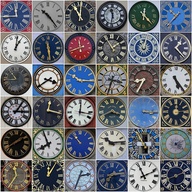
The Magical Technology of Fotamecus

Fotamecus is a spirit that I’ve worked with for several years, an entity with the power to assist us in expanding or contracting our subjective perception of time. I say ‘subjective’ advisedly – while we live in a world of atomic clocks and the connected pulse of internet timekeeping – as Dr Who observes, “People assume that time is a strict progression of cause to effect, but *actually* from a non-linear, non-subjective viewpoint – it’s more like a big ball of wibbly wobbly… timey wimey… stuff.”

Clocking the nature of time

Clocking the nature of time

I’ll give you a recent example. I needed to catch a train and had set out from home just a little too late. The inveitable morning traffic jam meant that I arrived into town only 7 minutes before the train was due to leave. While waiting at a roundabout on the road, watching the digital clock in my vehicle tick inexorably away, I chanted the name Fotamecus and deployed the Slow Time mudra. This is one of three mudras that were developed during the rituals which attended the filming of Chronomancy (I’ll explain the tech. in a moment).

Arriving at the railway carpark I had moments to spare. I grabbed my belongings and rushed into the station. In front of me a man was buying a complex ticket but even so I was still able to pay for mine and successfully board the train. Once sat down I used the Reset Time mudra to put time back into its normal course, and mentally thanked the Fotamecus spirit for its assistance.

Now of course as a chaos magician there are numerous ways in which I can look at the sequence of events above. I could say that psychologically the effect of placing my trust in an (apparently) external entity (ie Fotamecus) allowed me to relax and not to get flustered (and end up wasting time by doing stuff like dropping my keys, fiddling for change in my wallet, forgetting that I has already got the number on my phone needed to pay for my parking and so didn’t need to use the machine in the car park but could pay for the service once onboard the train).

Then there is the inner scientist which says ‘well hey, what about all those times where you used Fotamecus and it didn’t work?’ However the answer to that is ‘there aren’t any’. Now this doesn’t mean I, Fotamecus or whoever has absolute control over time. Had I left my house even later, or the traffic had been even more heavy, I probably wouldn’t have bothered with any magical shenanigans, but would have simply accepted the fact that I’d have to drive to my destination rather than take the train. This is part of the trick of magic. That the magician seeks to bend reality, to warp the possible futures of experience. There is little or no point in casting spells to achieve highly improbably outcomes. The skill of applied magic is finding where some wriggle room in a system exists and placing pressure skilfully there. (The story of the Taoist Butcher explains this beautifully.)

Then there is the animist or spiritist view of Fotamecus. That this is an entity which exists in something like another dimension (usually called the astral plane or whatever). This could means that the manifestation of this entity is a warping of the 4th dimension (duration) which has effects in the first to the third dimensions (the world of apparent objects). The spirit doesn’t exist only in a separtate reality but has some form of agency because of its emergence in dimensions beyond the 4th (check out this nice video, previously posted by Sef to this blog, to wrap your brain round multi-dimensional reality HERE). This means that what the spirit can do in our apparent reality can look miraculous. The emergent properties of the spirits’ character, and its abilities, may well be rooted in the 3D world (they exist as names, gestures, films, images etc) and are really no more tricky to explain than the fact that a cascade of chemical interactions emerges to form your mind reading this text.

So let’s get down to some magic-tech…

Developing a relationship with the spirit

It’s polite to develop a relationship with anythng your going to work with – people, entities, entheogens, tools. In the case of the spirits there are various models of how to do this. Perhaps one of the most obvious is the notion of feeding the spirit. In the case of Fotamecus I recommend the following:

Spend some time getting to know the spirit. Read its back story (some of which is HERE). Maybe create your own sigil, or use one of the ones that have already been connected to this entity, and place this on your altar or perhaps beside a clock in your home.

Have a party for Fotamecus. In Britain I do this when our clocks change; forward an hour in the spring and back an hour in autumn. Decorate the sigil or other represetentation of Fotamecus with suitable offerings (clock parts and dandelions for example). Watch films that you think Fotamecus would ‘like’ (aside of Chronomancy movies like Momento,  Ritual in Transfigured Time or Back to the Future  and lots of others, would work). Chant the name Fotamecus as an offering of practice – experiment with doing this slowly, faster etc.

Devotional Fotamecus wallpaper

Devotional Fotamecus wallpaper

Using the Fotamecus Mudras

These are three mudras designed for empty handed magic. They are based on one of the forms of sign language. They are best deployed after chanting the name of Fotamecus (at whatever speed or volume) to get into a light trance state and of course having first made your own connection to the spirit.

To slow time down: Extend your left arm, palm down, and slowly move the palm of your right hand up the left arm, stroking it from fingers to upper arm. This is a slow movement.

To speed time up: Hold your thumb, index and middle fingers out beside your right ear. Now quickly move your hand forward so the arm is outstreched, with the fingers closing as the arm reaches full extension (rather as though catching an insect).

To re-set time: Place the palms of both hands over the forehead, thumbs extended. Now pull the hands apart so that the hands end up roughly over the shoulders. As you do this the thumbs and fingers fold in (imagine you are strectching out an invisible blob of  ‘timey wimey’ something between them). As you make this mudra close your eyes for a moment.

Experiment with these techniques for yourself (and, of course, create your own) and you too can discover how time is on your side 🙂

Enjoy!

JV