Many of you will know that the Gnostics and I have got a thing going on. If I’m honest, one part of the attraction is that they have provided a reason for me to keep stalking Jesus, the other being that they had a pretty weird take on why our experience of life can seem a tad crappy (yes I am a magister of understatement).
For the religious philosopher the knotty issue of theodicy (the problem of evil) has always proven to be of a decidedly Gordian nature. Whether our gods are singular or plural, if we attach to them either omnipotence or omniscience then the reality of human pain is likely to raise some awkward questions regarding their goodness. For the fervent Dawkinite, the presence of suffering and disaster in our world is enough to render the possibility of godhead unlikely at best.
While recently revisiting some of the Gnostic’s primary sources in June Singers’ excellent “A Gnostic Book of Hours”, I was once again struck by the novelty of their solution to our experience of suffering:
Yaldabaoth (the demiurge) stole power from his mother (Sophia), for he was ignorant,
Thinking there existed no other except his mother alone…..
When the Arrogant One saw the creation which surrounds him
And the multitude of angels which had come forth from him,
He exalted himself above these and said to them:
“I am a jealous God, and there is no God besides me.”
The Apocryphon of John
When we attempt to engage with its primary texts we see a complexity and variation that mustn’t be minimised in an attempt to homogenise the subtle variety of narratives regarding our beginnings. While present day magical practitioners may reference “gnosis” in relation to the in-coming of new insights, many scholars of the early Gnosticism would view an emphasis on cosmic dualism as being innate to the traditions that they are seeking to categorise.
Certainly as we look at manifestations following on from the early historic sects such as the Sethians and Valentinians we do encounter groups that seem to have a decidedly negative attitude toward the realm of matter. While we may be heavily dependent of the polemical accusations of their opponents, from what we know about groups as diverse as the Manicheans and the Cathars, it is hard to deny that their views of the material realm were less than positive. In some ways this is hardly surprising given their life expectancy, infant mortality and dental care! While I might struggle with such perspectives, I’m also slightly anxious that my own rose tinted eco-consciousness may largely based on my own western privilege and the current availability of antibiotics.
As the Gnostics appeared to have placed a far higher value on a more experiential and non-historic approach to the Christ story, one might question the degree to which such cosmological models were viewed literally. I am however aware that in my desire to project my own image of the Gnostics as some sort of existential freedom fighters, that I might be glossing over their potentially hostile view of the material world.
Given the view that the material world was a vale of tears, it was perhaps of little surprise that they viewed such a realm as being the creation of a less than imperfect being or Demiurge i.e. “This god that you thought was the supreme being is at best a lesser agency and at worst a delusional and deceptive megalomaniac set on deceiving humanity.” The Gnostics tended to view their mission as an attempt to resist the Demiurge’s control in order to return to the perfect, true Source or Pleroma.
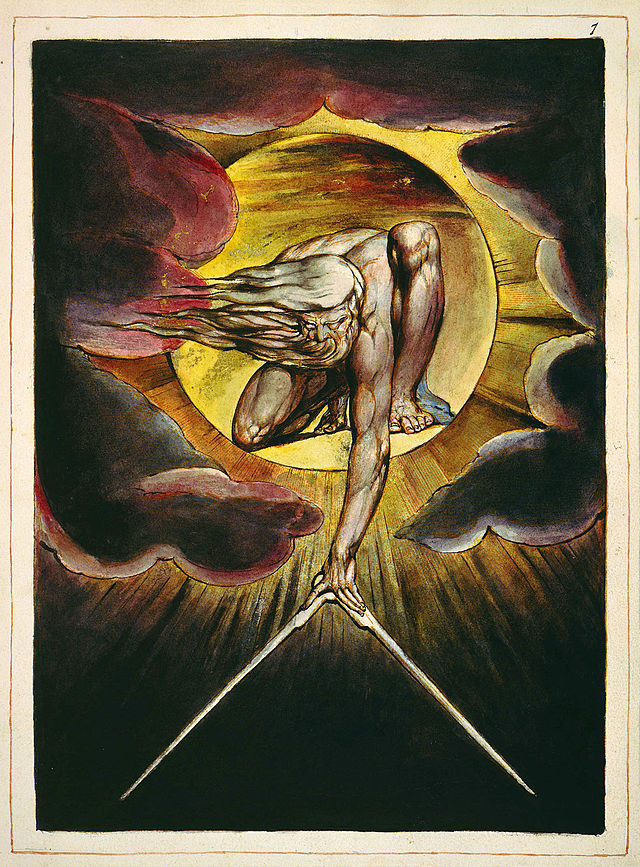
Ancient, no yays.
Now an understanding of such a dualistic perspective maybe critical for the purposes of our understanding of Gnosticism as a historical phenomenon, but many would rightly question the psychological and environmental wisdom of holding such a worldview. Many contemporary revivalists of the Gnostic tradition have emphasised the similarities between the gnostic message and the central dilemmas at the heart of the four noble truths [of Buddhism], and existentialism. Their core concerns regarding dissatisfaction and impermanence have considerable overlap with the Gnostic’s longing for a salvation away from the material.
The discomfort that many of us feel in adopting such a negative attitude toward the world that we know, means that many Neo-Gnostics adopt a more hermetic view of our origins. What we might describe as a form of “soft dualism”, relies on a more Neo-Platonic view of emanation where the reality (and messiness) of life on our planet results from its distance from the original divine source.
This softer perspective certainly allows a greater acknowledgement that we can experience the material world as both incredibly beautiful and pleasurable without having to view such experiences as being as a result of false consciousness. To experience the tension between the imminent and transcendent, the material and ethereal, is arguably at the core of the human dilemma.
Certainly within the Corpus Hermeticum we can see the tension between these two positions as the redactor of the current text has incorporated sayings that represent both a radically dualist and a more emanation based view. This tension between finding the divine in and through matter in contrast to abandoning it runs through the history of many religious traditions.
The blessed curse of human consciousness seems to be that the closer that we move to the potentiality of what we might become, so our desire not to be limited by the mortality of our bodies intensifies. Such longings need not translate into metaphysical realities, rather they reflect a widespread aspiration of consciousness that we often project into our belief systems. For the Gnostic this longing to continue beyond the terrestrial finds fulfilment through seeking a strange and Alien God!
While such contradictions and tensions might perplex someone trying to construct a coherent belief system, for the practicing magician, these polarities can be utilised in the exploration of some potent psychic territory. In my next post I will spend a bit more time examining both these methods and the vistas they may potentially open up.
SD
Recommended reading:
Curton, Tobias. The Gnostics and Gnostic Philosophy
Ehrman, Bart D. Lost Scriptures
Flowers, Stephen. Hermetic Magic
Hoeller, Stephan. Gnosticism
Pagels, Elaine. The Gnostic Gospels
Singer, June. A Gnostic Book of Hours
Smith, Andrew Phillip. The Gnostics
Trismegistus, Hermes. Corpus Hermeticum