
Review: Acts of Magical Resistance by Phil Hine

While the beginnings of many religious traditions are decidedly focused on the salvation, liberation or empowerment of the individual, they rarely remain as such. Given time to evolve and gaze outwards, many religious traditions develop a greater sense of collective responsibility, where the impact of any apparent awakening demands a response to the “other” and the world around them.

In considering such development, contemporary Paganism is no different and this concise work by Phil Hine provides us with a pacey and inspiring overview of the evolution of the political dimensions of Paganism within the UK scene.


Phil begins by mapping some of the origins of political conservatism within occult and esoteric circles, with writers such as Dion Fortune casting doubts over the spiritual pedigree of those who involve themselves with worldly politics. Such messages helped shape the reluctance within the magical and Pagan circles well into the 1970’s and early 80’s often leading to an absence of challenge to the mainstream positions in a way that translated into activism. For Hine this shifted radically during the ‘Satanic Panic’ that hit the UK in the late 80’s and early 90’s, which seemed to catalyse parts of the Pagan and magical communities into adopting a new radical openness in seeking to challenge the lazy stereotyping and misinformation so widespread in the media.

This work features some inspiring flyers and snippets from ‘zines from this time period that help capture the dynamism and punk rock energy that inspired many Pagans to greater acts of openness and heroism. Phil helpfully tracks a timeline of magical resistance before the late 1980’s as it manifested in Pagan contributions to the Greenham Common anti-nuclear protests, PAN: Pagans Against Nukes, Stop the City and the contribution of the PaganLink Network. These movements alongside seminal works such as Starhawk’s Dreaming the Dark (1982) helped ferment a new questioning as to whether “we are content to be spare bedroom Witches” with a limited vision of what our Paganism has to offer the world.

Moving into the 1990’s Phil paints a vivid picture of the collective ritual workings of the Dragon Environmental Network, Thee Temple ov Psychick Youth and Queer Pagan Camp as they sought to bring people together to challenge both ecological threat and attempts to limit sexual liberty.  These collective actions fostered community and helped create a sense that change was possible. The book provides us with insights into large group rituals such as the ‘Heal the Earth’ working (summer solstice 1987) and smaller sorcerous rites born from his time in the Leeds squat movement where the “magic of need” brought together activists seeking change in their immediate communities. These aren’t simply feel-good pathworkings in the hope of societal change, with rituals such as ‘Unleash the Furies’ illustrating how occult technologies such as Goetic working can be used to name, contain and then redirect contemporary demons such as patriarchal abuse or homophobic violence.

While this work is inescapably a challenge for us to move our magical practice and perspectives out of our spooky-club ghettos, it also manages to avoid the grimness that can feel present in our often near-exhausted activism. What I really enjoy about Phil’s writing is his ability to remain playful and humorous even as he is trying to describe the realities of trying to bring about political change. In a similar way to his ‘Liber Nice’ in his seminal Prime Chaos, he frames many group rituals as having a Discordian and almost Dadaist potential in being able to disrupt and undermine the bloated misuses of power that so often lay at the heart of oppression. When we are able to ‘play’ via our protests, so we model and embody a freedom that can even act as an invitation to those who we are protesting against.

The book concludes with a rich and diverse section on influences and resources to inspire. Phil reminds us of our heroic forebears such as Annie Besant, Florence Farr and those Kali worshippers who invoked her potency in order to challenge British colonialism. These spiritual allies and suggestions all aid what Phil calls “A Space for Wonder”, that can help us when our activism and protest might threaten burn-out or compassion fatigue. How can our Paganisms and practices reawaken creativity, openness and a connection with others? This is surely one of the primary goals of our magic and as such Hine urges us to embrace Wonder’s “alienating presentness”:

“Wonder propels us toward the unfamiliar, to seek new relations, to revel in dizzying complexity and richness. Wonder pulls us into the world beyond a limited horizon, beyond the certain, the familiar, the possible.”

In our current times, Phil’s book is a real grimoire for a magical engagement with our lives, our struggles and our joys. Highly recommended.

Steve Dee

Buy Act of Magical Resistance by Phil Hine


Coming up next…

Baphomet Magic – March 13th and 20th, 7-9pm UK time live and recorded.

Ghost in the Machine – March 25th, 7-8:30pm UK time live and recorded.
Psychotropics & Western Magic – April 3rd, 7-8:30pm UK time live and recorded.

Aleister Crowley & Liber AL – April 8th, 7-8:30pm UK time live and recorded.
Breaking Convention, Europe’s largest and most diverse conference on psychedelic consciousness. 17th-19th April at The University of Exeter.

The History & Practice of Scrying – May 15th, 7-8:30pm UK time live and recorded.

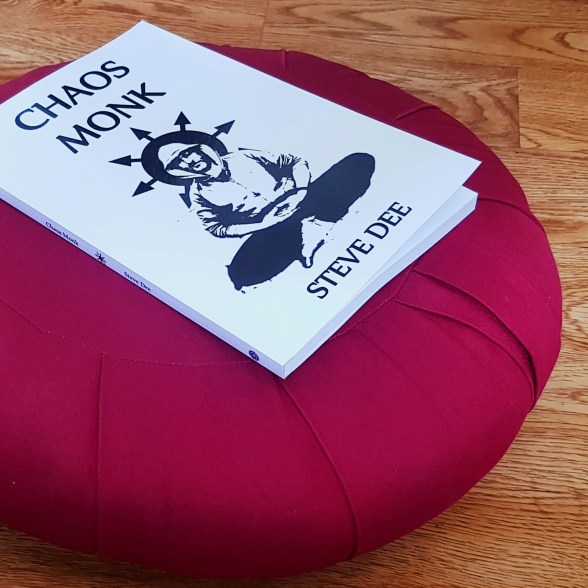
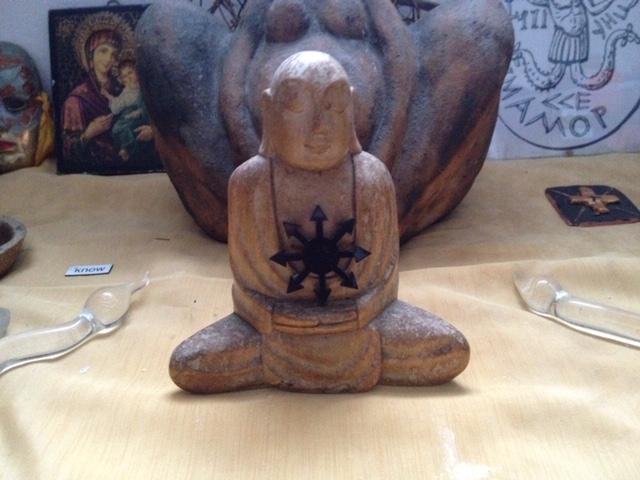
Chaos Monk

The prolific Steve Dee has written a third book! Chaos Monk offers an unexpected fusion of New Monasticism and Chaos Magic, demonstrating that it is possible to simultaneously be devout and fully embedded in the everyday world…

Steve writes: This book is an invitation to spiritual intensity. In the face of life’s brevity, it seeks to offer a challenge to consider what truly matters and how we might find skilful means for exploring such a question. As the pace and pressures of daily living seek to crowd out our ability to find space and silence, I believe that those traditions and techniques associated with monasticism provide vital keys for regaining our balance. While some may view such paths as ones of restriction or severity, as we travel together I hope to demonstrate the profound value of what simplicity, faithfulness and accountability might bring us when viewed through dynamic and responsive lens of Chaos magical practice.

This book is a deeply personal one, and unapologetically so. The impulse to engage with the monastic current runs strongly in my veins and it continues to be a deep personal obsession. When I started my spiritual journey at age 10, I was captivated by images of orange clad ascetics from both Hindu and Buddhist traditions. Now, as an adult, I ask: Why do I continue to be drawn to a path that emphasizes asceticism and discipline? What draws so many people to the form of stark spirituality that monastic traditions represent? How might contemporary explorers distil its essential components? This book seeks to explore such questions and describes how my own journey into contemporary magical practice continues to include monastic dimensions within it.

Sitting still is where it all starts. Only by ceasing to move can we gain access to the state of mind necessary to begin moving. Both in our psyches, and in our lives, we carve out a space which is our own to pause, to take stock, to commune with our higher Self. And then, with our feet in the right place, we take the steps necessary towards our goals, in fellowship with our communities. The modern monk constructs their cell within the everyday world.
This book helps to model some of these processes for you. It contains personal examples, historical reviews of Monasticism through the ages, gentle prods to keep things moving, and reflections upon what such a pilgrimage might mean. The alchemy of transmutation applied to the soul takes time, but gives us gold.

“A profoundly beautiful exploration of spirituality, magic and self that I consider to be one of the most important books I have read on the subject in many years. Particularly relevant to this era, Chaos Monk is intellectually satisfying whilst presenting an eminently practical approach. This book examines internal and external realities and the tensions they generate; acknowledging wider relationships that impact upon magical and spiritual development. Referencing Tantra, Thelema, Monastic Traditions, Chaos Magic and psychology, ‘Chaos Monk’ structures a template for the development of a long term, pertinent, spiritual approach to the self and the times, and as such should be an essential component of every committed practitioner and seeker’s library.” Charlotte Rodgers, creator of sculptural art works, writer of books which include P is for Prostitution: A Modern Primer, The Sky is A Gateway Not A Ceiling, and The Bloody Sacrifice.

“An exhilarating journey through chaos monasticism, a mystical practice informed by chaos magic. Accessible and clearly written, yet informed by a deep knowledge of the history of spiritual movements in both East and West, decades of magical practice, psychotherapy and art, this is a book for anyone with mystical leanings who wants to put them into practice. The first part describes the theoretical basis of chaos monasticism, and the second part shows how to put it into practice. Steve offers genuinely original spiritual exercises to help you develop your practice and introduces an element of play into the inner work. He also taps into the important mystical streams of apophatic theology and the dark night of the soul, and offers an exploration of one of my favourite spiritual practices, lectio divina. Other practices offered here include pilgrimage, psychogeography, and pathworking, all of which are great ways of engaging with sacred space and time.” Yvonne Aburrow, author of All Acts of Love and Pleasure: Inclusive WiccaDark Mirror: The Inner Work of Witchcraft; and The Night Journey: Witchcraft as Transformation.

Chaos Monk is a book I’ve been looking for for quite some time as it helps fill an often neglected area in the Chaos Magick approach—Mysticism! Steve Dee has an in-depth look at what a modern day monastic approach to Chaos Magick might look like. He draws from the past and other approaches but ultimately supplies the reader with some practical and useful ways of actually going out and doing it in a modern world setting. His thoughts on Chaos Mysticism, and his approach, ideas, and insights really resonated with me. I can only imagine that there will be a large number of people in the Chaos Magic community who will be well served by this book.” Tommie Kelly, Irish artist. musician, and writer, best known for his oracle deck The Forty Servants.

An Invitation
This is a call to come to the Quiet,
Those spacious places of the deep self.
This is a desert place found by the few
And others may laugh and call your journey madness.
Darkness is here
And only the brave can see that it holds the most brilliant of lights
Come, come my friends,
Come sit with those who are seeking the other side of silence.