Pieces of the Witch

In my most recent book The Heretic’s Journey: Spiritual Freethinking for Difficult Times, I spent time exploring how the Surrealist movement embodied a radical form of self-exploration in their philosophy and the artistic expression for which they became so famed. What follows in a short excerpt and ritual exercise from the book for you to play with:

Whichever media the Surrealists worked in (Painting, poetry, drawing) one of the consistent themes that runs throughout the School, is their desire to work more overtly with the unconscious aspects of self. We have already considered the prevalence of dreams and dream-like states in the work of occult inspired artists such as Ernst and Carrington and the way that their work often used the juxtaposition of strange, jarring images as a way of articulating often pre-verbal themes that emerge from the deepest dimensions of being.

The Surrealists were renowned for their inventiveness in developing a vast range of artistic techniques and strategies for seeking access to the creative dimensions of the unconscious self. This involved everything from relief rubbings (“frottage”), automatic painting, the creation of dream resume and the artistic use of old parlour games such as Exquisite Corpse. One of these techniques that the surrealists utilised to great effect was that of collage.

Collage (from the French coller, “to glue”) is a technique of assemblage in which the artist brings together a number of different media and pulls them out of their original context in order to create a new reality in which radically different ideas and textures can overlap, contrast and interact in the eye of the viewer. Historically while examples of collage can be found in 10th century Japan and in the Cathedrals of Medieval Europe, in relation to its use in Modern art, it is generally agreed that it was primarily developed in the works of Georges Braque and Pablo Picasso from 1912 onwards.

Max Ernst’s artistic expression was hugely innovative. He is credited with the invention of the frottage technique and also made use of other approaches such as decalcomania (pressing paint between two surfaces). While Ernst worked in a wide range of media his work with collage is especially inspiring. In works such as his surrealist novel Une Semaine De Bonte: A Surrealist Novel in Collage (1934) we witness his exploration of the jarring and animalistic dimensions of self.  As Ernst himself observed regarding his often absurd combination of images, objects and text, they “provoked a sudden intensification of the visionary faculties in me and brought forth an elusive succession of contradictory images… piling up on each other with the persistence and rapidity which are peculiar to love memories and visions of half sleep.” (Quoted in Ernst by Ian Turpin pg. 7)

max1

Cutting things up with Uncle Max

Within his collage and his work more generally, Ernst repeatedly utilizes the symbol of the bird as a representation of himself. He named this avian manifestation of himself “Loplop” who he saw as the “superior of the birds”. When viewed through a more occult lens, I am struck by the potential parallels between these images and the concept of the Witch’s familiar or the animal aspect of the self, referred to as the “fetch” in Norse soul lore.  Via its window into the darker, unconscious aspects of self, collage provides a means through which strange and even macabre images can provide insight to our own process of self-understanding.

Exercise: The Witch’s Collage

I will state at the outset that there are a myriad of ways of working magically with collage, and I offer this exercise as but one example (albeit a creative and tested one!) for intrepid explorers to utilise. Unlike their more randomized Postmodern cousin Cut-ups, collages seek to work more deliberately with aspects of the unconscious from the outset of the artist’s project of creation. Hopefully having begun a process of reflection regarding your heretical inspirations, as we begin this activity, the images, symbols and colour associations will begin to bubble to the surface!

To provide you with a bit of structure you might want to follow some of the following steps:

  1. Find the images and symbols that you feel capture the essence of your journey into heretical freethinking. Don’t be weighed down by the expectations of others! If cartoon heroes or industrial noise musicians do it for you include them alongside more standard spiritual symbology.
  2. Assemble art stuff. At a minimum you will need scissors, glue, pens and pencils. Coloured paper of differing textures work and you may want to incorporate pieces of text. Your imagination is the only real limit here! Make sure you have a large piece of paper or card (A3 or bigger) so that you have enough space to stick your stuff onto.
  3. Find a space that you feel comfortable in. Ideally you should be able to spread your images and materials out so that you can see the possible directs that your collage can take. Personally I like having some music on to inspire me and I usually need a minimum of 45 minutes to an hour to let the collage take shape. Having a time limit can also be helpful for this specific exercise in that provides an end point rather than having to struggle with that sense of not knowing when you’ve done enough.
  4. Like the approach of sleep, light hypnosis and some meditative states this work will be best approached with a sense of playfulness and a desire to not take it too seriously. Let your eyes move over your assembled materials and images and simply begin. You can’t get this wrong and your images and textures will build up during the duration of the work.
  5. Often our results can surprise us. What I love about collage is the way in which it can have various pockets of activity and interest. Our eyes may be drawn to one thematic cluster only to realize that there’s something really interesting in another part of our work.
  6. When our collage is completed, we can put it to any number of ritual uses. I often place mine in the corner of the house where I meditate and do ritual work. This allows me to come back to it repeatedly and spot emerging themes.
  7. Given the connection between collage, the unconscious and the realm of dreams, one interesting practice could involve placing your collage under your bed or pillow prior to sleep. Spend some time before sleep meditating on your collage and let the interplay of images and textures enhance your nocturnal journeying!
max2

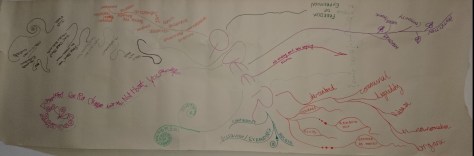
Here’s one I made earlier 🙂

Steve Dee


Events update…

  • There are still a few places available for Julian’s workshop on Sigil Magic in London on the 27th of July at Treadwell’s Books.
  • You can also join Julian for a Magical Words workshop at The Museum of Witchcraft & Magic in Boscastle, Cornwall on Saturday 31st of August.

Details of both workshops can be found HERE.


Breaking Convention: 16-18 August 2019, London, UK

Nikki and Julian will be at Breaking Convention, Europe’s largest conference on psychedelic consciousness. This is set to be an epic event. As ever Breaking Convention brings together under one roof scientists, medics, artists, shamans, and many more at one of the most intellectually rich and inspirational gatherings in the world. Highly recommended! Book your tickets HERE.


deep title 1

Nikki and Julian will be running Deep Magic camps and retreats in 2020, bringing together freestyle shamanic techniques and wisdom from indigenous medicine traditions. To find out more please ping us a message letting us know a little about your spiritual practice and experience with altered states of awareness. These will be intimate, powerful, accessible and transformation events. We hope you will join us as we go deep into the magic! Ahoy!

heretics

Queer Magic in Theory and Practice

The relationship between magic and queer is something that Steve Dee and I have explored in multiple articles on this blog (do a search for ‘queer’ to find them). Recently I had the opportunity to put some of these ideas into practice during my Queering Magic workshop at Treadwell’s Books, London.

The word queer relates, among other things, to notions of sexuality, gender and identity. More broadly it can be taken to suggest liminality, uncertainty, curiosity and the disruption of (apparently) fixed systems, through to what Freud would call the ‘uncanny’ and others might describe as ‘the weird’ (or wyrd).

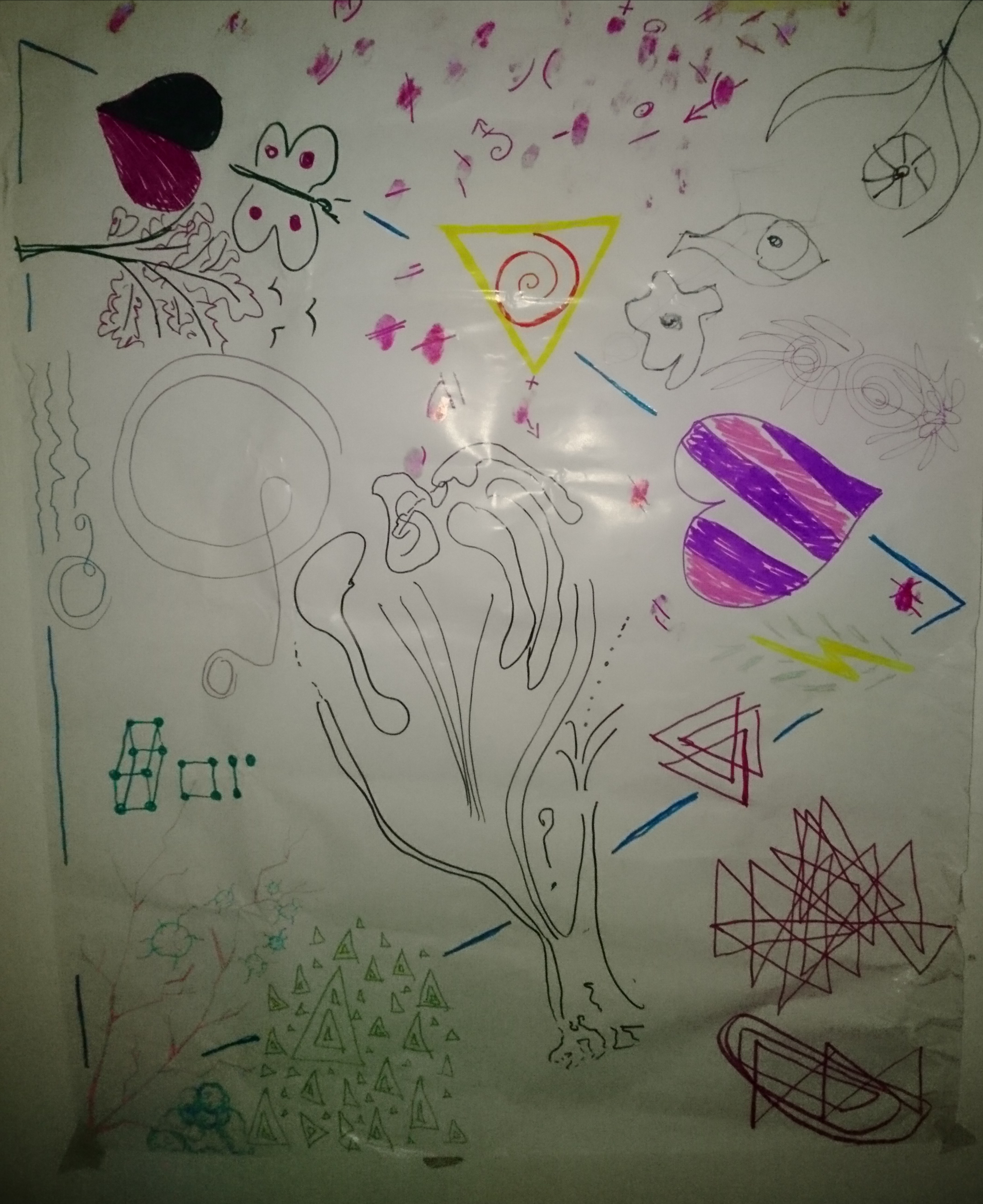
With such a broad and morphing constellation of meanings it’s interesting to attempt to articulate these, and at the workshop that’s what we did, both in writing and through colour and form.

DSC_3556

queerwords.jpg

Queer connects us to mythical and historic figures; bisexual deities such as Pan, the Divine Androgyne of Hermetic mysticism, and our queer ancestors from Aleister Crowley to Tove Jansson. Identifying these allies makes a real difference when it comes to claiming our own identity as queer people and especially as queer occultists.

Seeking historical exemplars helps us recognize that we stand in a lineage of queer folk. Knowing this history helps challenge the view that wyrd-kids-today are adopting non-binary identity simply as a fashion statement. That was the kind of thinking behind Clause 28, a bit of British law from the 1980s designed to stop regional governmental bodies “…intentionally promote homosexuality or publish material with the intention of promoting homosexuality” or “promote the teaching in any State funded school of the acceptability of homosexuality as a pretended family relationship”. (Those who find this kind of repressive legislation repulsive should know that they are not alone. This law was repealed by the then new Scottish Parliament in 2000 as one of their first legislative acts, and in England and Wales in 2003.)

Rather than something ‘new’ growth of the queer in Western culture represents a recognition that human identity, social roles, gender and sexuality have actually always been multiple and complex. The queer isn’t something original, as much as a recognition of what has actually always been the case. Supporters of this increasingly visible culture (like me) enjoying pointing out that many other societies (notably those of many Native American nations) include much richer, often more fluid, vocabularies for describing gender and sexual identity. Physical gender is a continuum or field of possibilities, sexual preference or social role even more so. This is why I like queer, it’s a useful umbrella term which reminds us to keep in mind – or in ‘play’ as Jacques Derrida might say – the mutability and flexibility of human nature. This isn’t necessarily a rejection of words like ‘gay’ or ‘male’ but rather queer acts as a reminder that these labels are convenient, contingent fictions and subject, like all things, to flux.

Magic, according to Crowley in 777, is ‘energy tending to change’ and more famously “the Science and Art of causing Change to occur in conformity with Will”. Thus the relationship of magic, change and queer(ing) is apparent at a deep esoteric theoretical level as well as in the actual lives of many occultists.

As we explore the meanings of queer we find it in contact with many other words of magic. Take for example the etymology of the word ‘witch‘. Grimm suggests that *weik- “to curve, bend” and *weg’h- “to move” (in a “mysterious” way) are concepts at the root of ‘witchcraft’. Such an imaged etymology of ‘witch’ contains ideas of bending or twisting both as demonstration of mysterious control (‘the witch bent men to her will’) or a turning away from the right/true/moral (ie socially acceptable) path and instead following of the a ‘road less traveled’ or a ‘crooked way’. ‘Witch’ exhibits Similar negative associations of spoiling or going wrong that have been linked to queer. The potentially transgressive, antinomian and outsider qualities of ‘witch’ are echoed in ‘queer’ in that both words have been reclaimed, recuperated and re-imagined not as epithets of denigration but instead identities of celebration, empowerment, transformation and resistance.

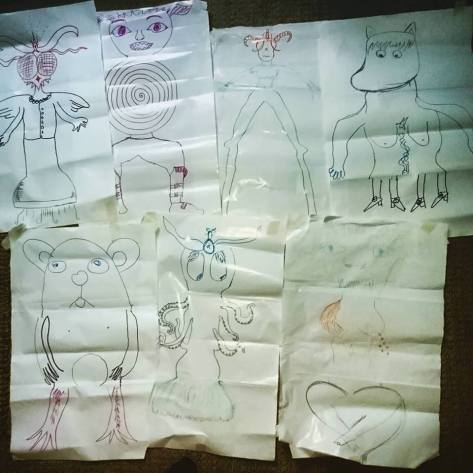
In a mythological context the ‘cut-up’ deities of Baphomet and Abraxas can also be considered pretty queer.  These spirits have obscure backstories and yet, especially in the case of Baphomet, a wild proliferation of forms, imbued with multiple meanings. ‘Baphomet’, like the ‘queer’ is a placeholder for an uncertain, powerful, morphing ‘energy tending to change’. At Treadwell’s we decorated our ritual space with Baphomets generated through the ‘picture consequences’ or ‘exquisite corpse’ method. Here are a few of the chimeric beings we spawned:

baphpics

Queer Truth is mutable and multiple.

There are of course those folks who, for whatever reason are unsure of all this queerness around magic. A few esoteric writers, typically of the probably-gay-but-unable-to-admit it type are hostile to queer cultures. Heteronormativity is writ large in the worlds of polarity structured occultures (such as Wicca) and also Medicine Path groups (where the language of familial heteronormativity often appears in ceremonial songs) – but this is changing. (By Medicine Community I mean folk using psychedelics such as ayahuasca, peyote and other sacraments as part of their spiritual process, often in a way informed by ‘native’ practices.)

Wicca has proliferated into many forms where queer identity is welcomed, celebrated and included. There are indications too that in Medicine Community contexts where previously there was only a relative mono-culture of male-female tropes, a richer linguistic ecology is developing. We can see how people wrestle with the boundary crossing experience that ayahuasca and other psychedelic drugs induce, sometimes in cultural settings where diverse sexual identity doesn’t necessarily get acknowledged. For more on this check the work of Clancy Cavnar for instance this article and this presentation.

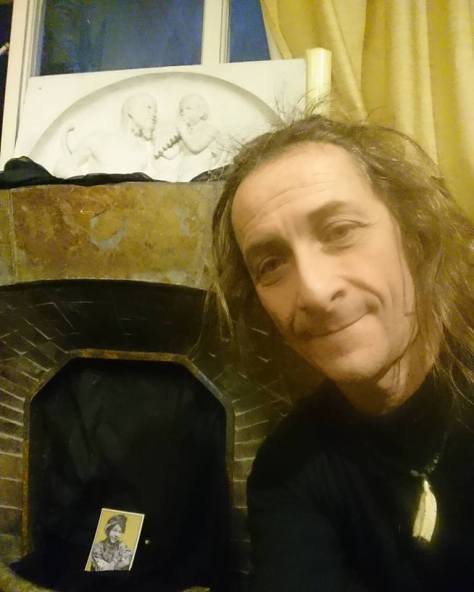
Back at Treadwell’s, part of our practice was to collectively offer our thanks to the artist, queer icon and Golden Dawn initiate Pamela Coleman Smith. ‘Pixie’, as she was affectionately known to her friends, lived in the Cornish town of Bude where I’d previously done magical work intended to re-ignite interest in her phenomenal oeuvre.  Following recent repairs to her former home Treadwell’s was able to acquire Pixie’s original fireplace. This charming ovoid hearth now stands in the basement of one of the leading bookshops and venues for the sharing of magical practice in Britain. A fitting place of power to house this magical object. Our group took time to appreciate Pamela Coleman Smith, the woman who designed the best-selling classic modern tarot. A woman who lived for many years with her female companion. A person, I’m pleased to report, increasingly recognized and celebrated as a key figure of the Western magical tradition. (Check out this wonderful new collection of writings on, and art by, Pamela Coleman Smith.)

pixie

Fireside conversation with Pamela Coleman Smith

Whether we wish to claim an identity such as ‘queer’ for ourselves or not my feeling is that occultists of all stripes can benefit from an exploration of these ideas. For those who apply the word to themselves and their work, seeking out mythic and historical allies, and recovering, creating and honouring their stories is vital work. For the queer spaces in culture are not themselves inevitable or irrevocable. For this is ‘energy tending to change’ – it is all those ongoing acts of witness, of rebellion, or bravery and of ‘queer truth’ that act together to create and maintain this space. A queer space in culture where the diversity of human experience can be shared and valued rather than repressed and feared.

Thanks to all those that came to the workshop and respect to all those queer wyrd people wherever and whenever they may be!

Julian Vayne

A few more thoughts on ritual process, magic and queer here


PS I’m doing another workshop at Treadwells in May on psychogeography, hope you can join me for some magic in the streets of London. 🙂