Heretic Heroes (Part 2)

Book Review: Andrew Phillip Smith The Lost Teachings of the Cathars, Watkins Books 2015

It’s easy to get overwhelmed when trying to get your head around a religious movement. The moment we get beyond catchphrases and pop culture references, the ideas and experiences that lay behind words like “Tantra” or “Gnosticism” can quickly result in the need to have a bit of a lie down in a darkened room.
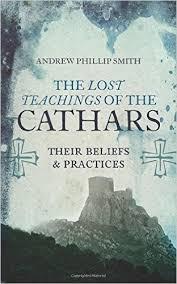
lost-teachings

Given the potential complexity of such terrain, it always comes as a relief when you find an author who is able to maintain the precarious balance between factual accuracy, readability and contemporary relevance. In the realm of Gnostic studies Andrew Phillip Smith has consistently been such a voice. Not only has he been editor of the fabulous journal The Gnostic but he has also penned a clutch of super-helpful volumes such as The Secret History of the Gnostics and A Dictionary of Gnosticism. In The Lost Teachings of the Cathars, Andrew has now turned his attention specifically to the issue of how the Gnostic religious impulse has continued from antiquity into the medieval period and beyond.

The first part of the book provides us with a well-written account of the Cathars as a religious movement, and their likely connection to other groups such as the Paulicians and Bogomils that pre-dated them. While there are a number of other books out there that cover similar territory, Smith’s account reads like a lively travel journal that incorporates both his own travels through regions such as the Languedoc, and his insights regarding what we know about Cathar teachings and their connection to earlier forms of Gnosticism.

While the Cathars can rightly be viewed as exemplifying a heroic attempt at religious freethinking, their story is ultimately a tragedy. The period between the 11th and 14th centuries in which they flourished in southern France and northern Italy was continually beset with conflicts with the orthodox Roman church, which they viewed as corrupt and in thrall to a false understanding of both God and salvation. Although there was variety and complexity in what we know of Cathar belief, it is generally agreed that they were dualists who viewed the realm of matter as being the product of a lesser god.

What Andrew’s book does more fully than most studies of Catharism is to closely consider their practices and their likely significance within the community of believers. He explores the available material that we have regarding their primary sacraments such as the consolateum and the apparellamentum, as well as the purpose behind the celibacy and vegetarianism adopted by the group’s adepts (the Perfecti). He also examines the manner in which their radical reinterpretation of Christ’s teaching ultimately brought them into such violent conflict with both civil and ecclesiastical authorities. Whatever one makes of their dualist theology, it is hard to remain unmoved by the devastating holocaust that was inflicted upon them at Montsegur at the culmination of the Albigensian crusade.
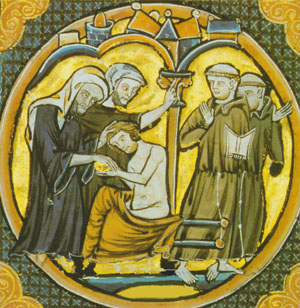
Brother on Brother Action

Brother on Brother Action

Most of the previous books that I have read on the Cathars have tended to end here, trying to make sense of these peace-loving mystics who fell foul of a corrupt church so desperate to hold on to its ability to control. Here though, what Smith does next is consider the way in which the last embers of the Cathar tradition have been revived by various teachers and groups in subsequent centuries. Like so many traditions that produced few written documents to define their teachings, the Cathars have become a screen onto which all manner of groups and writers can project their own desires and agendas.

From here it gets both weird and interesting as we get to dig into some more recent history.  Otto Rahn’s imagining of the Cathars as the custodians of the Grail brought him to the attention of Himmler and the SS  (Indiana Jones anyone?) and probably contributed to his early demise. Also we have the French Gnostic Church getting revived  (in 1889) via disembodied Cathar Bishops turning up at séances, and perhaps most spectacularly we have a mass Cathar reincarnation occurring in Bath, England. This latter story of an English psychiatrist being convinced by a patient that both of them were reincarnated Cathars, illustrates something of the way in which they have become a conduit via which the aspirations of our Aquarian age have been funnelled.

While lesser authors (and cynical chaos magicians) might take cheap shots at the nature of these explorations, Smith examines such efforts in a spirit that is at once critical and yet generous in understanding them as part of our shared human attempts to find meaning and identity. Such generosity is to be applauded and to my mind reflects a tolerance that the Cathars themselves would have welcomed.

Highly recommended.

For a chance to see Andrew and myself co-presenting about the Gnostics at the Occult Conference in Glastonbury, here’s a link! http://www.occultconference.co.uk/schedule/speakers/exploring-gnosticism

SD

The Agnostic Gnostic

I count myself fortunate to have a small number of close friends who can ask me challenging questions in a respectful but fairly direct manner. One such friend having read my recent book A Gnostic’s Progress had some pointy inquiries about how could we really know anything, and whether the pursuit of such occult know-how was ultimately a distraction from the real business of the here and now. He wondered whether, given the various twists and turns that my spiritual journey has taken, would I want an answer to my seemingly endless questioning? Would I even know what an answer looked like if I arrived at one?

These are great questions and while I may not have great or immediate answers, I thought it would be of value to reflect on them. What follows is less an attempt at direct wrestling and more an Aikido like wiggle slightly out of the way so as to move with the energy of the challenge they may represent.

The Gnosis of Not Knowing

“Well if you are a Gnostic then shouldn’t you know stuff?”

Now this is a good question and you might rightly wonder why anyone would pursue a gnostic path if they didn’t end up knowing more. Paradoxically however, when I try to compare the nature of what I know now, compared to what I thought I knew when I was following a faith based path, I am fairly sure that I am less certain about a whole range of things!

Part of my ongoing fascination with the Gnostic current is the way in which it seeks to grapple with the unknown. Its vivid myths are replete with alien gods and mysterious realms that defy description. As human beings look up at the night sky or plumb the depths of dark seas, we are confronted (and potentially terrified) by mystery. Of course we can aspire through our science and art to gain greater understanding of the hidden dimensions of what’s out there (or indeed in here), but this process of self-reflection and wondering is arguably an essential part of our experience of consciousness.

cute_cthulhu_by_unseeliechylde

Confused by alien gods?

I have written previously about the dangers of “unsafe certainty” i.e. a type of certainty based on absolutes that struggles with new information and insights. Often it feels that my great moments of Gnosis or Insight relate to the potential limits to what I can and can’t know. While the historic Gnostics were somewhat renowned for their complex cosmologies with multiple layers inhabited by a multitude of beings, the value for me of such perspectives is far less about adopting weirder world views and far more about using them to help access a greater sense of cognitive liberty. My own experience of trying to work with the Gnostic myths has had some similarity to Zen koan study i.e. the difficulty in trying to comprehend these schemas intellectually, has driven me towards a sense of knowing that seems to occur at a deeper, more integrated level. The gaining of such insight is rarely a straight line, once-for-always experience; rather it is a spiralling process where one has moments of internal spaciousness that come in and out of view as we live our lives.

Famously, the Zen practitioner seeks to engage in their endeavours with “Great Faith, Great Doubt and Great Courage”. Given that Zen Buddhist practice is generally less preoccupied with externalised metaphysical preoccupations, the emphasis on Great Faith is often seen as relating to faith or belief in the process of our own practice in relationship with both teacher and Sangha (community). My own journey into working with the Gnostic tradition has similarly been focused on strengthening or cultivating my ability to receive new information while simultaneously using doubt and questioning as tools to unburden myself from perspectives that are now outdated. This is also where Great Courage comes in! If we no longer believe in the certainties of a given orthodoxy and we seek to place greater value on the process of personal spiritual insight, then quite radically we are asking people to take far greater responsibility for themselves. Some people frankly can’t handle this, especially if they experience their faith-based certainties as being an effective means of protection from life’s messiness.

Gnosis: So What?

In thinking about contemporary Gnosticism, I have already written about the need for the spiritually adventurous to move beyond the role of being an endlessly ranting rebel (not saying it can’t be fun for a while!) What this radical embrace of “safe uncertainty” seems to necessitate is a greater awareness of both what is arising in the moment as well as our need for relationships that nurture. In short, if belief in dogma no longer carries evidence of insight, we may need to be more discerning/demanding  of what behaviour you would hope to see (for both yourself and others) if such revelation has occurred.

In reflecting on the current shape of those groups and organisations that are claiming connection to historic Gnosticism, it seems significant that many of these bodies have a greater emphasis on the use of either sacraments or collective ritual practice. In contrast to cultures shaped by  a Protestant emphasis on intellectual ascent to the dogma of creedal statements and scriptural authorities, those groups have a greater emphasis on the lived practice of ritual activity to provide both containment and guidance for their gnostic experience. For the flame of radical subjectivity to be nurtured and sustained, these shared rites arguably provide communal markers through which experiences can be triangulated and matured.


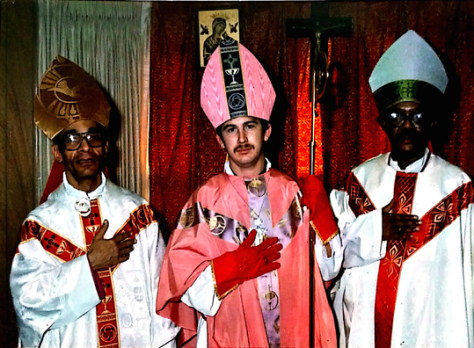
Some Gnostic Brothers

Some Gnostic Brothers

Perhaps this emphasis on practice and relationship gets closer to the heart of what it means to really know. Gnosis is just the beginning, a spark if you will that then needs to be tended. A good fire needs not only a source/spark, but also fuel and oxygen. For the Gnostic explorer to experience their insight as more sustaining, the spark of insight needs to be used and fed. This is a circular process in which we offer something to others and also acknowledge our need to receive. This reciprocal dynamic may entail the making of meals, the creation of Art, spending time listening, and so the list goes on. I can have endless amounts of weird shit going on in my head but unless I use it to do (for both myself and others), then we would be right to question its ultimate value.

SD