Happy belated Halloween!
I’ve just returned home from a family holiday in Barcelona staying within sight of the magnificent Sagrada Familia. Over the previous 25 years I’ve seen this remarkable building grow, having visited it several times (once with Rodney Orpheus during a particularly dramatic electrical storm) . It’s quite something to encounter such a multi-generational project, a fitting setting to reflect on ideas of ancestors and families.
Upon my return to Britain I’d been asked to speak and MC an evening of talks at Real Magic, part of the Do you believe in magic? exhibition at Bristol Museum and Art Gallery. This was a delightful way to spend my birthday, with over 720 people attending. The evening featuring wonderful presentations from speakers Esther Eidinow, Kurt Lampe, Vikki Carr and Ronald Hutton. Do you believe in magic? is a very engaging exploration of the occult and it’s relationship with science and religion, do go along to see it if you have an opportunity.

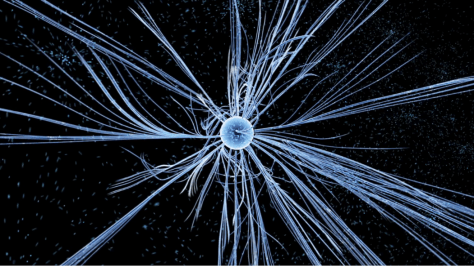
Mind manifesting in the Enlightenment Gallery at Bristol Museum
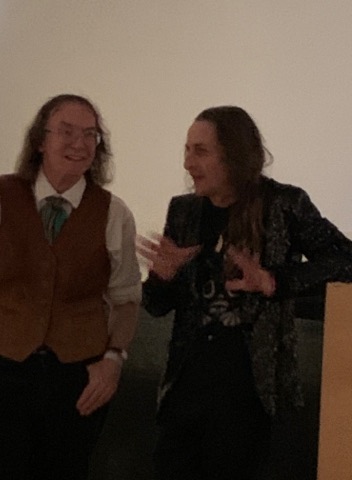
Ronald Hutton and me chatting before his magnificent presentation on The Wheel of the Year.
Here’s the text of my talk that evening on Psychedelics, Shamanism and Magic – enjoy!
We live in interesting times, one sign of which is perhaps the renewed engagement by academia and museums with the subject of magic. We have interdisciplinary conferences, most recently Trans-States at the University of Northampton, bringing together magical practitioners, artists and academics. The Victoria & Albert, Ashmolean and now Bristol Museums are working to widen the cultural conversation about what have often been excluded or even forbidden aspects of the human experience.
Tonight I’ll be speaking about an aspect of the human experience which has, until quite recently, remained occult, hidden, and even forbidden, namely the use of psychedelic drugs.

witches and alchemists
The role of mysterious substances is deeply embedded in the iconography of western magic. Where would the witch be without her bubbling cauldron, or the alchemist without the arcane paraphernalia of their laboratory? In European herbalism correspondences between plants and astrological forces informed diagnosis and treatment. Malevolent witches were imagined by some to make use of poisonous plants; henbane, datura and deadly nightshade. Scattered references in the grimoires of ceremonial magic suggest the use of mind-altering incenses.
While ongoing research gathers together these fragments of our indigenous tradition, it is primarily through the encounter between European culture and the peoples of the New World that the modern story of psychedelic substances emerges.
The term psychedelic ‘literally mind manifesting’, was coined in 1956 by the psychiatrist Humphry Osmand in conversation with writer Aldous Huxley to refer to a particular class of drugs. Their principal effect is to radically transform awareness, inducing a state of consciousness with some very curious, some might even say magical properties. The word Osmand coined was first applied to the effects of a cactus.

Classic psychedelic people and plants
The peyote cactus has been used for over 5000 years by communities in the Americas. The principle psychedelic alkaloid in peyote is mescaline, isolated and identified by western chemists in 1897, and first synthesized in 1918. Two other cacti also containing mescaline are used in the Americas for a variety of purposes which could be described as medical, religious and magical. Mescaline can include visionary phenomena, synesthesia-like effects where music might be perceived as visual patterns as well as evoking a range of very profound feelings including personal insight, euphoria and peak mystical experience. The effects of mescaline, like all psychedelics, are highly responsive to what has become known as ‘set and setting’ that is the mindset of the person taking the substance and the setting or environment in which the drug is consumed. Ritual specialists use ceremony to curate the set and settings for specific purposes, such as divination or healing. While these practitioners use various words to describe their work and social role their practice is often labelled as ‘shamanism’. Shamanism is a complex and contested term which some feel should be limited to the Siberian and central Asian areas from which it derives. For others, the word has a broader pan-cultural use and indicates a certain style of what we could call ‘magical’ practice that often includes interactions with spirits and the use of altered or ‘ecstatic’ states.
In some shamanic traditions these ecstatic states are induced by practices such as long periods in darkness or solitary mediation, or through the use of drumming or chanting. All these methods are effective but psychedelic substances provide one of the most reliable ways of inducing ecstatic states and perhaps for that reason are central to many of the shamanic traditions of the Americas. This doesn’t only mean states that are pleasurable, though they may be. The etymology of the word ‘ecstasy’ points to a feeling of being ‘outside of ourselves’, to be ‘out of one’s mind’. In the psychedelic state we are propelled outside of our usual way of thinking into a form of cognition that is rich and strange.

Mind the drugs
We can see this change in these two brain scans made during research in 2014 at Imperial College London, using the psychedelic psilocybin found in magic mushrooms and also used in New World Shamanism. On the left we see the brain in it’s ‘default mode network’ state. This arrangement is, in some respects, our sense of self, our egoic identity, the pattern that consciousness habitually adopts when we are alone, ruminating on the past and thinking about the future. The right hand image shows the same brain on psilocybin. We see that the self-identity pattern is turned down and novel connections between previously discrete systems in the brain emerge. We remain conscious and aware but our perception of reality is dramatically transformed. To use the language of shamanism – we might take flight and soar over an innerworld landscape, looking down from this new vantage point to gain new insights about the world. We might encounter spirits such as ancestors or mythological figures. We have a sense of going on a journey, a trip.
On our return to everyday awareness we can bring these insights with us, leading to transformations in our social relationships and effects such as the healing of sickness. In the psychedelic state we experience the deep truth that all things are interconnected or, as the Hermetic magicians would say; ‘As Above, So Below’.

Beastly rites
In the early 20th century the use of psychedelic substances, began to filter into European culture. Aleister Crowley dosed the audience at his Rites of Eleusis, a series of publicly performed rituals, with mescaline. His rituals, which included music, clouds of incense and epic poetry, were performed in London in 1910 making them one of the first attempts to formulate a ceremonial setting in which to ingest a psychedelic sacrament outside of the Americas. Crowley’s rituals can also claim to be the first psychedelic art-happening. In this sense Crowley’s rites were the forerunner of the Be-In’s of the beat generation and the LSD enhanced concerts of the Grateful Dead and Hawkwind.
The trickle of interest from artists, medics and researchers exploring mescaline became a flood in the mid 20th century with the discovery by Albert Hoffman in 1943 of LSD Hoffman’s new psychedelic substance initiated seismic changes in culture. These included the development of the rock music festival which aimed to provide a cultural container for the psychedelic state which had suddenly become available to thousands of people.
Within European occulture of the late 20th century, while psychedelics informed the cultural context, they were not central to the emerging esoteric styles of Wicca and neo-paganism. However they were enthusiastically integrated into the practice of some occultists, notably those influenced by the work of Crowley.

Peyote circle and Castlemorton festival
A third wave of psychedelic exploration occurred in the late 20th century as a novel chemical, closely related to mescaline, began to hit the headlines; MDMA or ecstasy. The development of the rave, like the emergence of the music festival decades earlier, provided a setting in which the psychedelic state could be held. The emerging rhythms of acid house music (a term arguably coined by the occultist Genesis P.Orridge) matched those used by other ‘shamanic’ psychedelic communities such as Native American Church.
The Native American Church developed in the late 19th century in North America. The central sacrament of the Church is peyote consumed during an all night vigil which features singing, drumming, prayer and other ritual activities. The Native American Church flourished because one of the effects of psychedelics is healing. In the context of the plains dwelling First Nations people this healing was a response to the genocidal damage caused by European colonialism. In particular many Native Americans sought to self-medicate their pain with whisky and this lead to much suffering. The peyote ceremony had the power to help people see things from a different perspective and this often led to them stopping drinking. The medicine of the ritual; that is the intention of the participant, the structure of the ceremony, and the psychedelic cactus – or more succinctly the ‘set, setting and substance’ came together to effect radical personal and social transformation.
Humphry Osmand and his colleague Abram Hoffer attended a Native American Church peyote ceremony in 1958 and this inspired them to wonder if LSD could be used to help people escape their additions. Their informed speculation was correct and, until the advent of Richard Nixon’s War on Drugs, many hundreds of people underwent successful psychedelic therapy using LSD.
In Britain, one might suggest that the emerging popularity of MDMA served to address the cultural wounds caused by post-industrial dislocation. This was the time of Margaret Thatcher, mass unemployment, the ever present threat of nuclear war and the miners strike. The emerging traveller communities and rave culture came under censure in much the same way that the Native American Church had done in the USA. The difference was that without an identifiable ‘shamanism’ or indigenous psychedelic tradition there was little possibility of legally defending the right to party, the sacred music defined in the UK Criminal Justice bill of 1994 as “…sounds wholly or predominantly characterised by the emission of a succession of repetitive beats” was driven underground.

Healing the harm
But the times are changing. Whether we consider the remarkable transformations that a suitable set, setting and psychedelic substance can generate as magic, shamanism or science matters very little. For these mind-manifesting materials are being re-discovered as allies in healing a range of illnesses that are present at epidemic levels in our culture.
Today MDMA is being used in Bristol within licensed settings to help people overcome chronic alcohol addiction. In the USA it is being licensed to treat Post-traumatic stress disorder. Other psychedelics such as cannabis, ayahuasca and psilocybin are also being recognized as having potent healing effects on conditions ranging from depression and anxiety to autoimmune illnesses. The current wave of research, often described as the Psychedelic Renaissance, a term coined by Dr Ben Sessa who works in Bristol doing MDMA therapy, includes studies on the potential of psychedelics to aid creative problem solving, to helping us face death with equanimity, and to develop ways to resolve interpersonal and social conflicts.
To the Mexican Curandera or the Siberian Shaman the discovery that ecstatic trance carries with it magical transformative potential isn’t news, but for European culture this is a radical change. For European, and by extension much of Euro-American culture was disconnected from the use of substances that could safely induce ecstatic states when the great Temple of Eleusis closed in the 4th century AD.

Mystery trend
Eleusis was the principle Mystery initiation of the Ancient World sacred to the goddess Demeter. In her temple 3000 initiates at a time would experience was many regard as the core elements of the shamanic process. They would undertake ritual purification, they would make a pilgrimage, they would fast and, crucially, they would ingest a sacred potion before descending into a vast darkened temple full of drumming and chanting. There they would face their fears and emerge into the light for a party to celebrate their rebirth. This annual ritual went on for thousands of years with its participants being drawn from all ranks of society. This shared psychedelic experience of crisis and rebirth shaped the pre-Christian pagan world. After Eleusis and the loss of the shamanic psychedelic experience European culture, one might suggest, started to behave just like an addict, rampaging across the globe in search of tranquilizers like opium and stimulants like tobacco and cocaine. Later that culture would give rise to two World Wars, the creation of weapons of mass destruction, and the poisoning of the biosphere.

Connected future
While we celebrate the return of the magical to academia, to museums and to a wider cultural setting we may also like to consider that the return of the psychedelic state to mainstream cultural as part of the same movement. A movement to value again the importance of the subjective, the magical and the ecstatic if we are to successfully cultivate our individual wellbeing and find better ways to live together. To find a medicine in these difficult times that heals us and, as they say in the Native American Church, all our relations.
Julian Vayne
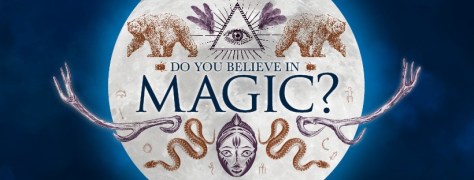
Do you believe in magic? is open until 19th April 2020 at Bristol Museum & Art Gallery.
 The Blog of Baphomet