In Praise of the Muses

I’m writing this post outside a museum, The Royal Albert Memorial Museum in Exeter (RAMM). The galleries, that were re-opened in 2011 after a refit four years in the making, are truly excellent. I’m here to see a show that I helped produce, Initmate Worlds, which according to tag-line is about ‘Exploring Sexuality through the Sir Henry Wellcome Collection’
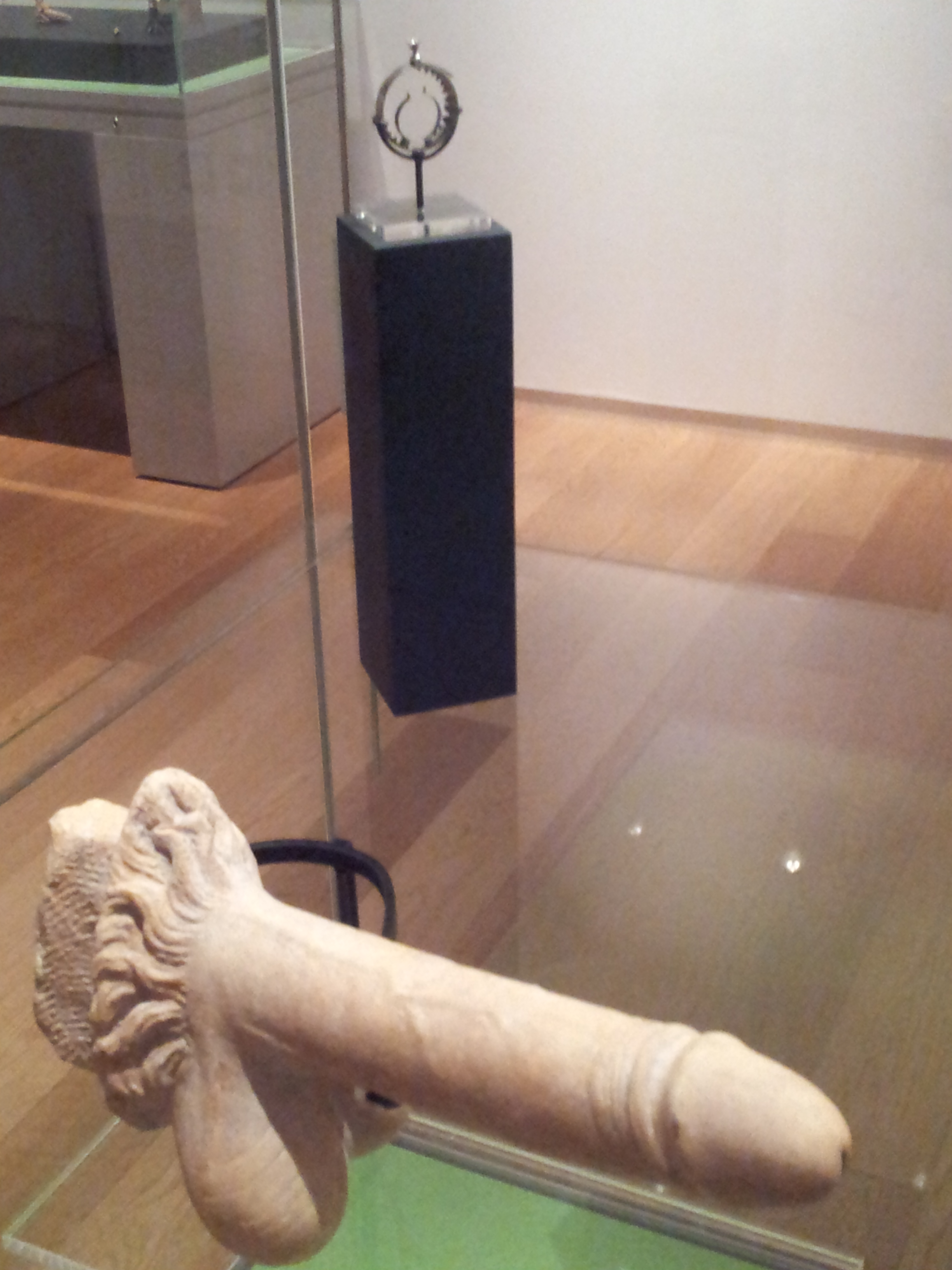
Pompeii lucky penis and less lucky Victorian anti-pollution ring
Pompeii lucky penis and less lucky Victorian anti-pollution ring

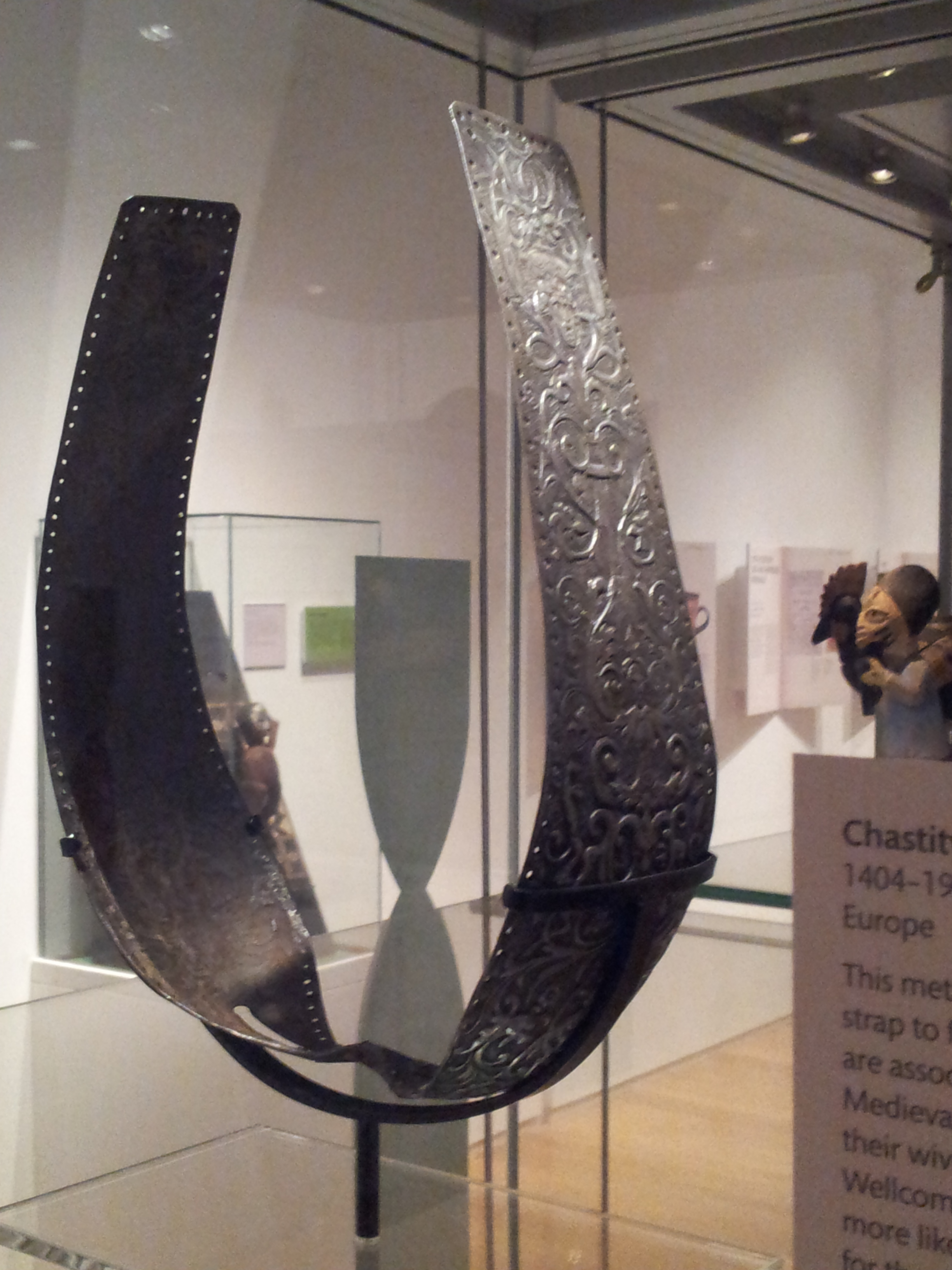
Chastity belt - fake medievalism to appeal to the Victorian (male) collector

Chastity belt – fake medievalism to appeal to the Victorian (male) collector

My own work with this exhibition included being part of an award winning project with staff from various museums in the South West of England & The University of Exeter. I also helped facilitate a workshop, with various stakeholders, that informed the curation of the space.

As they say these days, I has a proud 🙂

2014-06-18 12.04.09

What is a museum? One way I explain museums, especially if I’m working with teenagers, is that like Facebook, a museum has two core functions. The first to act as a space where we, as a community, as a culture, can ‘like’ things. A museum is typically a building where we stick all the stuff we ‘like’ and therefore don’t want to see destroyed, even if it is no longer in general use (steam engines, flint axes, Egyptian sarcophagi). If we ‘like’ something and wish to preserve it,  for many objects the best course of action would be to seal them in plastic and bury them deep in the earth. This would certainly be a way of protecting what we ‘like’ but what is the point of ‘liking’ unless we can also ‘share’? We share by putting these ‘liked’ objects into buildings with advertised opening hours, minimal or no charge at the door, and glass cases. We also proactively share, seeking what in the trade we call ‘new audiences’ (ie getting people to come to the museum who generally don’t or can’t), going out to schools with wonderful things from collections, putting images of treasures online and much more.

Ndungu spirit costume made by the Kongo people, Central Africa

Ndungu spirit costume made by the Kongo people, Central Africa

Why do we do this? The British Museums Association summarises it really nicely “’Museums enable people to explore collections for inspiration, learning and enjoyment. They are institutions that collect, safeguard and make accessible artefacts and specimens, which they hold in trust for society.” But since this is a blog about magic I’m going to put that same point in a slightly different way; namely that museums are simply what it says on the proverbial tin. They are, from the Ancient Greek Μουσεῖον (Mouseion), places or temples dedicated to the Muses (the patron divinities of the arts), these buildings are quite literally ‘shrines to the Muses’.

Small gods

Small gods

The nine Muses are a series of Goddesses who are the daughters of Mnemosyne, the Greek Goddess of memory. For this reason a museum is a storehouse of memory. It may be the memory of a particular activity (such as the use of plastic materials at The Museum of Design in Plastics, or magic at  The Boscastle Museum of Witchcraft). It may be the memory of a specific place (from Brighton to Wounded Knee) or it may be the memory of specific collector and their interest (or obsession) like this or these. Without memory there can be no muse.

Cutting edge science

Cutting edge science

Once we find our groove in a museum (and like getting acquainted with any Goddess the Muses take time to get to know) we can draw amazing power from these spaces. First we need to know how to move within them. Some museums do this by brilliant manipulation of the visitor; sometimes even a single case can achieve this. We are asked to peer down tubes, lift up flaps, and interrogate things through magnifying glasses. Sometimes a little showman’s flare can be beneficially employed. (An example I encountered recently was one stalagmite, presented in a case in Torquay Museum as a beautiful dancer. She was installed on a miniature stage, between parted velvet curtains, and recounted the story of her millennia long growth with a fabulously plummy pre-recorded voice.)
Shep en-Mut whose name lives

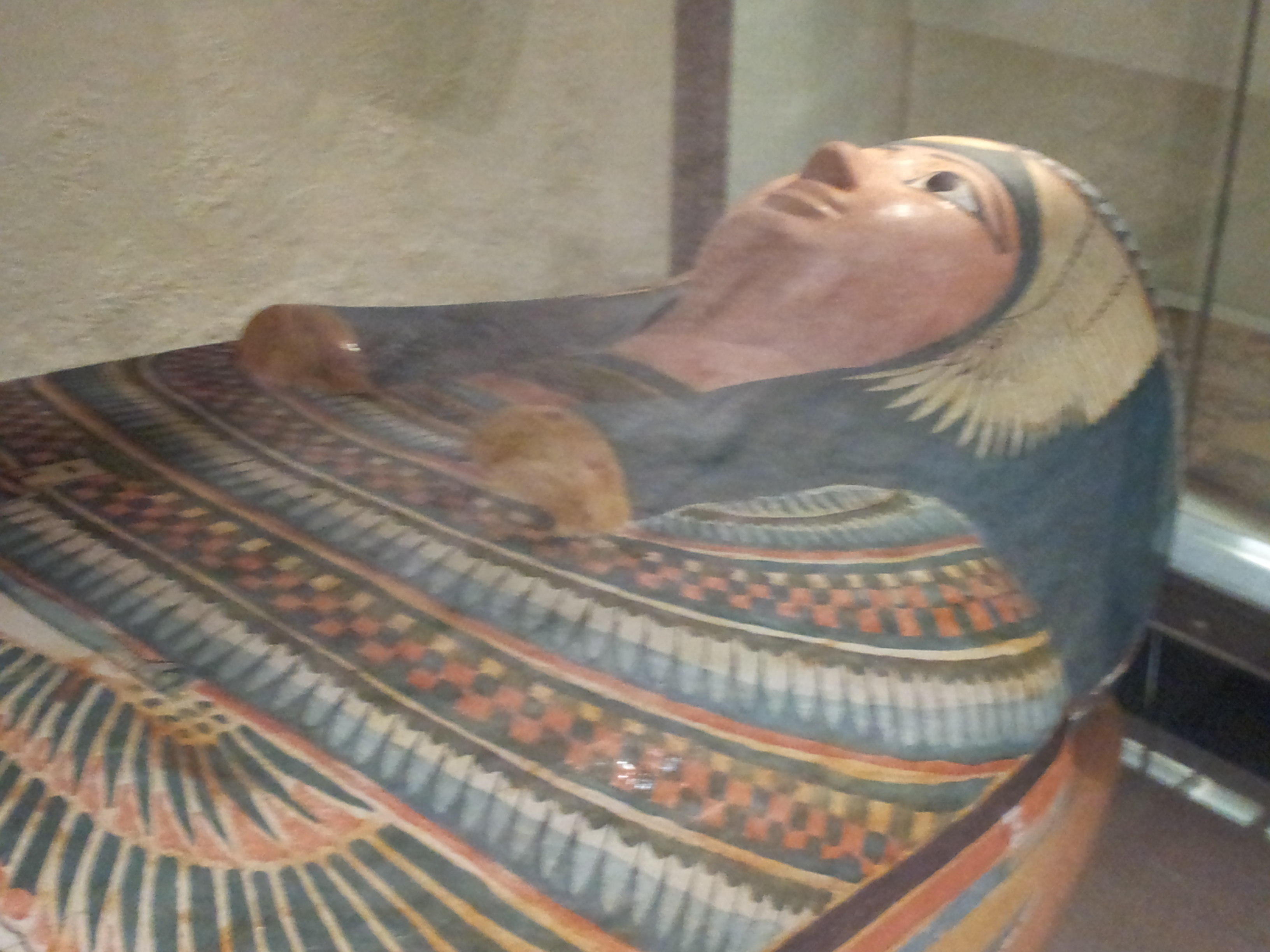
Shep en-Mut whose name lives

One of the things I do in my museum work is to produce games and other strategies to help people find their own ways into the museum experience. For some visitors the classic technique of drawing the objects works just fine but for others, particularly groups of children, there are many other strategies that we can use. These are magical, enchanting places but unless we are successful in the evocation of our curiosity they can also be some of the most tedious locations to traipse around.
Infant's respirator from World War II

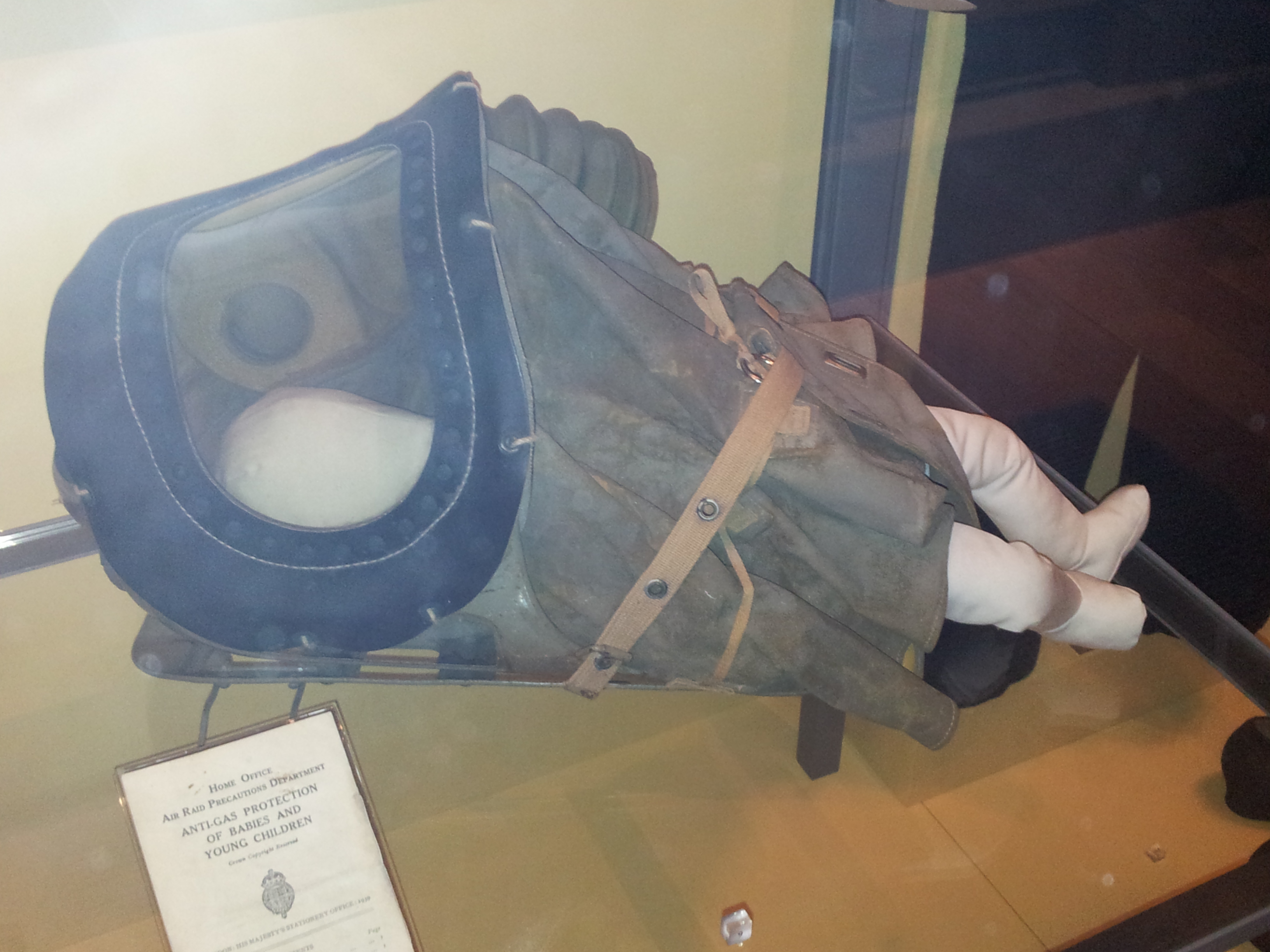
Infant’s respirator from World War II

When we enter the museum, if we can get beyond the cattle truck mentality of the tourist industry, we are in a place of great power. We can see our own lives made significant (things from our place, our community, even our personal history) and simultaneously part of a much bigger picture (I saw a stone axe from 250,000 years ago in Exeter museum and imagined the hand that held it, like mine yet separated by a seemingly unimaginable gulf of time). We can glimpse, even from these sometimes wood-panelled Victorian walls, even beyond the confines our home world (a meteor sits near the flint axe, a rock formed when the solar system was young).

We can compare our stories; our own vicissitudes with the lives of others. (As I walk through the RAMM galleries I am reminded of the work of Philip Gosse, contemporary of and correspondent with Darwin, trying to square the circle of his literalist creationism with his observations as a scientific naturalist). We can feel the pain and confusion of those who have gone before, the elation of their successes. We can judge them, admire them, and feel both similar and different from them.

Fabulous observational drawings by Gosse

Fabulous observational drawings by Gosse

Within an increasingly secular culture my view is that such shrines to the Muses are more important than ever. In these places people can be encouraged to draw, often to take photographs, and to sit in contemplation of ourselves and our relationships with others. These are temples which exist in many towns, cities and even villages around our planet, and they generally aim to be accessible to everyone. They are secular, humanist and inclusive sacred spaces. And while some writers have theorised that the museum creates an environment where the objects within it become psychically neutralised, I suggest that, once we have found the right way to explore a museum, the right way to worship at these shrines, the things within them can come alive in many new ways.

Ceremonial hooded cape made by the Anishinaabe people, Russia

Ceremonial hooded cape made by the Anishinaabe people, Russia

Once we have found our museum level (whatever technique we choose to use to get there; mindfulness meditation prior to going in, and a brief silent prayer to the Muses is what I like to do) these places can nourish our spirit, our soul, our mind and hearts. They are great mirrors reflecting back (albeit of course in partial, curated, edited ways) the world to us. They are both a refuge from the cares of the day and a place where we can be starkly confronted with the sharp end of reality. A museum is a nexus, a power spot where time and matter condense to form a rich brew from which may come all manner of inspirations.

When is your next visit to the temple of the Muses?

 JV
All Shall be Well

It was necessary that there should be sin; but all shall be well, and all shall be well, and all manner of thing shall be well.

Julian of Norwich

This may well be an unfashionable idea, or perhaps an unpopular belief system to enter into. But what if, everything is going to turn out fine?

The internet, and culture generally, are full of voices that are telling us that ‘it’s all going to shit’. Economic meltdown, increased militarism, ecological collapse, a giant meteor that’s going to do away with us; in all these cases, it’s just a matter of time. The End has already begun, the apocalyptic visionary of many stripes is everywhere present. We’re all going to hell in a handcart.

inevitable outro

Inevitable outro

I’ve been listening to a lot of Radio 4 recently, taking refuge in Melvyn Bragg’s excellent series In Our Time and chortling to the ribald and yet intellectual old-school humour of those brilliant comedies such as I’m Sorry I Haven’t  A Clue. Meanwhile I’ve been inadvertently pumping myself full of news about lost sailors and missing aeroplanes. Tales of the abduction of children in Nigeria. The growing crisis in Ukraine. Slotted regularly between the fabulous opiates of The Archers and Desert Island Discsthe incessant Radio 4 news has a clear subtext – we’re all fucked. The Great Decline and probably The Last Days are upon us.

At least that’s what I’m ‘supposed’ to think.

I’ve written before about how humans are neurologically wired to remember bad experiences more distinctly than good ones. We crave those stories of what a friend of mine calls ‘the problem’. There is always a ‘problem’. Something is wrong, and our neurology is geared to notice this, to be attentive, to marshal cognition and muscles and language and culture, to address it. Think about it, what for you is ‘the problem’ now? Or to put it in another way, what is there that needs to be done next? Something, as every politician will urgently inform you, simply must be done.

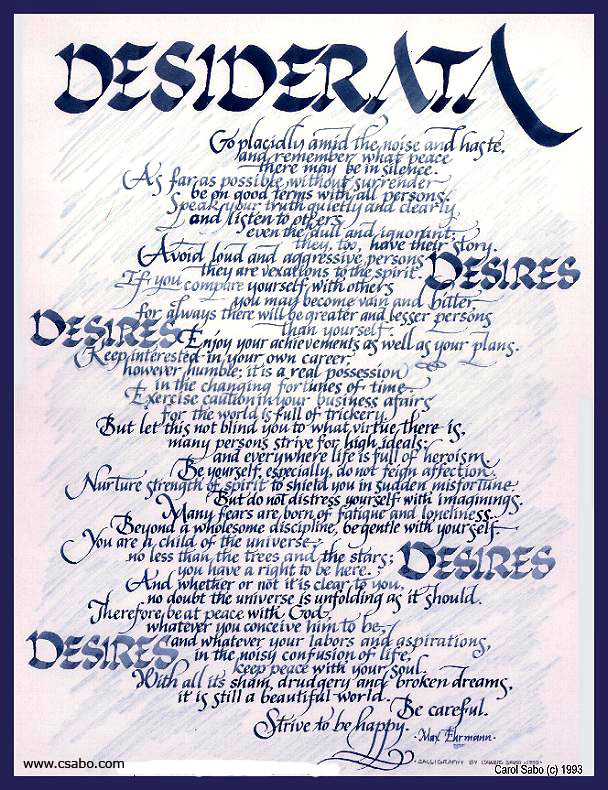
But what if nothing needs doing and more broadly the world does not need either ‘saving’ or abandoning? What if, as the poem Desiderata puts it; ‘whether or not it is clear to you, no doubt the universe is unfolding as it should’? Pan back in space and time for example; witness the differences that humans are making to the planet. Through the destruction of forests, the burning of fossil fuels, genetic engineering, nanotechology, the internet, the global gradual increase in human lifespans. Grand changes indeed, but nowhere near what happened in the early earth; when the atmosphere was poisoned with oxygen by selfish genes who photosynthesised without any thought of the long-term consequences. On that basis, and given the ability of life as a whole to recover from all kinds of environmental changes and externally visited events (like meteor strikes), I don’t have much fear that humans will spell the end of life on this planet no matter what we do.

Available in original and Mr Spock versions

Available in original and Mr Spock versions

‘The problem’, in essence, is imagined to come from us humans and our relations with each other (and this is an often forgotten point about apocalyptic visions; that they always include some form of human generated original sin). Something is wrong with people. According to some we are Godless perverts doomed to Biblical floods, for others we are debilitatingly deluded by our dangerous faith in a supreme being. Our apocalyptic commentators must find this Fall and then, through their eschatology, deliver us from evil (which typically is realised by going back to some primordial state or transcending the meat suit of the body).

Perhaps ‘the problem’ can be fixed by becoming a breatharian and preparing to ascend into your lightbody for 2012? Maybe the Fall was industrialisation, or farming and the answer is to prepare for a post civilisation world (cue ninja bushcraft and air rifle practice). Maybe the problem is all that Paganism in the Bible and we should start handing out copies of The Watchtower? Or if the problem is Xtianity, then being a Satanist is surely the right (er?) thing to do \m/ Ave Satanas! etc.

Not only are these discourses sometimes examples of answering the complex question of our being-in-the-world with a simple answer, they also often claim that, ‘the problem’, whether through positive action or ennui, must be engaged with. According to this mindset, we need to address what’s going on round here. To do any less indicates woolly-headed, naïve, fluffy-quasi New Age thinking, lacking in rigour, and in courage to face facts.

Really?

I would agree that many of ‘the problems’ faced by our species are very real; social inequality, for my money, is the biggest one (pun intended). However the story of the evolution of our planet, and the development in technical capacity by humans, does not in my view necessarily point to the show being over by any means. What if things are going to work out just fine? This isn’t to say that hurt, horror, pain, inequality doesn’t happen. This isn’t to say that everything is okay now and nothing needs to be done, to be nurtured, or to be opposed. Rather it is to take a rather grander, and simpler (less ideologically driven) position that provides a somewhat Taoist-flavoured perspective.

Now when people think of Taoism they tend to imagine rather beatifically smiling tai chi teachers and jolly old wise men. That’s all true of course, but there are also plenty of fascinatingly engaged and tactical expressions of this paradigm. The perception of the Way of the Tao (and one might argue the ‘Way of the Wyrd’ in a western context) isn’t about not acting. It’s not even about not making mistakes, but it is about finding, and indeed in some sense trusting in, the Way. Trusting in the process.

The Taoist classic the Tao Te Ching has various things to say about politics and social relations. Including advice for government ministers;

Governing a large country
is like frying small fish.
Too much poking spoils the meat.

When the Tao is used to govern the world
then evil will lose its power to harm the people.
Not that evil will no longer exist,
but only because it has lost its power.
Just as evil can lose its ability to harm,
the Master shuns the use of violence.

If you give evil nothing to oppose,
then virtue will return by itself.
~ John McDonald translation ~

What a powerful spell this Taoist-style perception is! A life-hack on our own neurology, a banishing on the Fall and the Apocalypse memes, a magic that may nurture and empower us in every sphere. What a radical (and indeed in some senses revolutionary or even ‘Satanic’) enchantment to cast! But this charm can’t simply be deployed at a linguistic level. Transforming ‘problems’ into ‘challenges’ is all well and good (as long as we can keep our sense of humour about what we’re doing). For a deeper effect giving thanks is a potent technique, as are methods such as Metta Bhavana and changing our perspective. One might build this development, of an ‘active equanimity’, into a ritual. Releasing our fear of the future in order to free up cognitive capacity and widen our awareness:

As your own neurology relaxes around the idea of ‘the problem’, so you get into that Taoist groove. Experiencing the deep understanding, the gnosis that the universe is unfolding just as it should. Being aware that, as you make contact with this paradigm, the effect on you will ripple outward, in weirdy astral and direct inter-personal terms, touching everyone you’re in contact with. Invoking a nurturing, compassionate and engaged relationship with the world. Giving you an attentive and relaxed place from which to make judgements that open up, rather than limit, our possible futures.

Thanks for reading this, enjoy yourself, and as…

just saying

(You may also want to listen to less Radio 4 news 😉 )

JV