
Many of us long for the divine and the mysterious, but what is it like to actually gain a glimpse of these things?
In his masterwork The Idea of the Holy Rudolf Otto, valiantly sought to map out those shared human experiences that lay at the heart of religious seeking. For Otto when we view the vastness and mystery of the Universe, we are met with both Dread and Awe. Dread and Awe act as two sides of a coin in which the vastness of time, space and the magnitude of life erode our sense of control and understanding. Just when we think we might be getting it, it’s that “oh shit” moment when we realize that barely have a clue.
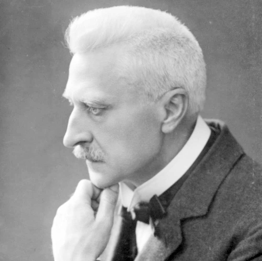
Rudolf Otto supporting his planet-sized brain
A couple of years ago I wrote this and for me it captured something of my own encounter with mystery and what Otto describes as “the numinous”:
“As I gaze out at the night sky, I find myself unable to find lasting meaning in any prevailing metaphysical position, be it a theistic one or that of the strict rationalist. The mystery and expansiveness of space seems to empty me of the trite and obvious. My sense of awe seems to both induce a sense of mild panic as I glimpse the limits of my control and understanding, while at the same time beckoning me onward into the depths of the unknown.”

The more time I spend working with the Dread and Awe the more I am struck but the powerful parallels that exist with both existential philosophy and its application within existential psychotherapy.
The origins of both of these movements lie with Søren Kierkegaard and the way in which his own radical reading of Christianity led him to grapple with the uncertainty connected to the experience of existence. As is well documented these ideas were taken on by Jean-Paul Satre who, in being inspired by his reading of Heidegger, gave the lecture in 1945 “Existentialism is a Humanism”. Existentialism as a philosophical school sought to centralize the experience of the individual in the face of a Universe within which the Judeo-Christian God had been declared dead.
In facing a Universal vastness that had no apparent meaning, how were we as humans supposed to find authenticity and a sense of our true essence? What lies at the heart of being beyond the superficial roles and labels that society may want to hand to us? These questions were a major preoccupation for the early Existentialists. Thinkers such as Sartre, De Beauvoir and Camus were relentless in their pursuit of making choices congruent with authentic being (i.e. in “Good Faith”). When faced with absurdity, the existentialists were stark in their assessment that such insights triggered both Dread and an underlying sense of despair.
The impact of the existentialists was profound and they not only spawned weird adventures in art, literature and theatre, but they also inspired radical forms of psychotherapy.
Building upon the insights of existential philosophy, existential psychotherapy sought to explore the way in which these ideas regarding meaning, freedom and impermanence could be explored within the healing context of a therapeutic relationship. Therapists such as Otto Rank (who broke with Freud in the 1920’s), Viktor Frankl and Rollo May were central to the development of an understanding of our shared human experiences that was less focused medical diagnosis.
In contrast to Freud and his focus on pathology, existential psychotherapy tends to view experiences of anxiety, alienation and even depression as part of a normal maturation that most humans will experience in response to the disconnect experienced between our experience of self and the world we inhabit. More contemporary thinker/therapists such as Irvin Yalom believe that psychological dysfunction arises when we try to avoid these givens of life. While current schools of so-called “positive psychology” may view such perspectives as being doom-laden or negativistic, an existential approach maintains that in confronting such realities, the true value of life and consciousness comes into sharper definition.
For me as a Magician seeking to work with ideas of Dread and Awe, the insights of existentialism provide helpful keys to unlocking the process via which my own initiation is deepened. In truly looking at the world’s vastness and impermanence so I create the possibility of seeing with a Zen-like “Shoshin” or beginners mind. In experiencing Dread I recognize the limits of what I can know and yet the sense of awe I encounter also helps me pursue what Viktor Frankl called “The Will to Meaning”.
Magic asks us to see with new eyes and what we see is often not comfortable Magic accelerates and intensifies our experience of dread, but in doing this so the possibility of activating our will becomes both more necessary and thus possible.
“Know Thyself, Create Thyself!”
Steve Dee
Check out Steve’s review of Asexual Erotics on Phil Hine’s blog.

 The Blog of Baphomet