We know it was different in the past. Our urban surroundings, buildings and street layout, the pictorial records we have of the strange clothing styles of decades and centuries past; the way language has altered so we no longer know why that street is called Paternoster Row. We stumble through archaic relics, some of which only some of us can even begin to understand, some of the time.
Rewind to an age before this (a past long before the versions of now that existed immediately before our own), a land with human animals in their ‘natural’ state, with organic shelters, with only the present as a known quantity. There may be new types of tool or object invented but the basic world view alters little, apart from the oracular myths handed down from the elders, of cataclysmic environmental change. Any differences between the Now and the Then are largely invisible.
The advent of stone cities freezes time, fossilises social space by describing limits to movement. To alter these spaces to different purposes, takes a conscious Will to destroy, and the decision itself then leaves historically visible reminders (even if this manifests in the erasure of certain features of previous cultures). Change in this situation becomes difficult, and challenging to the status quo, whether viewed at a cultural or individual scale.

Dominion; is it more about legacy, or sustainability?
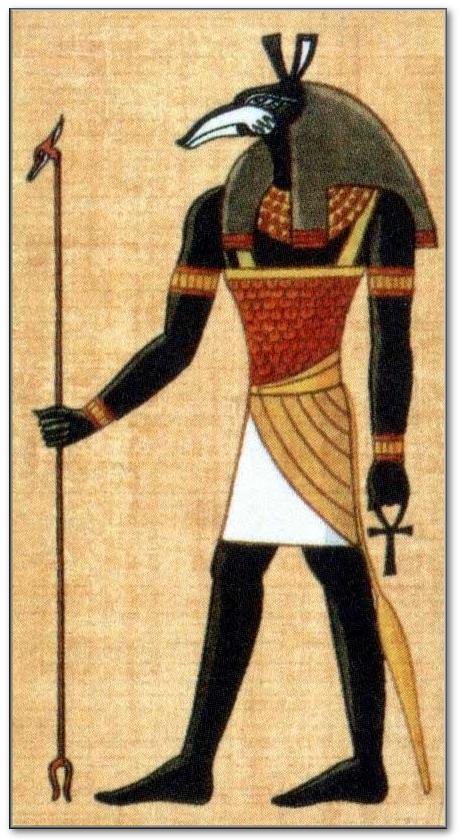
Parallel to this (in history) we see the rise of the adversarial devil figure, the Satan, the advisor to the Accuser (one of voices of the Elohim). The churchstate can use this figure to accuse those who seek to change things, of Evil (ironically making themselves The Accuser…).
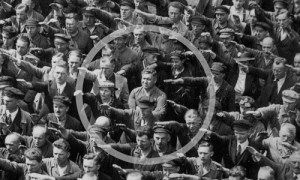
Change in technologies has always existed of course, yet we see around us more evidence of the usual scope of change than any human could be expected to assimilate easily.
So, perhaps holding to the attitude of ‘evil doers’ and ‘change lovers’ as being equivalent, no longer provides us with a useful truth (following the definitions of William James’ type truths).
Technology, like architecture, provides us with a tangible inheritance from those people who lived before us. When only some thousands of individuals made up our entire global species population, technological knowledge was hard to maintain amongst localised small bands of semi-nomadic tribes. Innovation occurred less often, and had barriers to its spread. Pottery was developed many times as a ‘leisure activity’ before it caught on as a technology that could make useful pots. The first times round it got no further than clay figures baked in the embers of a fire, and this practice itself often lasted only a few generations. One can imagine the scene:
“Oo have you seen that Doris? Letting her children play with the dirt for hours instead of taking them out gathering with her?”
“I know! Shocking. They won’t learn how to talk proper doing that kind of thing, a child needs to have its mother’s full attention all day. They just sit there, staring at the flames, watching the colours flicker while they wait for those new-fangled clay figures to fire. Rots their brains, if you ask me.”
Today we have so much ‘technology’, we have forgotten to include a large part of our world within the frame of this particular conceptual grouping. Ordinary object production, like that resulting in plastic spoons, shoes, bottles, would not feature near the top of most people’s list of ‘technologies’.
To take one of these examples, plastics, let’s trace that back a bit.
The material we call plastic these days, is itself a recent find. However, the technology of shaping plastic materials (using the adjectival meaning of the word), is far older. Horn bending, leather working of certain types (e.g. bottle making, only far more recently made of glass), all these have similar techniques. This is why we now have an initially bizarre seeming situation where the Worshipful Company of Horners (which subsumed the Bottlemakers back in the 15th century), has since the mid 20th century also included the plastic industry as part of its remit. A shrewd move on the part of the Horners of that time!
One ubiquitous object made nearly exclusively with plastic these days, is the humble comb. Combs are worthy of a longer look; one of the oldest tools used by humans, they were revolutionary in the effect they must have had from the moment of their first appearance.
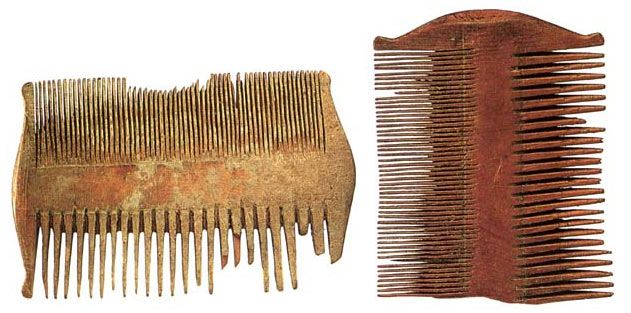
Combing the deserted remains of the past, we find…
Many early combs look strange to our eyes, with close set teeth. As any parent can tell you, they look like nit combs, rather than tools for simply untangling hair.
All humans, whatever their hair type, have a bugger of a time with these annoying parasites. But without combs, the whole process of delousing becomes a constant battle, taking up hours each week of picking through our manes to keep the pesky critters at a bearable level. So can you imagine the delight of the first comb maker, when they figured out how to scale up the process of finger and thumb searching, to one with a fine toothed comb, capable of clearing the head faster and more effectively? That leaves a lot of extra hours in a day for hands to do other things.
I searched for “earliest combs” on Google and was told they dated to the Persian times, 5,000 years ago. Surely they are older I thought… and yes, if one goes to “prehistoric combs”, references to combware (pottery decoration using a dragged or pressed comb) describe evidence for this decoration method as dating from over 8,000 years ago. Given the lack of actual comb remains for this period, when we know they had combs, we can consider the possibility that combs may have existed without any evidence remaining to us for thousands of years previously. The wood, bone and horn versions could easily have decayed without trace.
Some theorise that they became necessary when clothing became common, providing a new ecological niche for parasites. My own thoughts are that large groupings of people would require an efficient grooming method in order to remain in close physical proximity on a daily basis.
But, to the inventor of the comb (or more likely multiple inventors, as with pottery), the innovation would have seemed like a good idea, yet without a sense of historical difference to the old ways. Things looked the same, but with a new tool. We are faced with the distinction of Now and Then every moment; explicitly by things like Time Team on Sunday night telly, and implicitly by the existence of the television.
What does this mean? Does this weight of the ancestral presence press more closely upon us than the ancient cultures we see as having ancestor worship at their heart? Do we resent the lack of freedom, to invent ways of doing for ourselves? Do we rejoice that others have done so much work for us? How does the existing pattern of How to Live prevent (or allow?) us from seeing other perhaps more effective, or enjoyable (or, both!) patterns? Traps, or stepping stones…
Worth pondering, when you next endure the endless ordeal of waiting for a bus.
NW