Museum of Witchcraft – Learning for Schools

What do witches look like and how can you spot one? What would you say if you could meet a witch hunter from the past or present? Would you be prepared to stab a photograph of someone you love with a knife? And if not, why not? Why is it that unusual objects, like four leafed clovers, are considered lucky?

From Waddingtons - fun for all the family?

From Waddingtons – fun for all the family?

These are just some of the questions asked by the new learning resource from The Boscastle Museum of Witchcraft. Made possible by funding from The Friends of the Boscastle Museum of Witchcraft the first phase of this project is ready and waiting for teachers and learners to use. With my Museum Education Consultant hat on I’ve been leading this project. Staff from the museum have of course been essential to our success. We’ve also been really fortunate to work with students from the Arts University Bournemouth (the premier practical film school in Britain) who shot the films embedded on the site.

The sample of objects presented from the Museum of Witchcraft collection allow educators to address a number of curriculum needs. Questions posed in Religious Education, Citizenship, History and Personal, Social, Health & Economic Education (PHSE). As an Internet resource this material is accessible across the globe and there are plans to introduce teachers to it from a range of different countries.

Many of the questions that the site raises (such as those about prejudice and superstition) are hugely relevant in the modern world. There are many nations where people accused of witchcraft can find themselves in prison or even executed. Meanwhile in other States, migrant workers and gay or transgendered people can find that they are the culturally scapegoated group.

http://www.pshe-association.org.uk/

PHSE – Challenging choices

Developing discussions about such emotionally charged issues using museum objects (from the past, and perhaps from ‘alien’ cultures) can help people explore ideas in a fresh way. Using objects can make discussions safer. We can reveal our own beliefs, hopes and fears but, by externalising them in terms of our feelings about an object, we don’t need to reveal too much personal stuff directly. We can compare how our culture is now with things were in the past, exploring both differences and similarities. We can make value judgements, and imagine ourselves in different situations (for example as a member of a community where a witch-hunt is taking place). Anchoring these explorations in the past, through the object, we can engage with these issues without the political, social and perhaps personal difficulties that might emerge if we were to do the same with a contemporary issue.

So please have a look at the site. If you’re a parent or educator you might like to try it yourself (the current site is aimed at Secondary School and older learners but we hope to create a version for younger learners in the future). Feel free to pass on the link to anyone you feel might be interested. The site contains full instructions on how to use it for both learners and teachers, and there are built in feedback mechanisms too.

visit www.mowlearning.org.uk

JV
The Marvel of Materialist Magic

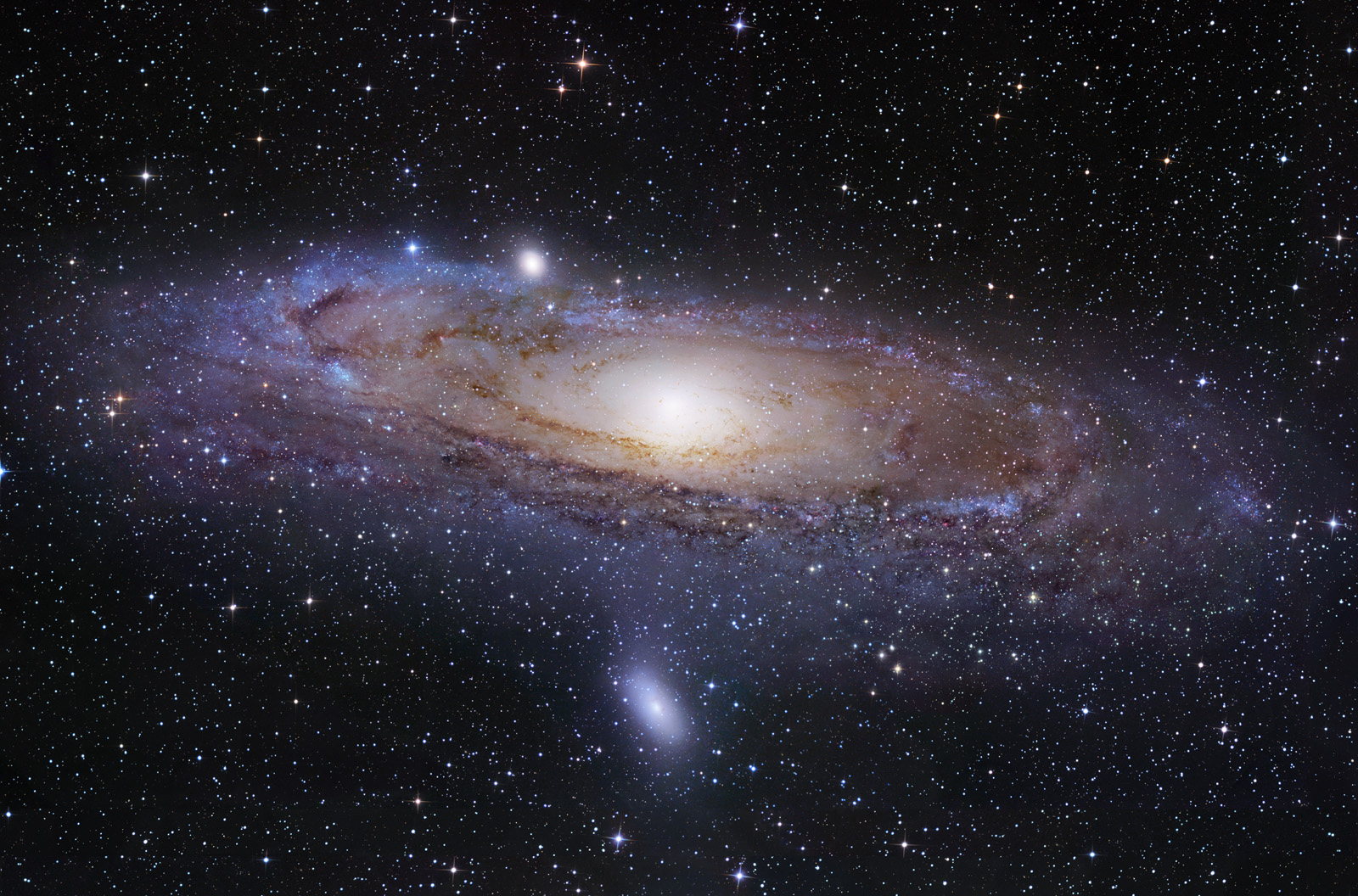
The materialist description of the universe can easily inspire in us a sense of wonder, an attitude of awe so profound that it naturally trips the circuits  in our brains where mystical, religious and perhaps even magical sensibilities reside. The current ‘standard’ model of how the universe came into being rivals any religious or esoteric creation story. The tale of the emergence of life, from the soup of chemistry, is many times more complex than even the most baroque ancient myth of mankind’s origins.

"Space," it says, "is big. Really big. You just won't believe how vastly, hugely, mindbogglingly big it is. I mean, you may think it's a long way down the road to the chemist's, but that's just peanuts to space, listen..

“Space,” it says, “is big. Really big. You just won’t believe how vastly, hugely, mindbogglingly big it is. I mean, you may think it’s a long way down the road to the chemist’s, but that’s just peanuts to space, listen..”

It was for just this reason that when Nikki and I wrote The Book of Baphomet (aka BoB) we wanted to start with this narrative. Hard science is always incomplete and provisional. There is always more to learn and any good scientist always admits to the possibility of new, paradigm-exploding evidence coming to light. (Like they say; ‘Nothing is True, Everything is Permitted’.) Yet this literal nuts-and-bolts, neutrinos-and-quarks view of reality is our best guess right now. A guess that emerges not from scholastic knowledge and ancient texts, but an understanding that comes from imaginative hypothesis, confirmed or refuted by experiment, by first-hand experience.

G. Ridgeway, generously reviewing BoB at Amazon says; ” The first chapter we get a sweeping epic of evolution, and the birth of the cosmos, which reads like a verbal description of a Stanley Kubrick film, Its very enjoyable.”

Here’s the first part of that opening chapter:

The Song of Life

The Stars are but thistles in that waste, pregnant seed heads that burst, releasing their strange cargo into vast space. From the heart of the stars, drifting outward from super nova and the dull trails of brown dwarves, emerge the elements. Forged in the fusion fires of titanic nuclear furnaces, as the ancient stars dwindle expand and explode, they scatter new matter through the cosmos. From this nucleosynthesis hydrogen begat helium, helium begat carbon, carbon begat oxygen. Stars a little more massive than our sun form iron cores by this process. Heaver elements are a job for flaming orbs orders of magnitude bigger, where gold and lead are liberated from the alchemy of the supernova and smeared across the sky in thunderous detonation.

Such is the stuff that we are made of. From whale to woodlouse, our bodies quite literally come from the core of the stars.

The vast particulate pentacle from which our earth was made was once a cloud of such star-stuff. The cloud thickened, gathered, and the central portion of this disk (which was at first over 3 light years in diameter) folded up, dense and hot. Gravity, that love of mass for mass, pulled the center tighter together until it ignited. Our sun turned on.

We captured something of this idea in the film trailers released with BoB, particularly the one HERE. Given our own project we were both enormously pleased to see this idea developing in other contexts. The most recent is in the publication of the first of a promised Seven Secular Sermons.

Daniel Böttger, the author of the project, writes:

I began the Seven Secular Sermons project in 2012, in an attempt to share the intense gratitude I feel towards this marvelous universe we are happening in. The sermons are (to be) a series of seven guided meditations on aspects of the universe. In verse and rhyme, they invite us into inner journeys towards a more profoundly satisfying appreciation of reality at large.

So settle into your favourite asana and check out the First Sermon. The whole text is available too. Having read it at our Zen-Odinist Mindfulness meeting, I can testify to its moving beauty and effectiveness as a means of being Here in this wonderful Now.

Enjoy!

JV