Gnostic Fan Fiction

I must confess to being excited about some writing that I have had included in a forthcoming anthology. No Safewords 2 is a collection of short-story fan fiction inspired by the work of Laura Antoniou . For the uninitiated, Laura Antoniou is undoubtedly amongst the world’s most talented authors of erotic fiction. In her Marketplace series, Laura has created an engaging universe in which beautifully crafted characters explore the world of consensual BDSM (Bondage, discipline and Sadomasochism). While this sexual style may not be everyone’s cup of tea, I would highly recommend the six books currently available as they touch on deep themes about belonging, identity, vocation and of course the nature of passion.

Fan fiction can take a whole plethora of forms, but at its core is a desire to produce new writing or art inspired by an existing canon of work. While it is likely that Fan Fiction as a contemporary phenomenon began as a response to the Kirk/Spock relationship in Star Trek, you can find forms of it that are connected to pretty much any series that engenders significant levels of devotion. This issue of devotion feels important in that the content of a given series is felt to be important enough to inspire the new author to take their heroes’ story arc in a new direction.

Famously the Kirk/Spock relationship was central in birthing “Slash” fiction where our protagonists are imagined in a whole range of male-on-male erotic activity, but fan fiction can also take our beloved characters into a whole array of other possible situations. In keeping with its Ironic and Postmodern nature the series “Sherlock” has generated huge amounts of fan fiction (including some great Sherlock/Watson Slash) while being itself a form of Fan Fiction inspired by Arthur Conan Doyle’s original genius. Sherlock reimagines the Conan Doyle characters in 21st century London, but also accentuates aspects of their characters so as to contend with more contemporary concerns. One excellent example of this is the way that Benedict Cumberbatch’s depiction of Holmes has been viewed as iconic by people identifying as being on the Asexual spectrum. While Conan Doyle’s Holmes had decidedly asexual traits, the evolution of Holmes in the Sherlock series has made this more overt and positive depiction of even greater importance.
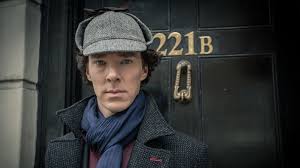
Asexual, comedy hat, genius - what's not to like?

Asexual, comedy hat, genius – what’s not to like?

In my own experience of writing fan fiction (and I don’t find fiction the easiest thing to write), my own efforts were probably successful because of my love of the original Marketplace series and the degree to which I had soaked myself in the canon that Laura and others have created. Great art often inspires both obsession and inspiration. Perhaps due to our desire to connect to a modern (or postmodern) form of mythology, we look to the hyper-reality of the screen and print as a way of making sense of our lives. While the slightly musty myths of the past may feel harder to access, it maybe that the power of story still provides us with an evocative way of touching the deepest aspects of our personal and collective psychologies. This is certainly the case with the Star Wars films and most of us are well aware of the degree to which George Lucas was influenced by Joseph Campbell’s work in trying to understand common mythic themes.

Personally I think that fan fiction is awesome ☺. Yes it can be a decidedly mixed bag in terms of quality, but for me it reflects something brilliant about how we as humans respond to stories that touch us and use the power of these myths to empower our own journeys. The original author may well be horrified by the quality of our art or what we have imagined their characters getting up to, but for me it reflects the tendril-like nature of inspiration that threatens to break apart any attempt to erect walls around a holy canon of work.

In many ways the Gnostics were the original purveyors of fan fiction. While the orthodox elements of the early church were trying to ensure certainty about what Jesus and the apostles did and didn’t say, the Gnostics just kept being inspired. It could be argued that even the canonical Gospels of the New Testament (especially John) are perhaps some of the greatest pieces of fan fiction known to history. Whatever one makes of the historicity of Jesus Christ, the idea of his life and mission were hugely inspiring and generated an avalanche of literary responses.

For those with an interest in trying to prevent heresy and innovation, the Gnostic approach to hermeneutics was highly disconcerting. The God of the Old Testament was generally viewed as an inadequate megalomaniac and Jesus; well frankly he just wouldn’t shut up. While his earliest core sayings may have been brilliant, his inspiration kept igniting the imaginations of those not content with the answers of orthodoxy. While holding a position of profound respect for both Christ and his Apostles, the inspirational torrent of the Nag Hammadi library represents a form of innovation and adaptation that is in keeping with the best of fan fiction.
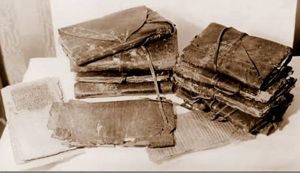
Holy Fan Fiction!

Holy Fan Fiction!

Those of us who love and produce fan fiction would rarely claim to have reached the levels of creative genius that are present in the primary texts that inspire us. For me fan fiction entails a process of playful investigation as to how these heroic figures of art can fuel my own development and creativity. Imitation can be the greatest form of flattery and also an expression of gratitude for how the great work of others make our lives more doable.  

SD

Magic in the Darkest of the Seasons

The Wheel of the Year spins, towards the darkest phase of the year here in the far north (i.e. Britain) .

Yesterday I was at a funeral in the local crematorium, to say goodbye to someone that I’d known in the course of my museum work. Within that garden of well-trimmed yew hedges, punctuated with sober brickwork structures, I stood out of the rain in the tiny waiting room. Drinking the vending machine coffee, and feeling emotions rising in me. This time last year I was swept up in that surreal swirl of organisation which attends the end of a human life. My Dad having passed away after a brief illness, I went with my Mum to speak with funeral directors, to make formal registration of the event. I helped her enter data into Governmental web forms.

A midwinter spirit

A midwinter spirit

It is during the winter months that most people in Britain die and, while some of this may be put down to infections, most of those deaths are not, at least overtly, directly caused by the darkness and harsh weather. Yet the correlation between death and the winter has remained true for hundreds of years. It is this fact that gives the death and rebirth of the solstice added poignancy. Thus there are those bitter sweet stories of the relationship between sacrifice, death, winter and spring, from The Lion, The Witch and the Wardrobe to The Selfish Giant.

Christmas, or Yule, or Mithrasmas (or whatever you like to call this feast) is the pivot point of the sun’s journey. It is overflowing with symbolism; there is the iconography of everything from the Messiah through to the Krampus; there are stories of hope and redemption, gifts brought at midnight by an aerial shaman, and ghostly tales from Christmas past.

The actual human deaths that occur in the deep midwinter enrich the symbols we absorbed as children; the Christmas tree, singing auld lang syne, then singing about the birth of magical child here to bring peace – as we mature as people, our reading and relationship with these symbols becomes deeper and more complex. Christmas becomes bitter sweet; an assertion of life and joy in the face of pain and heartache, but (if we are fortunate) we can continue to see the underlying message of renewal, of transformation and hope. Opening our-selves up to that Midwinter spirit, with all its sadness and joy, its blend of longing and elation, can be a difficult thing. For many people the black dog of depression follows them about in this season; echoing the outer darkness within their mindscape.

Given my own story at this time of year I can fully appreciate some recent writing by Anglesey Druid Kristoffer Hughes about the death of his Father, John Hughes, on the 11 of December:

This day, 10 years ago, was a dreadful day. We sat and we waited for the edges of forever to open and allow him respite and freedom from the pain of cancer. It is a day that none of us will readily forget. As twinkling fairy lights lit the streets beyond the hospital, as carolers took to singing, my Dad turned his face from this world and ventured into mystery.

The mystery of life and death was the subject of recent meditation I shared with folks at The Psychedelic Society of London (where I took part in a collaborative ritual event).

Psychedelic supper time

Psychedelic supper time

After an excellent evening of food and simple, highly accessible ceremonial practice, one participant asked whether, as an occultist, I had special powers. Where had all my years of magical ceremony, gnostic states and spiritual adventuring really got me? Could I leap tall buildings in a single bound, or perhaps control the weather with my mind? What was the kind of power that magic provides to those who practice it successfully?

There are lots of potential answers to this perfectly legitimate question. But one special ability many magicians aspire to, is to be able to live this life fully. To engage and connect intimately with the universe in which we find ourselves. This is the work of living a fully human authentic life (and the praxis of magic is a great way to approach this process). Come this time of the year, this time of death and of tinsel, this authenticity for me is about being able to hold the paradox of midwinter, to be empowered by it, and to express that insight in relationship with others (as Kristoffer did in sharing his writing about his father).

We can describe this aspiration (or, to the degree we manifest it, this ‘special power’), to be authentic, fully alive, in terms of doing our (True) Will, manifesting our inner nature, being in tune with the web of wyrd and all that (should we wish it to sound properly esoteric).

Of course, in answer to the question about ‘special powers’ one might offer stories about the many and varied ways that magic works. I’d claim magic is capable of making all kinds of transformations in the world (from things that look like applied psychology, through to proper parapsychological and synchronistic effects). However if the Great Work of Magic is really that, Great, it has to be about more than gaining skills in spells that increase the probability of accomplishing some simple desire.

But are such Taoist musings simply a cop out because sane people generally don’t claim to have any demonstrable superhuman abilities? What’s the use of doing magic if you can’t do literalist Harry Potter style spells? The difficulty is that real magic, outside of the imaginal world, does not often look like ‘special powers’. Magic is much more subtle and indeed far-reaching, which is why it is so difficult (and often meaningless) to empirically test. Any magician worth their consecrated salt is also aware that there are always multiple ways of reading any event in the universe. (Even something as ‘nuts and bolts’ real as the brain structure changes that appear to be the result of mindfulness and other practices). The most effective of magicians generally hold lightly to their accomplishments, not because they do not believe in their agency, but rather because they believe that ‘as above, so below’, and they know that the simple cause-and-effect/linear chain-of-events view of reality is only a partial truth.

What magic looks like (in your head)

What magic looks like (in your head)

Moreover when we are faced with human scale reality, for example the inevitable death of those we love, this is where our magic needs to be at its most powerful. Not in trying to hold back the tide of reality, like some kind of death-defying comic book character, but rather to learn how to flow with the way the world is; with grace, kindness and strength. To use the challenges we meet as humans in our work to make our soul.

So what might the star-following, wise magus want for Christmas? What gift of siddhi or mystical insight might we hope that the Santa Shaman might present to us? (Especially if we’ve been good all year; done our meditation and body work, done Priest work for others, deployed our magic in day to day acts of sorcery, undergone powerful initiatory journeys etc etc…)

For myself I’d like the power to enter that Mystery of the Darkness (a mystery glyphed in the Chaos Craft system by octarine). To fully know, at all parts of my self, the potential and power of transformation possible at the time. To pay attention to, and be inspired by the stories of this season; in myself, in the landscape, in the communities I meet; and to communicate that wonder to others.

At a human psychological level this darkness works its magic by transforming the loss I feel when I think of my Dad. Instead I am thankful for the fact that these feelings arise because I loved my Dad and he loved me. I notice the loss, the darkness, acknowledge it. Then I become aware of that tiny, but bright light of hope. This is my gratitude to the universe for having this good man in my life. I reach out through the web of wyrd to those others who sit with loss at this time of the year and wish that they too can find their own light in this long night.

At the end of his writing Kristoffer likewise goes beyond this own sadness into an affirmation of his connection to his father; a clear act of magic:

“…I sense that part of the Universe that holds his experience of being Alan John Hughes, my father…
And that for today, is enough comfort for me to hold his memory close and know that a part of him lives on.”

Christmas is a time for magic. Part of the magic of this time is that we come together, friends and family and share our company and stories. We feast in the darkest of seasons, we shine the light of our humanity through our communities and this illuminates us all. As magicians we seek to place our attention into this time, for ourselves and the liberation of all beings, we step into the octarine unknown of the new year. We tune in to the tides within the micro and macrocosm and use these to empower our Great Work of transformation, in whatever way makes sense for us. Not as superheroes but as fully realised (and ‘realising’ – it being a process) flawed, mortal, fabulous humans.

Seasonal Shiva; Yuletide intervention by Number One Son

Seasonal Shiva; Yuletide intervention by Number One Son

May you be blessed with the magical gifts of this midwinter spirit; with peace, delight, joy, empowerment, transformation, and may these manifest in your life in the way that serves your unique humanity in the best way possible.

JV