Yogi Mind

“We are what we think.
All that we are arises with our
Thoughts.
With our thoughts we make the
World.”

The Buddha, The Dhammapada.

Knowledge is Power apparently. At the crumbling end of this fourth aeon, our ability to use these beautiful big brains for reason, categorisation and linear problem solving is valued above all else. As we are confronted by the confusion and pain of our existence we have sought to replace our fading myths with the Big Stories (meta-narratives) of hard science.

For Gurdjieff, the path of the mind with its intellectual and reasoning capacities was the way of the Yogi, and was the work of the “third room” or mental centre. To follow this path was to undertake the way of jnana yoga. As we’ve seen already (via the ways of the fakir and monk) in the fourth way teaching the “sly man” must integrate the best of this approach so as to pursue awakening whilst in the world.

In contrast to the path of faith, reason and the scientific method are friends to the gnostic magical practitioner. Magic has always sought to explore the mysterious and currently hidden via observation, reflection and experimentation. The Book of Baphomet brilliantly examines the genius of this approach as it vividly outlines the timeline of this bold adventure. Whether via the Royal Society, Crowley’s “scientific illuminism” or the on-going forays of Chaos Magick we can
see how the desire “to Know” has informed both science and Magick even if our lab coat wearing colleagues blush at our messy methodology!

Who would be foolish enough to deny how sexy and sleek science is? Here at the Blog of Baphomet we think its frickin’ hot with a capital “H”- a couple of us might even be scientists if not science-curious. What our sometimes reductionist cousins need to remember is that open attitude of uncertainty and wonder that drew them to this endeavour in the first place. If the magician needs science to avoid new age naivety and intellectual sloppiness, the scientist by giving up some of their “unsafe certainty” may access those beautiful right brain insights that provide those trans-rationale eureka moments.

In the future robots will do yoga for us (probably)

In the future robots will do yoga for us (probably)

The mind however is not without its problems. If Buddhism acknowledges the primacy of the mind, it also acknowledges that it is with our thoughts that the problem so often lies. How is our thought content related to our experience of suffering and how might technologies like mindfulness practice allow us to address our mental pain in a different way? While reason is a beautiful thing, sometimes as we try and think our way out of mental confusion, it feels as though we are pulling a large bundle of knotted fishing line tighter and tighter. The method of using the body and breath as a focus and gently acknowledging the arising of thought content, encourages a more lateral approach. From a place of knowing that this is all part of “monkey mind”, we create the possibility of increased mental spaciousness, were we become less reactive to our thoughts and fears.

In my own life this approach to managing the mind has been critical in a number of ways. When my psyche went into meltdown as my past faith slipped through my fingers, the quiet and space that silent meditation offered provided some vital respite. Being able to hold the “observing I” position allowed me to better negotiate the core incongruence between who I felt I should have been and the person that was emerging.

For me a solid foundation in mindfulness is also critical for healthy magickal practice. As magicians, I believe that the primary “spell” that we cast is on ourselves in adopting the remit “to know, to dare, to will and keep silent”. The ability to tell ourselves the story that we are magicians is the critical step in being able shift reality-both internal and external. If we choose to work with others in our magick, part our task is to continually re-infect each other with the meme that we can cause “change in accordance with Will.”

Now while this is a vital part of the great work, the obvious danger is that we lose the ability to wake-up from the story and stand “meta” to it. To fail to do so risks grandiosity and excessive narcissism (hey we all need some self-love!). If we pride ourselves in our paradigm shifting, we also need to be able to move back to the still point of the chaos star and realise that whilst a highly effective one, chaos magick itself is also a paradigm.

Whether we describe our mindfulness practices in terms of Vipassana, Zen sitting practice or Gurdjieff’s self-remembering, in order to maintain perspective and maximize new insights, such psycho-spiritual technologies are worth further lab work.

SD

Changing your bodymind; the why & the how

Scientists say… oh gods, I hate that introduction to a news story! However, here I go:

Scientists have been telling each other, at a conference in Vancouver, about ways brain function in the elderly correlates with other activities and behavioural functionality.

Apparently, to simplify slightly, people who exercise tend to have better memory and cognitive functions. Certain areas of their brains are physically bigger after as little as a year of altered behaviour (eg, doing exercise classes);

http://medicalxpress.com/news/2012-07-shield-aging-brain.html#ajTabs

and, sleeping the right amount also makes your brain’s cognitive functions work better;

http://medicalxpress.com/news/2012-07-poor-age-brain.html

The causal link remains unclear, however as organisms in a physical world, we should not be surprised that our brains require use of our bodies (whether active or quiescent) to prompt them to work properly. The western world view for some centuries has been of a soul/intellect trapped in the confines of a lowly mechanical vessel which carries it around but is somehow not intrinsically a part of the individual. All those people yearning for freedom from the aches & pains of a body, looking forward to life as a brain inna jar or as a cybernetic consciousness, have imho kind of missed the point of existence.

Engineers trying to make artificial intelligences have found that programing the AIs to react to a physical environment works more effectively than other starting condition; by facing tasks such as how to traverse a surface, an intelligence learns many types of patterns, and problem solving algorithms grow themselves. It is these underlying spatial choices that give rise to our internal mindscapes, and in turn the higher level representation system we call language. Without a body, we cannot interact with anything, even more we fail to have any reason to think if no interactions with a necessary ‘other’ occur.

A science fiction series, The Well of Souls by Jack L. Chalker, explores what might happen if a person’s awareness were to manifest in different shaped bodies, with differing biochemistry, different drives; a consciousness in the form of a particular animal tends to take on the personality of that animal. Terry Pratchett used the same idea in his description of how the phenomenon of ‘borrowing’ affects his witches in the Discworld books, who have to fight back the urge to fly down stairs after inhabiting the bodymind of a bird.

We know that by wearing a different costume our characters alter, and some interesting work in virtual reality has experimented with how our perceived body image changes our self-perception; give a person an avatar with a different weight, or level of culturally valued appearance, and subsequently they have altered self-confidence even after having ‘finished’ the experiment.

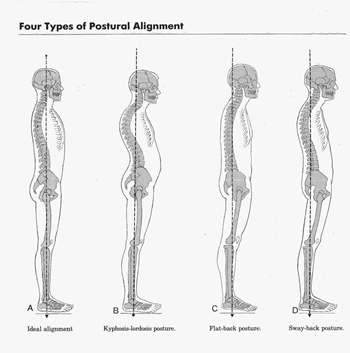
Sitting down for extended periods does evil to yourself, and the chair can indeed be regarded as the work of the devil; several sources report on how a lack of movement, coupled with the unnatural posture a chair provokes, causes havoc  with biochemistry, musculature, mood and concentration. Hundreds of websites can tell you more, two randomly selected ones are;

http://www.businessweek.com/magazine/content/10_19/b4177071221162.htm#p1

http://www.inc.com/jessica-stillman/be-smarter-get-up-and-walk-around.html

Why do we have chairs? Historically, the ground, a cushion, stools, and benches were the sitting options of choice, chairs only appearing fairly recently; first as thrones, to denote the occupant as a special figure. As this idea of status derived from a seat with a back filtered down through the classes, each household wanted one for the head of the table, then richer homes wanted chairs for all the guests, and the trickle-down effect now means even the lowliest of rooms has these bizarre torture devices in. After a lifetime of sitting without always using the abdominal muscles to support the upper body, we find slouching the customary fallback position. Status memes, what a way to decide on the habits of a society!

So what can we do, armed with these snippets of knowledge? If we have decided to determine our own states of consciousness, they provide another way we can influence these. Do you wish to be healthier, more alert, happier? Do you want your mind to function faster and more creatively? Then get up and walk around, or at least sit in a way that allows your back and abdominal muscles to do what they are supposed to (i.e. without leaning back against a surface).

A lot of trance induction works this way. By adopting certain postures we actually feel more confident, by shifting our attention to the wider visual field we automatically move into a very light state of near hypnotic awareness, perfect for acts of self-suggestion.

The mind body divide we use linguistically seems to derive (like so many other dichotomies) from mistaken views of how the world manifests. As creatures of bilateral symmetry, we like to divide anything into two, or if getting elaborate, four or eight directions. Conceptualising something as a continuum proves difficult for an animal whose survival for several billion years depended upon understanding little more than I vs Not I. To reconcile the distinct oneness of the universe around us, the way in which matter pervades all space, with the objects we see as people in fact representing what could more accurately be described as standing waves in the pool of cosmic substance, takes a significant rewiring of one’s brain. Language and positional conceptualisation has its place, however we must not mistake utility for ultimate truth. Words provide handles to manipulate our understandings, yet any thing or act can be grasped from more than one direction.

Start with easy, simple steps. Practice assertive body language, and bear in mind that not only do postural changes affect the image you communicate, they alter your own mindset, via the ways your internal body systems are changed. NLP, CBT and other more ‘fringe’ psychological therapies make use of these kind of techniques, but approaching them from a Chaos Magick perspective allows one to extract the effective practices from the various metaphors that accompany them, whether biological, chemical, behavioural, psychological, theatrical, or viewed as an invoking process. Choose the glamour that works for you at this time! And then, invest some real belief in that glamour. Pretending to be assertive (or whatever the mood is) takes far more effort than changing yourself into an assertive person.

One could of course decide to adopt any other postures, e.g. empathy, or use observational practices to see which postures we tend to fall into from habits, and which specific previous occurrences or environments result in certain postures. Altering the external environment allows changes to our options of internal process.

Learning about this basic sorcery level manipulation of personal reality can give insights into other ways of affecting our worlds.

To paraphrase: Get up, make up your mind, and walk.

NW