Dark Times

The wheel of the year turns another click onward, and one of the many new years we can choose to celebrate these days has arrived. Chaos magicians can choose to move the exact date (which is handy) so I shall be ‘doing’  Samhain in a week or so, while today is reserved for a nice secular witchy style evening with friends, tarot cards, and beer.

Annual party occasions give us regular markers in our lives, the Christian names (having taken over for a while) now reclaimed by other more pagan sounding titles (e.g. Christmas – Saturnalia/solstice, Easter – Eostre, Hallowe’en – Samhain). As each one rolls around, as our planet rolls around the sun, we recollect what we did last year and imagine what we might do next time round.

This circular notion of time, is ages old. A day is obviously circular, we can see the sunlight moving overhead; the year then must surely follow a similar shape. And what type of things do we do on these auspicious (or dangerously liminal) days? We do what humans have done for thousands of years at any excuse. We dress up, we eat, drink, and we meet with our friends, our tribes. We might even listen to repetitive beats.

These anchor points of parties and known shapes to particular days and evenings give us a sense of continuity, in the otherwise formless day by day sameness. Fictional as they may be, like the days of the week, they provide us with a progressive narrative, punctuations in the stories of our lives. Yet as with all Life, the yin-yang balance of the feast days means that no two are ever the same. What costume shall I wear to Halloween this year? What present shall I buy for my love to unwrap on Christmas day? Comforted by the familiar we can express our agency through the versions of themes allowed.

But this year, this year is different. It is 2012; this could be the last time we celebrate these festivals. While we know for sure in our rational minds that the world will keep turning long after December the 21st, a part of us wonders, checks, before settling on that sensible conclusion. Here, in this moment of uncertainty, we can see a blank slate. For as certain as we are that death and taxes await us in the New Year of 2013, we know with equal surety that the calendar we use is arbitrary. 365 days in a year, yes, but… hang on isn’t that not quite right itself?! As for the number of the year, the names of months and the days, the way we divide up that year: So much depends upon the place and time we took our first breath, the culture of our parents.

And so for a split second we wonder, What if?
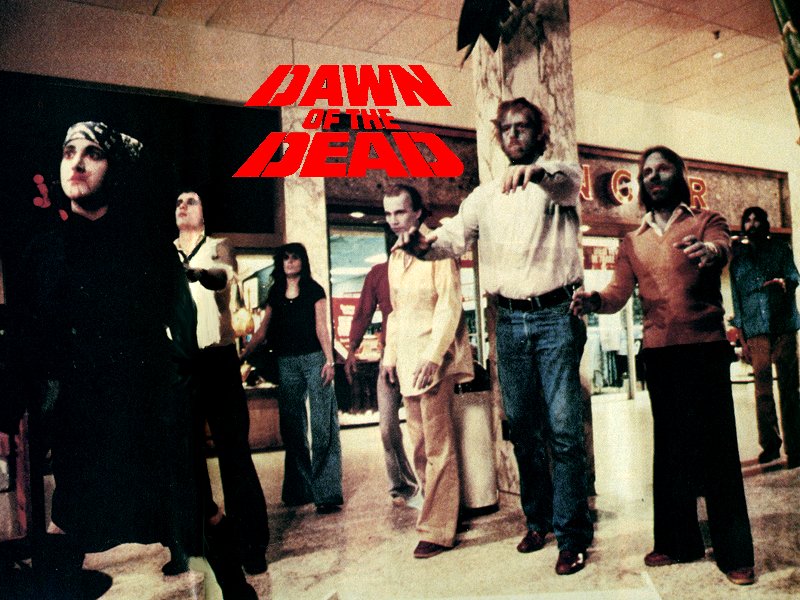
A shopping mall, yesterday (Library image)

This gives us a kireji moment, a cut between two contrasting actions. The intrinsic sameness and differentness of each feast, the simultaneous looking forward and backward as symbolised so perfectly by Janus god of doorways, as we pass through the signposts of one year to the next, an opportunity for change or continuing arises.

Whether you celebrate tonight with a traditional turnip lantern and a surfeit of Soul cakes, or in a traditional zombie blood spattered outfit at a massive party, or dress your children as traditional pumpkins and go out to collect sweets, I wish you a safe journey through this space of esoteric choices, practising for the times we face choices in those ordinary, mundane days between times which make spooky ghouls and vampires look like a picnic in comparison… to change, or not to change, that is the question.

NW
Shaking up your Magick

I’ve been exploring shaking recently. The kind of trance state that often goes by names such as the Seiðr (seething*) or simply as ‘shaking’ within the Christian tradition (hence The Quakers et al). There are a couple of good books on the market which explore this approach, Jan Fries Seidways  and Shaking Medicine by Bradford Keeney (which comes with a nice CD of sounds to shake to).

[*Ed’s note: I have been asked to point out that despite  recent use by some individuals equating the similar sounding words ‘seiðr’ and ‘seeth’, they are in fact from very different etymological origins, and historically unrelated. Further information about more plausible etymologies of this word can be found at http://en.wikipedia.org/wiki/Seiðr. Seiðr covers a wide range of complex magickal techniques, and should not be taken as equivalent to the technique of entering trance by shaking. We apologise for any confusion! NW]

As I’ve already mentioned shaking trance turns up in many spiritual traditions, and there are many techniques you can use to get into that state. But as with most things in magick (especially in the DIY-punk-inspired style of chaos magick) no guidebook is as good as your own experience. Playing with this state I’ve discovered that, unsurprisingly, if I spend some time stretching (using yoga, tai-chi and other non-stylised movement) getting into the shaking trance is easier than if I plunge straight in. Sometimes a rattle helps, so there is a neat ouroborous feedback loop feedback from one’s own movements through sound and vibration (even if you’re shaking to pre-recorded sound) and back into movement.

Different shakes can arise. Sometimes they start at the periphery of the body, but for me the deepest and most powerful ones start at the root – the dan tien, the muscles of the core. As with much martial arts practice the idea of allowing movement to arise from the belly, the spot we quite literally grow from (attached to our mothers via the umbilical cord) makes movement of the arms and legs deeper and stronger than if the limbs are used in isolation.

shaking can open up many spiritual powers

Shaking can open up many mysterious spiritual powers

The shake can go through phases. Faster or slower, moving the body around in the space or keeping it fairly static and merely vibrating; shivering on the spot. The rule is, feel into it and go with it.

So what’s the point? There are many different uses of shaking trance. There are the physical and psychological healing benefits. By shaking ourselves we unblock channels of lymph, energy, blood and mentation. We stir the blood and stimulate the organism with global sensation. Vibrations pass though the organs as well as along the arms and legs. We feel good.

Then there are the more clearly esoteric uses. Shaking trance can be used as a state to build energy or gnosis for acts of results magick, casting sigils and all that. But for my money one of the most interesting features of it is the oracular or inspirational use of shaking.

Like some aspects of Seiðr there is a sense in which this trance can be regarded as passive. The practitioner is carried away by the vibrations of the bodymind; spontaneous glossolalia, song and even prophecy may arise. They may be a sense of the body changing into other animal or mythic forms, emotions well up, dislodged from the depth of the mind, floating up to awareness. So although the technique is one we deliberately employ there is very much a sense that the practice unfolds through the practitioner rather than originates from him or her. We create the conditions for kundalini to strike up the sushumna; light the touch paper and our occult organism does the rest. We shake out obsolete patterns and dance into the Mystery.

Try it for yourself!

JV