
Exercise 3: Awakening the Magical Self

More esoteric praxis from Steve Dee; as featured in his forthcoming work on Gnostic magic.

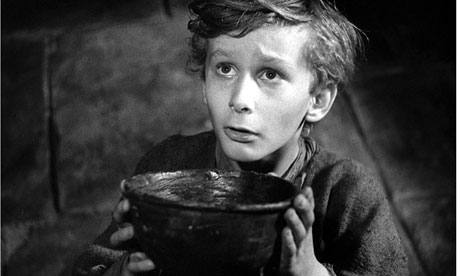
Let’s face it, being human can be difficult at times; not only do we have the basic needs of food, shelter and survival to contend with, but we also have to struggle with those nagging questions about “why am I here?” and “why am I still unhappy?”. When faced with such dilemmas we human beings have been endlessly inventive in our attempts at brushing them under the carpet. We are endlessly trying to shift our shape in the hope that the new thing will provide the salve we seek: more food, more sex, more stuff, more of frankly anything in an attempt to anaesthetise our core pain.
Wanting more

Wanting more

Many seek to manage this anxiety through the embrace of faith and the certainties that it offers. I’ve had my own stab at suppressing reality via the path of religious orthodoxy, but my inner heretic won out.

The path of magic is simply not suited to those who desire either a simple solution to life’s mystery or are unable to withstand mind-warping bouts of existential anguish (sounds attractive doesn’t it?!). To be a Mage is less a noun and more a verb, a process of on-going exploration and refinement in which the light of realisation moves in and out of view.

While ontological certainties may be less familiar to such intrepid explorers, it hasn’t prevented us from making a multitude of maps. These may be borrowed from the religious soil from which the magician originated or they might be fresh mutations based on insights gleaned from science. Whether we base our journeyings on chakras, the Tree of Life or post-Freudian models of the self, many of them seem to have a shared preoccupation with the pursuit of holism and the reconciliation of apparent opposites.

Most of the maps that I find helpful (such as Assagioli’s Egg) acknowledge that our experience of human existence is profoundly coloured by a whole host of competing drives that are further complicated by our experience of linear time. Most of us are wrestling with the realities of physical survival, the questions of who we are now, and our hopes and questions about life after death. To complicate matters further these drives are generally set within a timeline where we have to interpret the past (forgetting bits, idealising bits, demonising bits), experience the present (to varying degrees) and, speculate on an unknown future. It’s enough to give anyone a headache!

Those of us who practice within various forms of Chaos magic have consciously sought to engage with this maelstrom via the skilful application of apparently non-occult technologies. The present tense has an arsenal of awareness techniques brought to bear on it, while the very linearity of time is questioned as weaponised Neuro-Lingistics seek to untie knotty past traumas and whisper to our future selves, so that our best futures might become possible.

While a certain degree of self-awareness thankfully prevents delusions of megalomania, what such an approach does promote is a sense of curiosity and agency. As a Magician these two traits are mutually dependent treasures: the sense of some power allows me to manage my anxiety in a way that allows a more open exploration of what the difficulty might be. So often our terror shuts us down and prevents a more open appraisal of whatever challenges are in front of us. To cultivate a more experimental, playful engagement with a situation promotes a perspective where we are allowed to be less than perfect and that our understanding is part of a learning process.

Learning through play

Learning through play

Exercise 3 – Your Future Magical Self

This exercise was originally presented as a group working in our magical lodge back in 2009. This practice aims to work with our future magical selves and owes inspiration to Edred Thorsson’s work on the Wode Self (found in his brilliant Nine Doors of Midgard), and Nema’s concept of N’Aton found in her fabulous book Ma’at Magick.

The purpose of this practice is to allow us to consider how we wish to see ourselves change magically in the future, and to provide a ritual means for integrating these changes more fully in the present.

Step 1: With a piece of paper and pen at hand, write down those qualities that you wish to see in your magical life and practice in 12 months from the current moment. What are you doing? What new skills or knowledge have you acquired? What are you wearing? What does you altar space look like? Try to be ambitious but also realistic; the most effective and sustainable change comes through utilising the raw material of who you are now. We are not talking about a personality swap, but rather a process of enhancement and enrichment.

Step 2: Stand in a comfortable position and become aware of your breathing. If it aids you in visualising (and doesn’t cause you to fall over) you can close your eyes. As your breathing naturally slows and you inhabit your body more fully, reflect on yourself as the Witch, Shaman, Gnostic, Magician (insert relevant descriptor) which you find yourself being right now. The very fact that you walk this narrow path means that you are already brave and brilliant. Spend time reflecting on what you currently do well and give back to the world and also spend time acknowledging those aspects of yourself that might be more challenging or problematic. This version of you in this moment must not be pushed away, this dark, rich material is the soil from which the ‘future you’ will be fed.

Step 3: While in this state of relaxed connectedness, begin to visualise the physical form of your future-self standing opposite you. As you imagine looking into their eyes, visualise them possessing those qualities that you will make your own. In contemplating their physical traits and the way you will engage in the world, imagine that their form begins to glow with blue light. As your visualisation becomes more vivid and focused, so the blue light becomes more intense and electrified.

Step 4: Embrace your future magical self! Activate those kinaesthetic learning processes by physically leaning into your visualised form. Absorb that blue energetic version of you and draw in those new qualities and traits. Connect to the energy of this embrace!

In the version of the ritual that I delivered within our magical group, we passed a small hand mirror around the circle and each of us spent time gazing at our own eyes in order to ground this experience more fully. In turn we passed the mirror to the person next to us and gave the blessing: “Embrace your magical self! Pass it on!”

SD


Exercise 2: The Liberating Journey

The 1950s and 60s witnessed the birth of an important movement within the Roman Catholic Church in South America. People engaged on the coal face of day-to-day hardship re-envisioned the gospel message in relation to salvation from political and economic oppression. The Liberation of the Israelites from Egypt and the Gospel message of Christ were viewed as narratives of freedom whereby “the downtrodden were lifted up” (Luke 1:52). With the birth of Liberation Theology in the works of Leonardo Boff, Gustavo Gutierrez et al, past dogmas were no longer sufficient, and the rigours of true discipleship were now to be measured in terms of deeds or “praxis”. As Desmond Tutu powerfully observed; “If you are neutral in situations of injustice, then you have chosen the side of the oppressor.”

For many Liberation Theologians, the biblical exodus was seen as an exemplar of what personal, economic and social freedom might mean. The exodus is the central example in the Old Testament of salvation history, i.e. the way in which God is seen as intervening in the life of the Jewish people so as to demonstrate his on-going covenant with them.

Lest we forget the concrete nature of why liberation was so needed by these people.

“Indian Soldiers from the Coritiba Province Escorting Native Prisoners” by Jean-Baptiste Debret

For the Liberation Theologians the movement from oppression and captivity, through tribulation and wilderness and then on to the Promised Land, provides us with a critical paradigm as to what the Gospel needs to embody. To speak of salvation without there being concrete transformations at a practical grass roots level is to utter empty words. These insights were such a direct challenge to the wealth and power of the institutional church, that leading thinkers (such Leonardo Boff) were silenced by the Congregation for the Doctrine of the Faith (Led by Cardinal Ratzinger/Pope Benedict).

While the metaphor of a journey is often something of a cliché in spiritual communities, I believe that we can still make effective use of it when applied skilfully to our own life situations. In the case of the exodus story, rather than it being based on new age meandering, it was a journey that first required a rather stark awakening to the profound discomfort and oppression that the Israelites had been subjected to. Like the Buddha being profoundly awakened to the impermanence of the Universe, for us to truly pursue change and transformation we need to view our current dis-ease with open eyes.

If you are considering a journey of change in your own life, you might want to try this exercise that makes use of some insights gleaned from Dialectical Behaviour Therapy (DBT). As is self-evident from its name, this therapy (developed by Marsha Linehan) seeks to use Hegel’s thinking on how processes of change occur (Dialectics). DBT seeks to work with the difficulties that we can arise if our thinking and emotions become polarised and cut off from each other. The therapy’s goal is focused on developing skills that allow the less connected aspects of ourselves to communicate more effectively. In DBT, as emotions and reasons are allowed to inform each other, so we begin to cultivate the deeper wisdom of what Linehan calls “Wise Mind”.

Step 1.

Draw a line down the middle of a blank piece of paper and on either side draw a circle that has enough space to write inside. Inside of the circle on the left, use words or symbols to describe the current situation that you wish to change. Like the Israelites or the Buddha waking up, we need to view our situation with as much clarity as possible. Some people find it helpful to imagine themselves viewing the situation as if it were occurring to a close friend: what would we feedback to them? How would we describe the nature of the problem or dilemma? What aspect of the situation is most changeable?

Step 2.

In the other circle use symbols or words to describe the situation that you wish to journey towards. As you see it in your mind’s eye, what things are you doing? Are you wearing specific clothing? What are your surrounding like? These can be vital questions in order to focus your desire
to see things change. It will also provide you with a goal (albeit a visualised one) that you can measure your progress against.

Step 3.

On another piece of paper re-draw these circles as intersecting like this:

circles

So this is where the rubber hits the road! If we have connected to the situation we are unhappy with, and also have a clear vision about where we wish to journey to, how do we use the insights gained to actually begin to make it happen?

The intersection between these two circles is the synthesising point where our desire for freedom needs behavioural expression. In the same way that Liberation Theology places a firm emphasis on praxis, so the behavioural aspect of DBT would insist that we gain the greatest benefit when our longings are translated into actually doing something. The beginnings of this journey will often start with small steps that, when they are added together, can cause significant shifts within the eco-system of our current situations.

For example if we want to ultimately reduce a pattern of habitual/addictive behaviour that we feel is damaging us, how do we start increasing the positive new activity that we want to experience more of? If I want to reduce my smoking in order to improve my yoga practice, I might increase my practice at home or attend a new class so that I can maximise my desire to change the target behaviour (the smoking). By increasing my practice at home I’m reminding myself of why I want to reduce my smoking and by going to a (good) class I’m using the practice of others to reinforce my new activity and to provide myself with inspiration. This then acts as a feedback loop (or spell!) that helps me reach my ultimate goal i.e. being more healthy.

There are many types of response that can be generated by mapping out change processes in this way. As we let the dialectical tension simmer between what we want and where we currently are, numerous alchemical realities can be generated. We might realise that the change we want is actually something less radical (we might redraw our circles with new goals in mind). Seeing our current situation more clearly may help fuel our motivation and get us reflecting on whom we might invite to join us on this journey (other people’s circles begin to intersect with our own).

A psychiatrist once had a sign in their waiting room stating “Either way it hurts”; i.e. it hurts to change, it hurts to not pursue change. To think about change is never without risk, but the alternative of not seeking growth can be a slavery that most Gnostic explorers would struggle to bare.

SD