Gems for the Library

Here are a few recent additions to my library that I thought you might like to check out…

The first is Momento Mori by Paul Koudounaris. This book gathers together some breathtaking photographs by the author that focus on the ritual uses of dead humans by the living. The collection spans images of skeletons dressed in gem encrusted raiment in Germany, the charnel houses of Europe (notably the astonishing Sedlec Ossurary in the Czech Republic where human remains are used to construct baroque ceiling ornaments and skulls cover every wall), and many more locations. The household skull spirits of Bolivia are photographed, as are the gilded corpses of long dead Buddhist monks, and the tragic monuments to those people murdered by the Khmer Rouge in Cambodia. This amazing collection of images is introduced by an erudite essay which explores how the material remains of our ancestors have, by and large, become excluded from the day-to-day experience of many (post) Protestant cultures; contrasting this attitude with current global and historical contexts which show that this is an unusual disconnection. This isn’t a morbid or gruesome book, rather one that explores with text and astonishing images, how we make sense of death and maintain our relationships with those who have gone before us.

Bone yard

Bone yard

The next two volumes take as their subject drugs. The first, Mystic Chemist by Dieter Hagenbach and Lucius Werthmüller (with forward by Stanislav Grof), is a biography of Albert Hofmann. This is a detailed account, with numerous illustrations, of the life of Hofmann himself and his problem/wonder child LSD. There are some great tales here and Hofmann comes across as a thoughtful, kindly and dedicated person. Also included is some broader cultural analysis of the influence of LSD on art, science and other fields.

Continuing the etheogenic part of this trip, the third journal this year from Psychedelic Press is out now, maintaining the very high standard of writing that I’ve seen in the previous editions. Material from personal, legal, ethnographic, scientific and other perspectives make these volumes a real delight to read. There’s some ground breaking research being reported in these collections too, so if you want to get hip to what the psychedelic intelligentsia are up to these days I recommend a subscription. For example, in Volume II from this year historian of the counter culture, Andy Roberts, did a great job of refuting the oft repeated story (which actually appears in Mystic Chemist) that Francis Crick got his insight into the configuration of the DNA molecule while high on acid.

Acid-head before acid

Acid-head before acid

Another slice of counter-cultural goodness is available in the form of The Trials of Arthur by C.J.Stone. In this book, which has elements of gonzo journalism, we follow the story of one King Arthur. Not the first incarnation of that Once and Future King but his modern iteration as an ex-squaddie biker/druid activist costumed hero, who waged a dogged battle against The Man to allow unrestricted access to Stonehenge, and was an important part of the Thatcher years road protest movement.
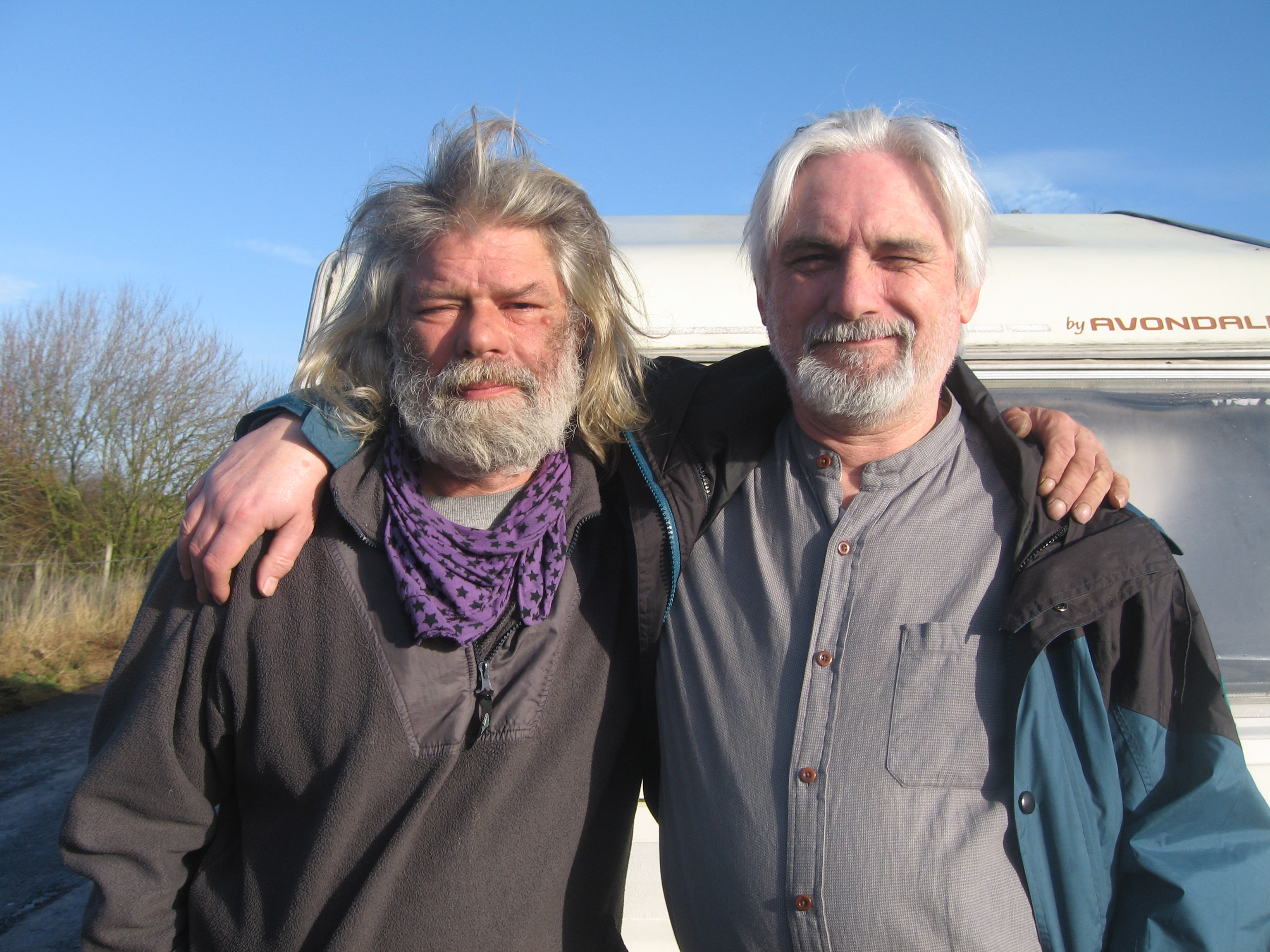
Sword and the Stone

The Sword and the Stone

This is a deeply magical books where the symbolic identity of King Arthur, though a series of synchronous events and high strangeness, becomes linked to a chap called John Timothy Rothwell (born 5 April 1954). As the revelation of this identity unfolds our modern Arthur gathers his knights around him and sets of on various quests. The question of the ‘truth’ about Rothwell’s identification as King Arthur (as either a reincarnation of the ancient King or classic British eccentric, or both) is explored. The notion that there may be many ways to read this phenomena (as C.J.Stone and I suspect Arthur himself would admit) is maintained, while clearly showing both the symbolic power of that royal archetype, and the bravery of this individual (Arthur refused to wear prison issue clothes while on remand and was put naked into solitary confinement for quite some time). This is an important slice of counter-cultural history and describes how an inspired and magical approach to protest can affect real social change. People engaged with the Realpolitik of opposition and cultural transformation, who are inspired by occulture, should read this book. This volume elegantly describes how magic can practically bring about real changes in the world.

JV

 

Drugs – You Done Too Much

One of the causes I support is the end of prohibition, the end to the War on (some) Drugs. Chemognosis or the use of entheogens is something I’m interested in, that’s why I’m involved this year in helping to organise the mother of all psychedelics conferences, which opens this weekend, Breaking Convention.

There are numerous approaches being developed around the globe to help us get a post-prohibition model of how these powerful substances may be used. Many years ago I was involved in helping to set up the drug policy think-tank and campaigning organisation Transform. I’ve also encountered these substances first hand in (for want of better terms) ‘tribal’ cultures from outside of Britain. Given these facts I like to think I’m relatively well informed about the broad social story of drug use, as well as the specific narrative of their use in modern occulture. Within this in mind I thought I’d write an article that states something which I think should be blindingly obvious, but often appears in prohibitionist arguments about why we shouldn’t legalise or decriminalise drugs: this is the concept of ‘too much’.

The sharp end of the War on (some) Drugs

The sharp end of the War on (some) Drugs

For example, when discussing cannabis, opponents of legal and cultural reform will often point out that if you smoke too much cannabis this can have negative health consequences. This is certainly true. Current research suggests that heavy use of potent forms of cannabis (typically selectively bred, hydroponically produced weed) may be implicated in the development of mental illness, particularly in some young people. At the other end of the scale (in terms of how long humans have been using a given substance) novel materials such as 25I-NBOMe (which is active in very small amounts, typically between 0.000050 and 0.0001gram) have been linked to several deaths.

In all these cases the logic runs that people may take ‘too much’ of substance X and end up feeling ill or perhaps dead. However the point I’d like to make is that ‘too much’ is, by definition, ‘too much’. It’s no surprise that ‘too much’ of anything (water, egg and chips, paracetamol, chocolate biscuits or cocaine) can be a problem. That’s why we have those words – ‘too much’.

Another way to put ‘too much’ is to use the expression ‘overdose’ and this can perhaps help people see more clearly what’s going on. An overdose is literally (in the original sense of the term ‘literally’) a dosage level that is too high. At that level various effects the user might not want become apparent. (Although some entheogenic spiritual styles actively make use of reactions such as the purgative vomiting on peyote or ayahuasca as a transformative and liberating part of the trip.) In the language of pharmacology we can have an Effective Dose (the lowest dose at which an effect from the substance can be identified) all the way past the Dissociative Dose (DD, where consciousness is turned off) to the LD50 (the amount at which 50% of a given population of users will die). Of course we may desire the different effects at different doses, and for different substances (a full-blown ketamine trip for example often starts from a DD, ‘the K-hole’, and the experience is largely about awareness coming back on-line). However death is rarely a desired outcome and so an LD50 level dose is quite likely ‘too much’.

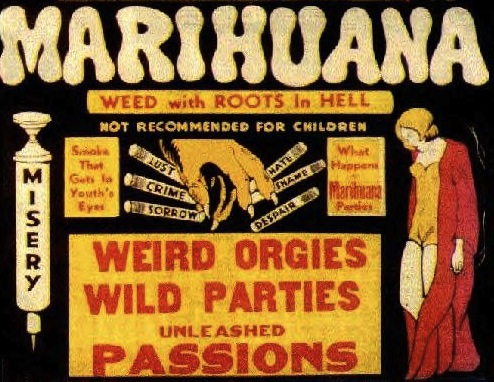
Just injecting one Marijuana can kill you (probably)

Just injecting one Marijuana can kill you (probably)

Entheogenic psychonauts sometimes claim a special case for psychedelics, in that they exhibit a rapid tolerance which means that the effects of a drug such as LSD will significantly reduce if taken regularly over a given period. There is also often a cross-tolerance which means that if you take a load of acid and, a few days later eat a bunch of psilocybin mushrooms, the effect of the latter material will be less dramatic than if the user had waited longer before going on another psychedelic trip.  While this is true it’s also the case that some people do try their best to up the dose and increase the effect they are after. While there may not be any dramatic physiological responses to increasing the dose for ‘classic’ psychedelics there can certainly be unpleasant psychological issues. In this case the person has clearly taken ‘too much’ or ‘overdosed’.

Paracelsus wisely remarked, half a millennium ago; ‘Sola dosis facit venenum’. Liberally translated this means that ‘Poison is in everything, and nothing is without poison. The dosage makes it either a poison or a remedy’. So the argument that we should ban, or keep banned, a substance because people may end up taking ‘too much’ and getting ill is simply a statement of the obvious and in no way a good argument to support prohibition.  It is an argument for good education, good health-care provision, and better quality, labelling and licensing of substances – but prohibition? No. That’s simply ‘too much’.

JV