Your Very Good Health!

I don’t have perfect health. My body after nearly 47 years taking breath, has had things happen to it, and has broken in several places. A casual passer-by would never know but, I have; ligament damage to my knee, a weak Achilles tendon, currently a bad back (from sitting funny last week and spreadsheeting for three hours), and a severely damaged inner ear. Also, various other temporary aches and damaged bits come and go, along with the rounds of viruses, bacteria, and so on. My skin and bones record dozens of small scars from long forgotten injuries.

This is my normal. Having a blemish free body, unaffected by incidents after so long would be unnatural. It is a miracle I am alive at all! I marvel at how well biology does at maintaining this form I inhabit in recognisable similarity year to year, despite replacing all the cells on a regular basis.

Evolutionary adaptation takes into account this wear and tear, accidental impacts, and attacks from hostile micro-organisms. As well as repair, it has blessed us with death, and its companion, reproduction, so as to give the life force a restart every generation. Our tissues are designed to receive damage and recover from it as best as possible. Life expects us to be hurt.

I once heard a skin specialist being interviewed, who was asked what we could do to keep our skin totally safe. He said, cover it in petroleum jelly and stay indoors permanently; which he immediately followed with, of course that is impossible. Living entails a process of acquired ‘imperfections’. Like trees none of us has grown entirely according to the biological instructions we were provided with at conception, our surroundings alter our shapes and behaviours. This even applies to how our DNA instructions manifest themselves (see epigenetics).

Having experiences gives us personalities, and interesting appearances. Like trees, the ‘perfect’ human form would likely seem bland and without character.
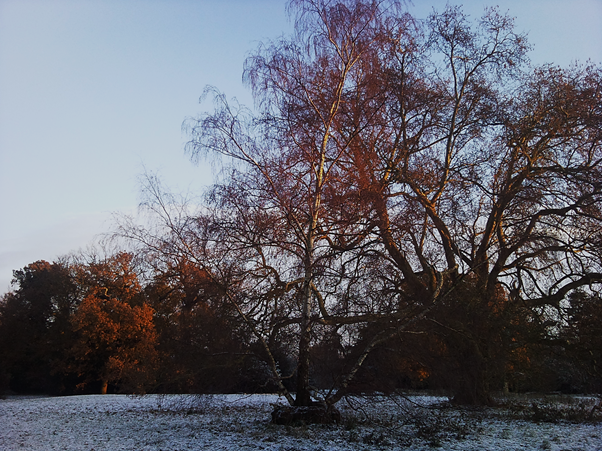
My perfect tree

My perfect tree

Part of living is accepting that we do not remain in that mythical state of ‘perfection’, even if we are born with no obvious errors; which in itself is not something we ought to expect. Having the ability to see what we do have, in the face of adversity, to count our blessings, gives us a different take on who we are.

In a world influenced by the futile quest for a standardised perfected body image, the scars and marks of survival can loom large. For me a big step in defining myself came when I was asked by my friend (a psychologist with many years experience of counselling those with chronic conditions) what percentage of me was ‘ill’, and what ‘healthy’. I realised that whilst my internal sense of (literal) balance was flawed, it made up only about 3% (subjectively) of Me. The other 97% was in fact in pretty good shape. Suddenly instead of feeling broken, beyond repair, I felt that I had worked well at keeping what I could functional; my senses were fine, I had limbs that did what they should, I had reasonable fitness. I could do more things to make that ok part of me better, or perhaps Good; even if I couldn’t change the damaged inner ear.

And so I did. I’ve spent the last few years practising yoga, eating well, ensuring I sleep properly, and enjoying the things I can do, pushing aside the terror of inadequacy by building the abilities I have; so that when I get dizzy or have issues then the weller bits of me can compensate. This is not a perfect solution, but, as well as the health benefits, this strategy has made me feel I have influence over myself, my behaviours. A feeling not to be underestimated in its power.

On a magickal level the approach has changed my attention, which for me right now seems to be one of the defining skills of a magician; to direct attention as necessary for optimal results. And as I switched to this different perspective, I began to discover (by myself, and via information shared by others with me), possible remedies for the problem, as its import shifted to non-critical. Perhaps, by allowing the damage to be there, whilst seeing the strengths I had, this made space for the previously non-existent (in my world) herb-lore to appear?

However, I write this suggestion very cautiously. It is easy to say, ‘think positively! and all your ills will vanish!’ That is not my intention here. Our aim ought to be to acknowledge our imperfections, our normal state which means we cannot, then look for and focus on the normal we have which means we can.

My inner ear is not mendable. The surrounding biological systems and my way of life however can adapt, so nowadays when I lose balance I barely notice that my body catches me before I stagger and fall. The fatigue can be held at bay (mostly…) by factoring in rest periods throughout every day. Feeding the health, giving attention to wellness, pushing aside the trauma of not-perfect.

Recently I visited my mum, and we were talking of my university days; and I found myself glad that I had done that training, but, pleased it had been forced to stop, as I now have a career which suits me far better. With hindsight, I learnt so much from the years of pain and discomfort, those twists of my branches away from the programmed high reaching symmetry of a scientist has given me a lower profile with greater stability, and arguably made me far more likeable… though without a control it is hard to tell 😉

I would like to encourage those readers who have health issues, whether intrinsic or from external sources, to make a slight shift in perspective, and (in a Pollyanna way…) play the game of rejoicing in their abilities.

Accentuating the positive can drive out the negative. Directed attention does miraculous things to the bodymind. We notice what we look for; seek out your strengths, and you might be amazed at how those weaknesses atrophy.

NW
Magic in the BodyMind

Recent blog posts regarding the spheres of Chaos have been prompting some reflections for me on the way that progress on the magical path might be experienced within our bodies. We might acquire new titles or embark on yet another curriculum promising new Gnostic vistas (Aeonic timeshare anyone?) but do these chunks of learning or imagined shifts in status actually translate into tangible shifts in how we experience our bodymind?

Much ink has been spilt on this blog with regards the centrality of body within our experience of this initiatory pathway that we call magic. To dance, shake and vibrate the names of god in our bodies is central to the type of ecstasy and awakening that we are in pursuit of. Ours is not a means of escaping the physical, rather the insights gained come through the messy, fragile realities of our flesh.

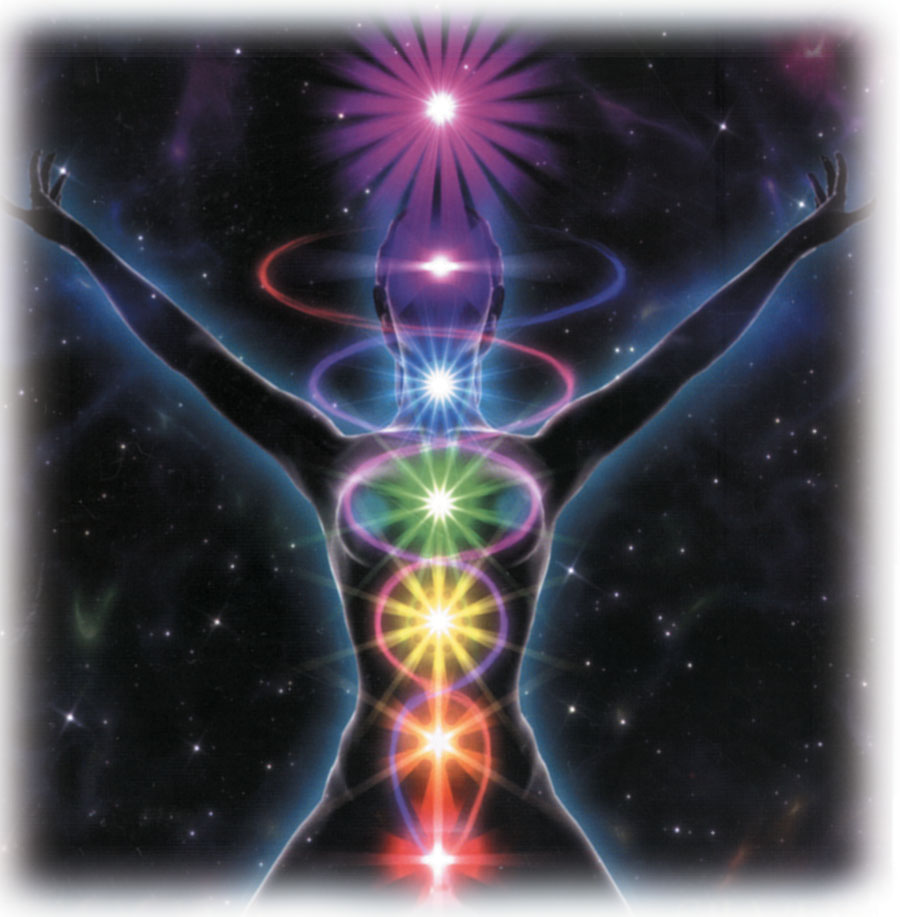
Body magick

Body magick

My own baby steps as a spiritual explorer began when I discovered a book on hatha yoga that my Mum had used whilst being pregnant with me. Much to the amusement/dismay of my working-class builder Dad, the 10 year old me spent hours trying to master “Salutation to the Sun” and crashing into furniture as I attempted daring headstands. On reflection, a big part of my love for this approach was the extent to which it demanded something of me at a very physical level. For the proto-adolescent me trying to come to terms with a rapidly changing body, the discipline and degree of bodily awareness that these exercises awakened felt deeply congruent with stirrings of the libido and the unfolding of sexual awareness.

As my body underwent the alchemical awakening of puberty, I sought to use the channels of asana, pranayama and the Maha mantra of the Vaishnavas as a means of trying to negotiate the primary challenge of “identity vs. role confusion” (cf. Erik Erickson). Eventually I chose to run into the arms of the church in hope of escaping my growing sexual uncertainty, but even here Pentecostal ecstasies found their messy way into my body via glossolalia and Holy Ghost tremblings. My own journey through Christianity and ultimately out the other side, felt as though it were a response to this deep need to experience religious sensuality as a whole body experience. Although the lives of St. Francis, St. John of the Cross and Theresa of Avila point towards such embodied ecstasies, personally I needed technologies that mapped this territory more fully.

Whilst in the early stages of training for the Anglican priesthood, the ideas of Jung turned on the lights with regards depth psychology and the potency of occult knowledge. These concepts were not abstractions, Jung’s ideas concerning anima and animus flicked another switch with regards my own gender fluidity. The breadth of his engagement with alchemical traditions allowed him to develop a psychological model that contrasted starkly with orthodox Christianity. The primary dualities of light/dark, Christ/Satan that are generally viewed as oppositional, are now viewed as being polarities within which a natural oscillation can take place over time. Whether using the yogic psycho-physiology of the Ida, pingala and shushumna or the severity/mercy polarity of the kabbalistic tree it becomes possible to dance with apparent opposites rather than struggle against them. These dualities are not mere topics for intellectual ascent, but realties that can be mapped and felt within the body.

The decision to step out onto the path of occult knowledge and magical practice is rarely an easy one to take. For me the core conditioning received via the church dictated that such a journey was psychologically and spiritually dangerous. In many senses I’d agree – the desire to eat from the tree of knowledge brings with it a process of individuation that necessitates pain and growth. Such processes ask us to examine and challenge the beliefs that we have inherited so as to break new ground in the hope of becoming who we need to be.

As I began trying to find a path or magical tradition that made greater sense of my spiritual yearning, I became aware of how much of the body-focused material from the yogic traditions I had absorbed was resurfacing within neo-paganism. From Theosophy, the Golden Dawn and the work of Crowley I came back into contact with a heady fusion of ideas that while potentially helpful, were also confusing in the lack of intellectual transparency with regards their origins. What would it look like to engage more thoroughly with the source material from which these ideas originated whilst retaining the spirit of creativity and rebellion that stirred their genesis?

Personally I have found that my own attempts to cultivate a dynamic, magically informed sadhana have provided an invaluable lens through which I can appreciate the efforts of my tantric forebears.

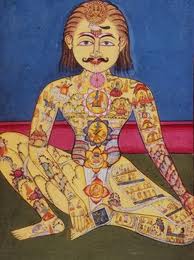
A Tantric forebear

A Tantric forebear

My own attempts to make head-way along this path eventually led me to seek initiation within an Order that remains unapologetic about its east/west hybridism. My own initiating guru within the AMOOKOS tradition was clear in stressing many of the commonalities that exist between hermetic and tantric approaches. Given my history this has helped me greatly in seeking to integrate different aspects of spiritual explorations. Some may be uneasy about this type of approach, but for me this considered syncretism continues to contain a potentially magical dynamism.

As I walk my own path, what I find myself returning to (albeit in a number of differing traditions and sets of practices) are those methods that ask me to deepen the degree of holism in the insights that I might gain. This leaking, failing body is both the arena for potential ecstasies and the ultimate reminder of my own mortality. For me the process of alchemical refinement that I am pursuing is not one of moving up and away from the body, rather it aims to be one of return and refinement as new levels of consciousness are brought to bear.

SD