More esoteric praxis from Steve Dee; as featured in his forthcoming work on Gnostic magic.
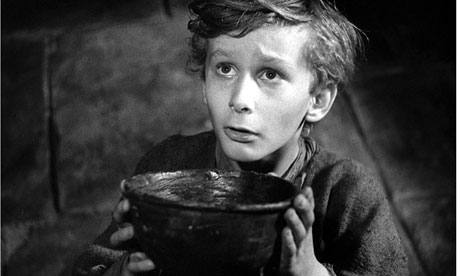
Let’s face it, being human can be difficult at times; not only do we have the basic needs of food, shelter and survival to contend with, but we also have to struggle with those nagging questions about “why am I here?” and “why am I still unhappy?”. When faced with such dilemmas we human beings have been endlessly inventive in our attempts at brushing them under the carpet. We are endlessly trying to shift our shape in the hope that the new thing will provide the salve we seek: more food, more sex, more stuff, more of frankly anything in an attempt to anaesthetise our core pain.
Wanting more
Many seek to manage this anxiety through the embrace of faith and the certainties that it offers. I’ve had my own stab at suppressing reality via the path of religious orthodoxy, but my inner heretic won out.
The path of magic is simply not suited to those who desire either a simple solution to life’s mystery or are unable to withstand mind-warping bouts of existential anguish (sounds attractive doesn’t it?!). To be a Mage is less a noun and more a verb, a process of on-going exploration and refinement in which the light of realisation moves in and out of view.
While ontological certainties may be less familiar to such intrepid explorers, it hasn’t prevented us from making a multitude of maps. These may be borrowed from the religious soil from which the magician originated or they might be fresh mutations based on insights gleaned from science. Whether we base our journeyings on chakras, the Tree of Life or post-Freudian models of the self, many of them seem to have a shared preoccupation with the pursuit of holism and the reconciliation of apparent opposites.
Most of the maps that I find helpful (such as Assagioli’s Egg) acknowledge that our experience of human existence is profoundly coloured by a whole host of competing drives that are further complicated by our experience of linear time. Most of us are wrestling with the realities of physical survival, the questions of who we are now, and our hopes and questions about life after death. To complicate matters further these drives are generally set within a timeline where we have to interpret the past (forgetting bits, idealising bits, demonising bits), experience the present (to varying degrees) and, speculate on an unknown future. It’s enough to give anyone a headache!
Those of us who practice within various forms of Chaos magic have consciously sought to engage with this maelstrom via the skilful application of apparently non-occult technologies. The present tense has an arsenal of awareness techniques brought to bear on it, while the very linearity of time is questioned as weaponised Neuro-Lingistics seek to untie knotty past traumas and whisper to our future selves, so that our best futures might become possible.
While a certain degree of self-awareness thankfully prevents delusions of megalomania, what such an approach does promote is a sense of curiosity and agency. As a Magician these two traits are mutually dependent treasures: the sense of some power allows me to manage my anxiety in a way that allows a more open exploration of what the difficulty might be. So often our terror shuts us down and prevents a more open appraisal of whatever challenges are in front of us. To cultivate a more experimental, playful engagement with a situation promotes a perspective where we are allowed to be less than perfect and that our understanding is part of a learning process.

Learning through play
Exercise 3 – Your Future Magical Self
This exercise was originally presented as a group working in our magical lodge back in 2009. This practice aims to work with our future magical selves and owes inspiration to Edred Thorsson’s work on the Wode Self (found in his brilliant Nine Doors of Midgard), and Nema’s concept of N’Aton found in her fabulous book Ma’at Magick.
The purpose of this practice is to allow us to consider how we wish to see ourselves change magically in the future, and to provide a ritual means for integrating these changes more fully in the present.
Step 1: With a piece of paper and pen at hand, write down those qualities that you wish to see in your magical life and practice in 12 months from the current moment. What are you doing? What new skills or knowledge have you acquired? What are you wearing? What does you altar space look like? Try to be ambitious but also realistic; the most effective and sustainable change comes through utilising the raw material of who you are now. We are not talking about a personality swap, but rather a process of enhancement and enrichment.
Step 2: Stand in a comfortable position and become aware of your breathing. If it aids you in visualising (and doesn’t cause you to fall over) you can close your eyes. As your breathing naturally slows and you inhabit your body more fully, reflect on yourself as the Witch, Shaman, Gnostic, Magician (insert relevant descriptor) which you find yourself being right now. The very fact that you walk this narrow path means that you are already brave and brilliant. Spend time reflecting on what you currently do well and give back to the world and also spend time acknowledging those aspects of yourself that might be more challenging or problematic. This version of you in this moment must not be pushed away, this dark, rich material is the soil from which the ‘future you’ will be fed.
Step 3: While in this state of relaxed connectedness, begin to visualise the physical form of your future-self standing opposite you. As you imagine looking into their eyes, visualise them possessing those qualities that you will make your own. In contemplating their physical traits and the way you will engage in the world, imagine that their form begins to glow with blue light. As your visualisation becomes more vivid and focused, so the blue light becomes more intense and electrified.
Step 4: Embrace your future magical self! Activate those kinaesthetic learning processes by physically leaning into your visualised form. Absorb that blue energetic version of you and draw in those new qualities and traits. Connect to the energy of this embrace!
In the version of the ritual that I delivered within our magical group, we passed a small hand mirror around the circle and each of us spent time gazing at our own eyes in order to ground this experience more fully. In turn we passed the mirror to the person next to us and gave the blessing: “Embrace your magical self! Pass it on!”
SD


 The Blog of Baphomet