Autumn leaves – reviews by Steve Dee

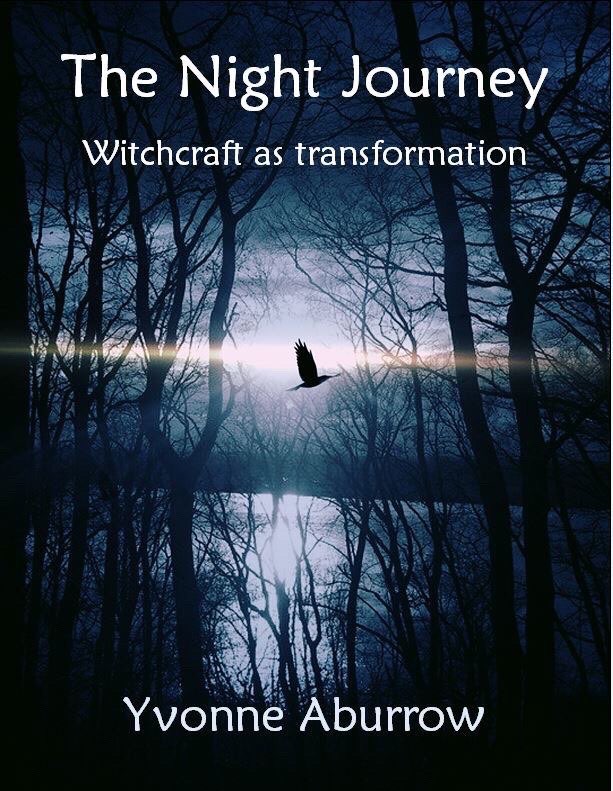
The Night Journey: Witchcraft as Transformation (second edition)
by Yvonne Aburrow

Most of the books that I have read on Witchcraft in the last five years have tended to be either focused on history (e.g. Ronald Hutton’s The Witch) or the spookier reimagining of its Traditional, non-Wiccan manifestations.  In contrast The Night Journey offers something different in its radical re-visioning of initiatory Wicca as a path of personal and political liberation.

I first encountered Yvonne’s writing in their excellent All Acts of Love and Pleasure: Inclusive Wicca which I experienced as a vivid attempt at bringing inclusive and Queer perspectives to forms of Paganism that may have become stuck in our ableist and heteronormative views of human expression. This new work feels like an expansion of Inclusive Wicca; a conscious fleshing-out that provides a deeper, more theological appreciation of what Witchcraft has to offer as a contemporary religious path.
Yvonne has been an initiate of Gardnerian Wicca for almost 30 years and this work represents a distillation of their thinking regarding how Wicca can speak to the challenges of the 21st century. The structure of the book covers a range of themes regarding the validity of Wicca as a religious path and the way in which its initiatory structure helps manage issues such as ego-inflation and spiritual burn out. 

The first section of the book, “Between the Worlds”, moves beyond a simple “how to” book and provides a rich theological reflection on how Wicca provides a living process of shared ritual work via which a relationship with divinity can be evolved. They provide a nuanced engagement with how Pagan magical paths can address our deepest psychological need for contrast and polarity, whether these are between darkness and light or silence and sound. Yvonne has a background in academic religious studies and this feels very present in her deep description of how her own spirituality and beliefs have evolved within the framework that Wicca has provided.

For Aburrow, Witchcraft is an innately Queer path. The Witch is one who inhabits “a liminal zone between the worlds”. This path offers us a shimmering multiplicity of sexual and gender expressions and the Witch by their very definition bends, shapes and adapts. Their theology is unapologetically one of immanence and this is one of the unique features that they believe Wicca (and Paganism more widely) has to offer in the spiritual marketplace. 

In many ways Yvonne’s writing has many parallels with that of Starhawk in very consciously seeing the Witch as an adversarial figure that “endangers the status quo”. Aburrow explores the more Left-Hand Path adversarial dimensions of the Witch path, not as a preoccupation with Gothic aesthetics, but as the outlaw-tricksters who are “the eternal outsiders, the eternal critics”. The Night as the realm of dreams and the Sabbatic journey represents a need to work with ecstasy, wildness and even our own madness as a means of empowering our activism.

The second section, “Bringing it all back home”, provides us with an engaging set of reflections on Yvonne’s experience of running a coven, and these insights regarding ritual forms and working with power in leadership hold relevance across many spiritual paths. How do we seek to work towards more flattened hierarchies while retaining our awareness of the power that we hold via experience and time within a tradition?

Yvonne explores the differing ways that people learn and how we support people in plugging into an egregore while also allowing them to retain the rich individuality that will ultimately add to a tradition and allow it to evolve. For Aburrow, the ability to co-create and change is at the heart of their magic and their self-description as “a relational polytheist” evokes for me the image of a shared cauldron into which people bring their own unique contributions towards a common goal. 

Toward the book’s conclusion, Yvonne returns to the theme of liberation in the longest essay “Challenging Oppression” in which they ask us to consider the implications of our Paganism:

“I became a Witch, a Pagan a Polytheist because I believe all life is interconnected, interwoven, interpermeable.”

If such connection is central to our religious identity, then it has to have implications for our ethics and how we pursue liberty at both a personal and collective level. Yvonne’s work is unapologetically anti-oppressive and anti-racist. Well-meaning inaction is no longer viable. In order to move forward we have to face the implications of racism and colonialism and it is inevitable that such unlearning will be deeply uncomfortable. The chapter also provides some really helpful reflections of the complexities of cultural appropriation and how we might integrate wider traditions in a slow, respectful syncretism.

The Night Journey never promises to be an easy one! As you would expect it can be both disturbing and challenging. At times I felt almost overwhelmed by the concentrated punch of Aburrow’s insights and I consciously chose to slow down to allow a more healthy process of digestion! Thankfully Yvonne provides a series of helpful reflective questions and exercises at the end of each chapter to allow us to consider the implications of these issues in our lives. The brew in this cauldron is a potent one and I could imagine myself spending a year and a day working with these chapters so as to allow the type of reflection, soul searching and deep change that Yvonne’s work is promoting.

Highly recommended.

Buy the second edition of The Night Journey: Witchcraft as transformation here at http://www.shop.doreenvaliente.org/


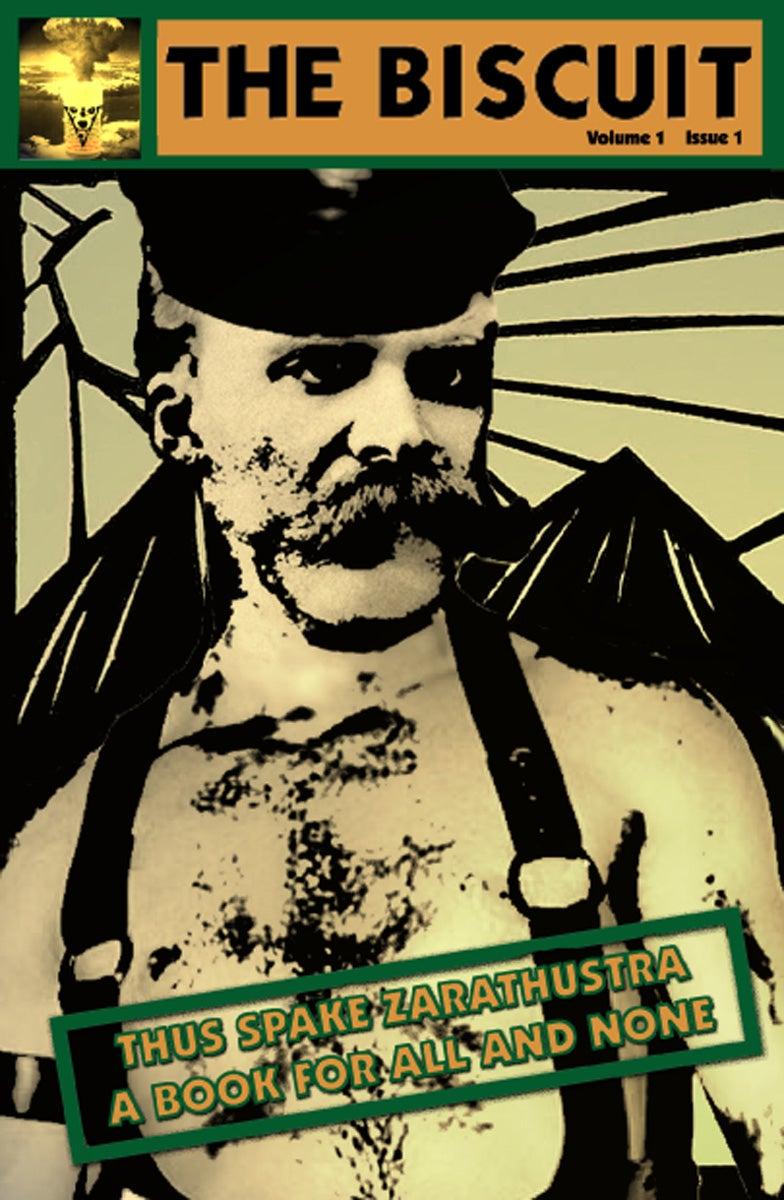
The Biscuit Volume 1, Issue 1
For me there are few things more Punk Rock than a zine (short for magazine or fanzine). Although having their origin with 1940s sci-fi, for me they really took off as an art form during the heady, DIY culture of Punk and the myriad subcultures that it spawned. Zines at their best are a dynamic cut and paste that juxtaposes art, poetry and philosophy in a way that allow the reader a truly multifaceted take on the topic at hand.

This first edition of The Biscuit produced by Three Bones Society (www.threebonessociety.com) captures brilliantly the joyous chaos of a true zine. The contributors to this maiden edition are drawn from a rich intersect of visual artists, esoteric practitioners, psychotherapists and hedge-philosophers so there is little risk of boredom!

The Biscuit is the brainchild of Eric K Lerner, who is obviously a person of bold ambitions as this first edition is nothing less than a Queer-Feral reclamation of Friedrich Nietzsche’s Thus Spake Zarathustra. The whole zine is an attempt to pull back Nietzsche’s work from the hands of fragile egotists and to place his powerful vision back within the current of the post-Christian esoteric tradition. Thus Spake… is the necessary antidote for our materialism and safe complacency: 

“He strives to penetrate the reader’s very being like a virus that takes over the host’s physical essence. His language may bloom within the reader on a subconscious level as a trigger to reinvent him/herself as a higher being.”

David Rankine kicks things off with a concise but unsurprisingly erudite reflection on how Zarathustra has impacted upon Crowley and the evolution of Thelema. Rankine rightly argues that an appreciation of Zarathustra’s message is key to illuminating the Thelemic ideal that “every man and woman is a star”. Sean Woodward’s striking poetry and artwork similarly brings a vivid magical voice to the party.

The Biscuit is full of dynamic and iconoclastic visual art: Tightrope by Charlotte Rodgers provides us with a dancing bone creature whose toppled cruciform calls us to boldly embrace spiritual autonomy: “Thou has made danger thy calling: Therein there is nothing contemptible….” The woodcuts of Thomas van der Krogt, the collage of Vanessa Sinclair and the Gnostic icons of Dolorosa de la Cruz all provide visual sustenance that is both provocative and playful.

A good zine never promises linearity, and The Biscuit unapologetically shunts us between Ron Athey’s gritty performance art cut-ups and Eric K Lerner’s reflection on the challenges of translating Nietzsche from the German: “Gott Todi Ist” is as likely to be rendered “God death is” as it is the iconic “God is Dead!”

Given my own bent as a Queer therapist I greatly enjoyed Vanessa Sinclair’s psychoanalytic reflection on the parallels between compulsion to repeat and Nietzsche’s concept of the eternal return i.e. through repeating patterns we often create the space for deeper, more subtle reflection. This edition ends on a bang as Paul Bee Hampshire provides us with a joyful “Zarathustra-the Sequel” and without spoiling the ending we get to see Zee grappling with the complexities of Queer theory ☺

Zines are rarely for the fainted hearted, but this is one of those really great ones that manages to convey more in 45 pages than many a dusty tome.

Highly recommended.

Steve Dee


Online Magic

Develop your Core Magical Skills with Deep Magic. Several months of self-paced magical training to develop or refresh your Great Work.

Follow our free Imagination and Wellbeing course, also at the Deep Magic teaching site.

Magic in Between Times

The September Equinox is a time of balance. Occurring under the auspices of Libra this is the season of Adjustment, of Justice, and a time to measure our harvest. It is a time for looking at relationships, the interplay between the dark and the light, and that which connects these polarities.

This year has been difficult for many people and so, as we in the northern hemisphere slip into the dark half of the year, we are faced with the need to address these shadows. To help us in our transition, one approach is to look not only at the ‘things’ in our lives, but also to be attentive to the ‘between spaces’. This work can, and should, unfold on may levels.

The body is the first temple and so, as we in the north head into the dark, we can prepare our bodies for this time by attending to our physical ‘spaces between’. One example of this would be in our bodywork where we can focus on the fascia, the connective tissues that attach, stabilize, enclose, and separate our muscles and organs. 

We can pay attention to the fascia using any number of approaches including yoga, tai chi, massage of self or others. We can use supplements, notably hyaluronic acid, and good diet to support these tissues. We can consult a healer if necessary. The fascia can be regarded as the primal matter of the body, from which the tissues of bone, muscle and other organs differentiate as the embryo develops. As such it isn’t just the ‘padding’ between structures but rather the foundation of our form. Paying attention to this ‘in-between’ aspect of our organism helps our whole being emerge in a good way. As a wise friend of mine remarked recently; ‘focus on the fascia and the chakras will sort themselves out’.

Emerging centres

For magicians, bodywork is crucial because, well, as above, so below. Bodywork implies acting with the aspiration to be as fit as we are able to be in our current context. This investment, in what these days is usually described as our wellbeing, is for the benefit of ourselves and others. Bodywork, however we do it, helps us have more capacity when we face the slings and arrows of Fortune. It’s a good investment. As they say in the memesphere; ‘make time for your wellbeing or you will be forced to make time for your illness.’

Moreover if as magicians we are to stay in tune with the patterns in the wyrd we must be able to listen, and bodywork trains listening the body. In my own approach to this work I’ve been exploring Butoh, inspired by a friend’s investigations of this technique. This way of movement that originated in Japan proceeds from a deep listening to the tides in the body. As with shamanic transformation into animals, we quiet our minds, allowing a spirit to enter us, embodying that force in our dance. (Or at least that’s how I’ve been approaching it at the moment.). Have a look at this example of the practice and, more importantly, give it a go:

Seeking balance includes becoming aware of opportunities in daily life that I can use to support my practice; especially in the busy autumn and new academic year. When I teach students I often suggest that they look for these opportunities, so their magic becomes seamlessly blended with daily activity. For example; when we brush our teeth, which we probably do twice a day, we can do so while wondering if the toast is burning, or thinking about what we did last night or whatever. But we can also recognize this simple, almost automatic act of self-care, as an opportunity to work with our awareness. We can simply brush our teeth. Remaining fully present in the act. When out mind wanders we notice this and return to awareness of brushing our teeth. Thus we have turned a straightforward act of dental hygiene into a chance for mindful awareness.

Noticing and using these little opportunities for finding the magic in daily life is essential. While of course sometimes we may find ourselves doing more or less elaborate ceremony, daily chores like cooking, cleaning, mending and making can all be magical acts if approached in the right way.

The equinox period also provides a chance to pay attention to personal points of inbetweeness and transition. This could mean doing practices at the interface between sleep and wakefulness. Recommended reading on this topic includes the excellent Liminal Dreaming by Jennifer Dumpert (also a contributor to the My Magical Thing series). In her book Jennifer brilliantly updates the use of the traditional black scrying mirror by suggesting you use your ipad or phone screen while it’s turned off. The tech, whether you’re doing it with an digital tablet or obsidian mirror, is simple. Having done any preparations for the work you deem suitable, sit or lay down so that you are holding the black mirror in front of you. Allow yourself to dream, to doze (this technique works well just before bedtime). As you fall into a microsleep the hypnagogic state, with it’s boundless creativity and complex brainwave patterns, emerges to generate images, ideas and sensations. As your hands drop the mirror to your lap you’ll jolt into wakefulness. Simply repeat the practice; gazing into the mirror, slipping into the liminal state noticing what’s there, and then jolting back into awareness. Repeated over multiple sessions this is a very effective approach to scrying. The images may begin to appear in the mirror itself as the duration of the hypnagogic state extends. Suitable incenses can be usefully employed to increase the potency of this method.

Making offerings
Black mirror

I’ve also been getting to the liminal state at the other end of the day. Over the last few months I’ve been doing online wellbeing teaching under the auspices of the National Health Service. Some of these sessions happen in the mornings from 7 to 8 am. To make sure I’m in the best state of mind to help others, I’ve been spending half an hour each morning before I teach in meditation. While most of the time I do my meditation practice seated or standing, for these 6 am sessions I use Shavasana while still in bed. Obviously some mornings I slip back into sleep but then hover in the hypnopompic state, as my meta awareness notices that I’m sleeping, and I return to conscious attention on my breath. This practice also allows dreams, that may have been brutally banished by the alarm clock, to gently seep back into memory. More broadly, as the duration of the light changes this alters melatonin production in the pineal gland. This makes the equinox season a good time to start a dream diary and to explore dream magic.

Experiments with liminal psychedelics, such as orally consumed Salvia divinorum, nitrous oxide and ketamine may appeal to psychonauts at this time. However chief among the magical medicines of the autumn is of course psilocybin. I was honoured this month take part, for a second year, in the Tam Integration Psilocybin Summit. If you missed this stellar, richly diverse event you can catch the recorded presentations online. I’m also working on a course for the Fungi Academy on Psychedelic Journeywork with sacred mushrooms. Now the proud possessor of studio lights, teleprompter and high end camera, we’re working to create some real quality material. I’ll keep you informed as the project progresses.

Reflecting in this way – on what we have done and where we’re going next – is also part of the equinox process. We look back at what we did over the summer, we consider what we have harvested from this year, and we prepare for the period ahead. Though we may wince at idea that winter is coming, especially in this time of pandemic, the skillful person will try to re-frame the situation. We can look at this moving inwards, into the dark, as a challenge. Therefore this is time to take stock, to enumerate our resources, our allies, to work on our health, and built our resilience. And to do so does not mean slipping into some kind of alt-right survivalist nonsense, for if ‘I’ am to survive then it must be ‘we’ that survive together.

Back in the temple of the body we can use this equinox time to pay attention to the biology of our gut. This is another good way to do this work of ‘in-between’ magic. After all about 50% of the cells in your body are the intestinal flora. The human gut is, according to some, one of the most densely packed and potentially diverse ecological niches on our planet. Feed your gut, however this works for you, and pay attention to the feelings and needs of the millions upon millions of tiny spirits in your body without whose collaboration you would die. Make a healthy alliance with your gut feelings, listen to what they tell you. If your equinox is one of springtime that’s where spring tonics come in. If you’re passing into the dark this may mean eating microbiologically enriching foods to set you up for winter.

Spirit realm

By recognizing ourselves as a microbial biome we bring into focus our inter connectivity rather than our (apparent) sovereign self of separation. Our gut creatures are the ‘inbetweeners’, the interface between self and the nourishment we need from the world.

The equinox season invites us to notice connections where previously all we perceived was separation and distance. I am reminded of this teaching by the marvellous spider webs, spanning improbably wide gulfs in my garden, binding things together.

Though we may be located apart let us be cognizant of the connections between us, change what no longer serves us, and nourish our Great Work. Let us celebrate the turning of the year. Let us acknowledge the entering of the dark for some, the emergence into the light for others. We are different, we are connected, we are together.

Julian Vayne


Online magics

I’ve doing a whole bunch of workshops via Treadwell’s Books. We’ve got a packed program right through until December, I hope you can join me there.

The awesome Dave Lee is also doing online stuff these days. To find out more the best plan is to subscribe to his excellent newsletter, check his website for details and for info on current courses.

Nikki continues as Editor of the Psychedelic Press quarterly journal; the autumn issue is now available.