Interior Design: Home is Where the Heart is

There are times we all feel low. A lack of control over circumstances, caused by chance events, or from external entities (e.g. stupid people), can throw us off balance in various ways. Health, employment, living arrangements, alterations to our lives undermining the most basic levels of Maslow’s hierarchy of needs.

As magicians we thrive on the feeling of control over our worlds, so a lack of this can hit very hard. Even ordinary developments such as inevitable life flow (our loved ones getting older, our own bodies encountering the vagaries of experience, larger factors changing which alter our expectations of possibility (e.g. economic climate).

The best of us can find these situations challenging. It can take a while before the initial shock of realisation sinks in, and we stand surveying the wreckage wondering just how we can climb onto level ground.

As with many tasks, a good starting place is to examine the possible area of influence. Initially this can be conceptualised as the Self. We can all choose what we do (within physical limitations!) with ourselves. I’ve noticed a tendency of people after a calamity (of whatever scale) to focus on the lack of choices, the limitations, what they cannot do. While these remain it can help enormously to simply ask, So what can I do?

Here, I use the Self in a way that does not restrict itself to the physical skin bounded body. Unless total disaster has occurred, the chances are that we have a place to live we call home, and given how closely this space affects our everyday existence, for the purposes of this essay it can be regarded as a part of the Self we have some influence over.

There is a teaching story, centuries old, which tells of a man who had nothing. He sat in the hut he called home, on the bare wooden floor, put his hands to his head, and cried. After a while he looked up, and through his tears stared blankly at the stark surroundings. Unable to bear the oppressive emptiness, he left the hut and went walking.

As he passed by a rubbish heap, something caught his eye. A rug, of shabby yet still bright colours; it occurred to him that his home would be better with a bit of softness, and colour. So he picked up the rug and carried it back…

Now he sat upon the floor, on the rug, and did not cry. He looked around and wondered, whether perhaps he could do with a small table?

You can see how the rest of the tale unfolds; materials for a basic table are acquired, clever use of old slates and offcuts of timber. As his small home becomes slightly improved, his potential to envisage the next step, to dare to think ahead, increases.

When we feel low, which happens to us all at some times, we can help our Self to feel better by reminding ourselves of what we can do, what we have control over. Having certainties pulled out from under us, the rug from beneath our feet, makes us catch our breath, sets us on the back foot, and disturbs our sleep patterns. Physiological reattunement of those processes within the body (breathing, posture, active relaxation of tension, etc) is easy to find advice on (see any number of internet sites/books/therapists). The next layer outwards, the Self which is our home, receives advice from tv programmes, those wanting to sell us products, or fashion styling websites. However, thinking of the way spatial arrangement of furnishings and colours express and feedback into our psyche has (as far as I know) not yet become a craft many of us have mastered.

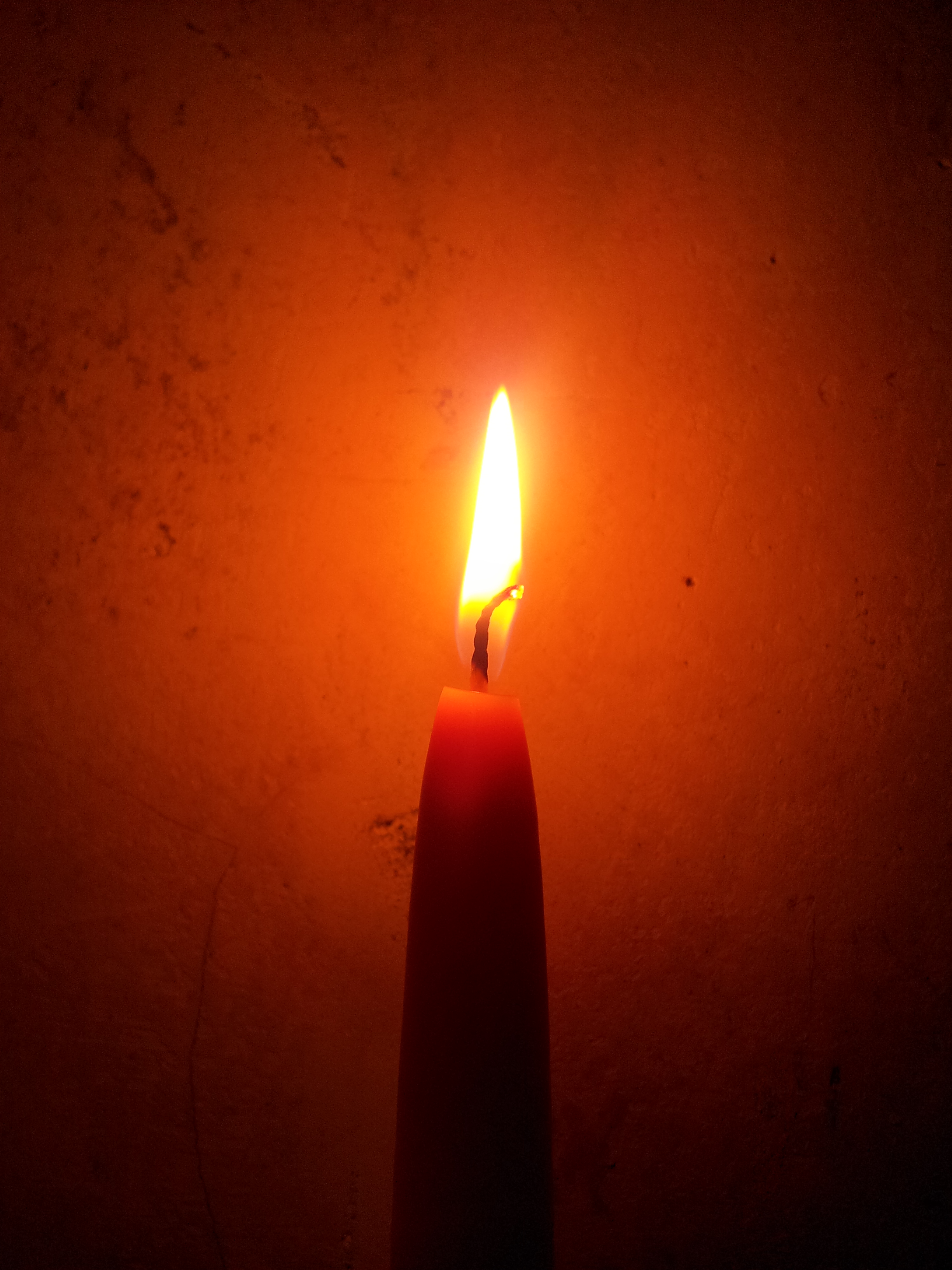
Leaving aside the nuances of such an Arte for now, we can do a few things from our standing start. Stretching the boundaries of the achievable by simple means. Move the furniture in your living room; memories and habits become associated and ingrained by the routes we take, by the walls and window view we stare at. Clear away the unwanted objects that thwart your actions. Bring in some flowers, or other greenery. Light a candle. Change the pictures on those walls. Paint one or two of them if you like.
Better...

Better…

In a way, it does not matter exactly what you do; the important thing is to change your visible, palpably sensed environment, in a way which allows for a recognition of your current life activities, your current tastes, to bring the immediate world around you up to date with where you are. With what you do NOW. And here the term ‘now’ includes not merely the instant, but the now which spreads into the time frame of today, of this week, of this month.

Shifting these definitions of Self, of Now, outwards beyond the skin, beyond the present moment, and demonstrating to yourself that you have agency here and now, you can alter the circumstances in which you find yourself; this has great power. Small steps lead to greater perspectives on what may happen next, what you can subsequently affect.

Many times that feeling of victimhood, of ineffective action, seems impossible to break out of. Grooves of behaviour repeat, sitting in the same place, moving around that awkward coffee table corner, memories of previous patterns reinforced by the visual cues present. By shifting a few items, these established patterns are loosened, freeing up the possibilities for alternative behaviours.

Looking with fresh eyes at what we have, how we can arrange it, and what might be acquired to make things nicer; these all feed the growth of healthy attitudes towards those further out areas which can look daunting from afar. Move towards them gradually; remember that you do have other goals (e.g. nicer food, clothes you love, educational courses, travel, better habits, richer social life, creativity), but start closer to home.

For the deity inclined, perhaps set up a shrine to the Lares (the small gods of your physical location, the observers and influencers of a place) and Penates (the small gods who represent the life giving force of a well-stocked inner storeroom). The hearth is the traditional place for these, so the mantelpiece provides an obvious location. Without a hearth, we can construct a shrine which focusses on a safely placed flame (candle in a lantern or other protective holder) to represent the living hearth. Small figures of hero aspects which appeal to you work well for this purpose. Offerings of food & drink, shared with these figures, allow yourself to exercise your ability to care for others. You can also offer smiles and simple recognition of them, thanks for times when your surroundings have provided you with comfort, a friend has offered a welcome helping hand, or a drawer has yielded up that screwdriver you so desperately needed!

Bringing it back to the starting point now, before we get carried away: Start with the personal. You will find it harder to care for or about anything/anybody, if you do not love yourself first, and the simplest way to demonstrate this to yourself is by how you behave towards yourself.

Sit in your home. Close your eyes. Drift away a bit; look at yourself. Ask, What can this person do right here, right now? What options do they have? Can I alter those options?

NW

An aside; I have to say, thank you to Walking. We often ignore the deities that are closest to us, integrated so deeply to our very evolutionary structure that we forget how much power they have. The elements have a certain cache still, earth water fire & air, but those less objective fundamentals get a poor look-in. Asana does allow a bit of sacredness for the process of Breathing, and Sleeping manages a few appearances in mythological existence (even is only as poetic metaphor and place of the more glamorous Dreaming). But Walking gets barely a mention as a magickal/holy technique. Sure the fact of pilgrimage is acknowledged, but the WAY of Walking, the trance states it provides, have largely vanished from our awareness as explicit tools. More on this in another blogpost…)

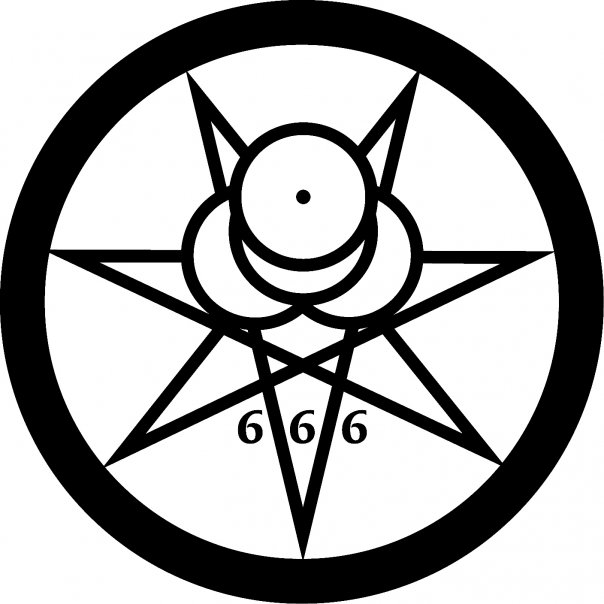
Enter “The Dark Lord” – a review of the work of Peter Levenda

This book took me back to my early teens when I first came across the work of Kenny G. The Dark Lord stands squarely in the tradition of attractively produced, Thelema-centric, hyperbole-tastic, Typhonian literature. At first glance I wondered if this was to be a biography of Mr Grant (aka ‘The Slime Lord’) but in this case ‘The Dark Lord’ isn’t just a more polite epithet for Kenny (and no, it’s not a Voldemort or Peter Mandelson reference either). Instead The Dark Lord in question is the being that signifies that whole stellar-Set-Shaitan-Typhon antinomian spooky occult vibe.

None more black

None more black

In this book Peter Levenda takes us a on a grand tour of the interface between Crowley, Lovecraft and Grant, with supporting characters appearing in the form of Jack ‘butterfingers’ Parsons, Mike Bertiaux and Frater Achad (no mention of Soror Nema, women don’t get much of a look-in until we get to p. 246 – see below). Levenda presents Grant as the magus who distilled the Ophidian Gnosis from Crowley’s (overtly) Big Solar Cock style of Thelema. Grant does this by detecting the stellar rather than solar vibe in the work of Lovecraft, left-handed tantrism, and some obscure and (largely inaccurate) scraps of mythology from Seabrook, Massey et al.

Levenda doesn’t wade directly into the pool of qlipothic slime like Kenny G. does. Instead he provides an opportunity for us to peer over the edge, a knowledgeable and interested observer of the unspeakable goings-on in the Adverse Tree/Meon/The Mauve Zone etc. The book opens with an erudite but rather inward looking analysis of Crowleyian aeonics where Ma-Ion, Horus, Isis et al jostle for esoteric prominence. While Levenda points out that the archaeological and historical evidence for the Aeon of Isis (age of matriarchal power) being supplanted by the Aeon of Osiris (featuring Abrahamic faiths) is rather thin on the ground, there is still a sense for me that these vast, pan-cultural claims rest on nothing more solid than some blokes from the early 20th century going on about Aeonic Words and channeled texts.

While ideas such as the Aeonics of Crowley (or Achad, or Aquino, or Carroll, or McKenna for that matter) are interesting metaphors through which we can explore the world and our relations with it, such a relativist and post-modern approach doesn’t work for Levenda. This is typical of the Typhonian current of literature in that it folds back on itself; a hungry oroborous, eating, digesting and regurgitating a series of texts and presenting its results as having some kind of universal applicability. But the bottom line for Levenda is that all this stuff points towards the (cue dramatic music and so frequent that it seems obligatory ellipsis) …The Dark Lord!

Little Sunshine's Big Aeonic Cock

Little Sunshine’s Big Aeonic Cock

This book is certainly well written, though it isn’t as evocative as the writings of Grant himself. There are some interesting and nicely put points about the relationship between magic(k) and religion, the role of syncretism in magic, and the primacy of technique rather than ideology for the magician. But, paradoxically, this is far from a book of actual esoteric praxis. However Levenda does provide partial instruction in the Sinister Gnosis (capitals in these situations seem to be obligatory). So on page 246 – after perhaps one of the longest bits of literary foreplay in history (in both the previous 245 pages of this book and the whole of Typhonian Trilogies) we finally get down and dirty with …The Dark Lord. So what’s the deal? As we chaos magicians like to ask, ‘what do you actually do?’

The answer is that (at least for certain adumbrations of the arcanum) you get your girlfriend to bend over, then you makes ‘magical passes’ over her points chauds (hotpoints, powerzones, chakras, tits, that kind of stuff). You may choose to wave your wand over her (or your Obeah, or your Wanga, or whatever) and when she’s all of a quiver go down on her. (But of course don’t come, ‘cos if you do all the vital Azoth leaks away, innit?)

Those of us in the early 21st century, who in response to this, might venture to suggest ‘WTF! Is that it?’ are of course not privy to the deeper techniques and meaning of this ritual. The aim, as explained by Levenda is that, “…there should be a flow of secretions from the female genital outlet”. Truly the poetic tradition of tantra is not dead.

There are other options given in the technique. The juices from the woman can be smeared on little disks of metal and used to make all kinds of talismans that allow the adept to live forever, travel to magick fairyland, meet aliens etc etc. Whether the coins are slotted into the accommodating ladies vag isn’t clearly described, nor yet what sort of “jar” they should be kept in after the ritual.

Whether …The Dark Lord has anything else up his apparently heteronormative sleeve isn’t revealed. No fisting, no breath control, no group orgiastic sex. Sure there’s bit of kinky celibacy alluded to in the text, but that’s about it. And since it has taken us (the avid audience for Typhonalia) a book case full of tomes just to get to cunnilingus, I fear it may be a long while until …The Dark Lord reveals the mysteries of bum sex or wot-not. (Mind you the fact that these books are reassuringly increasing in value is of course a good thing. Hail Satan! \m/.)

However my irreverent take on the Mysteries of Nuit and Hadit (‘my heart & my tongue’) above is not me saying I didn’t enjoy this book. I did. But I did so in a way which was really about the softspot I have for Kenny G. Grant’s work was formative in my magical development, if nothing else because I spent ages reading it thinking, ‘well this is all lovely, but what do you actually do?’ And this was both a noose and goad to my own magical process. Having seen beyond what, for me, would have been the cul-de-sac of a solely Typhonian path, I realised (mostly thanks to people like Ramsey Dukes and Robert Anton Wilson) that an occulture without humour isn’t worth having. The Discordian in me loves to see the funny side of the Nightside of Eden. Of course there’s lots of Discordian cross-overs with the work of H.P.Lovecraft. Who could forget the adventures of Lil’ Cthulhu (and more, and more, and more, comedic Lovecraftianisms)? My feeling is that the ‘hard core’ Typhonian culture, as exemplified by Levenda, needs and indeed invokes some of this.

The present volume contains the opportunity for all kinds of gags; simple, outrageous and subtle. I think I did spot a few. For example Levenda provides us with a handy list of special magic and world-shaping events which have all happened on April 30th. Of course as any fule kno this is a potent date of magical significance. Levenda handily explains that “…this is a date with great relevance, for it is another of the cross-quarter days…Known as Walpurgisnacht to readers of Bram Stoker’s Dracula, it is also known as Beltane or even just as May Eve to pagans and Wiccans. The European equivalent of the American Halloween, it is a day when witches gather for their Great Sabbat atop mountain peaks to commune with the Devil …(sic) with the Dark Lord” So Beltane is the European version of the Yankee Halloween eh? Well that explains it I guess…

Levenda’s list of magic happenings runs:

“April 30, 1492, was the day Christopher Columbus received his commission to set sail for the East Indies, a voyage that culminated in the ‘discovery’ of American on October 12, 1492-coincidentally Aleister Crowley’s birthday.

April 30, 1789, was the day George Washington took the oath of office of President…

April 30, 1945, is the day when it was alleged that Adolf Hitler committed suicide…

April 30 1975, is the day when Saigon fell to the North Vietnamese army, signalling the end of the Vietman War.

April 30 1978, is the day the Democratic Republic of Afghanistan was proclaimed…”

To this I would add (sticking with the Americana theme)

April 30, 1869, Hawaiian YMCA organised

April 30, 1966, The Church of Satan is established at the Black House in San Francisco.

April 30, 1968, 3 Oriole pitchers walk 14 NY Yankees in a 9 inning game (whatever that means)

etc ad nauseam…

Weird American rituals on 30th April

Weird American rituals on 30th April

Of course all these synchronicities come down to the hidden machinations of …The Dark Lord (even the globally insignificant elections of America Civil Servants). What is hinted at throughout is that Crowley, Lovecraft et al were in contact with ‘supramundane’ entities. Proof that these Elder Gods (or Space Brothers) are attempting an incursion into culture comes in the form of Crowley’s Liber Al, art movements such as Surrealism, and hillbillies getting their bottoms touched by aliens (abudctee phenomena). The significance of April 30th is that it is on this date, according to The Necronomicon, that ‘the stars are right’ and some stars, like the supernova in 1006 ce blow up (although whether this is a Julian or Gregorian 30th April isn’t discussed).

While I rather like the spirit model myself I also think it’s important to be able to consider what’s going on in other terms (cultural, semiotic, psychological etc). So while it may be evocative to claim that extraterrestrials are interested in our earth so they can mine the “sacred and magnetic Tulu-metal”, whether I should fear the possibility of aliens fracking the landscape (along with terrestrial drilling companies) I’m not so sure. This is sci-fi meets LHP magick and it’s clear that …The Dark Lord is not of this earth. At least one effect of the near universal agreement by the Crowleyianity faithful (and let’s face it, this is a religious movement, complete with revealed texts, laws and priestly hierarchy), namely that Liber Al is the work of an extraterrestrial, means that, unlike the other Holy Books of Thelema, it remains Outside the Circles of Copyright Control.

It’s apparent that Peter Levenda knows his Ophidian Onions and, while there’s not much original research in this text, his stripping down of the Typhonian canon is pretty accurate. The book didn’t have as many freaky looking sigils as I would have liked, but the cover art by the fabulous Rosaleen Norton and general production quality is great. This is a handy book to add to your Typhonian collection but if you don’t already own a copy I would recommend getting the version of The Necronomiconthat Levenda  (allegedly) wrote under the pseudonym Simon, first.

So is this volume worth checking out? Well reading …The Dark Lord is a little like being on tour bus Number 231 bound for Universe B – entertaining if you get the references in this sentence, but otherwise possibly not.

JV