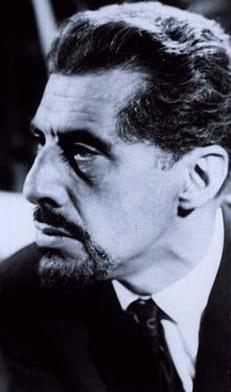
Idries Shah, one of my favourite models.
NLP started when some people noticed that other people were really successful at what they did. Why? they asked, before following them around until they saw behavioural traits and ways of interacting that denoted a successful strategy.
Ok.
What if, instead of noticing their behavioural strategies, they had instead noted their clothes, in a specific way; Oh wearing a red tie makes this man successful! Using your left hand to push doors open means this woman has great success!
Nonsense, of course.
When we look at successful philosophies, taking a Sufi approach (as described by Idries Shah) allows us to notice the meta data of a behaviour or person, instead of getting trapped with which robe colour, what kind of silly hat, how a word is spelt or pronounced. There may well be occasions when any of these things are required to create the desired effect, so the anthropologists amongst you can rest easy as we like to hear of these details, some of which can indeed work wonders on the human mind and the world it perceives.
Taking an Apophenic approach, then, we need to decide which seemingly trivial aspects of a practice help cause effective changes in your world in accordance with your Will, and what less obvious patterns of behaviour lie behind them. Using previously tested methodologies and equipment can suit some people, the very act of repetition of an established ritual gives them extra belief in a system. However; if these actions are performed merely by rote without some understanding, without deeper belief in their power, beyond “we do this because this is what we have always done”, then a philosophy/spiritual current can fossilise, become a stale shell of its former vibrant self.
Using a lobster metaphor, the glamour, the shell of a culturally developed form of achieving gnosis, needs regrowing periodically, to ensure it still fits, and looks fresh.

A lobster, yesterday
Sufi teaching stories often rely on culturally specific situations regarding the mores and ethics of the time & place they originate from. Unless these are refreshed and reclothed, whilst retaining the living body of knowledge contained within the story’s situational trappings, the meaning and impact of them will vanish. Others more reliant on nature for the tale’s message, can last for thousands of years virtually unchanged, as we all know what a butterfly does.
Here’s a couple of sites that tell tales:
http://unfutz.blogspot.co.uk/2007/10/3089898-idries-shah.html
Cultural patterns such as religion and superstition, often stagnate, as meanings behind rituals become lost or forgotten, whilst the rigid rules, fancy footwork, and ancient linguistic formulas remain.
This happens so frequently that we have, over the millennia, grown to associate somewhat old fashioned dress and mannerisms with the voices of authority and the gods. People in positions of power (or even those pretending to these positions) deliberately constructed buildings to look older, adopted modes of dress that had gone out of style decades before, made parodies of gesture and stance to add to their costumes.
My life consists of playing many roles, for which I like to have precedents I can emulate where possible. My ancestors gave me examples of parenting, and wage earners, of gardeners, cooks and cleaners. Not all of these examples reach standards I would hold up as perfect… They abound with models of curiosity, humour and care.
My wider culture provides other models, across the spectrum. Unfortunately many of the more visible ones are just that, models of what transmits visually through our present obsession with the screen as communication device. One of the reasons I like radio and reading/writing, is that they provide alternatives to the eye heavy emphasis. So much of our lives is dependent on peoples’ looks these days, our politicians get voted for mainly on the grounds that they look like what we expect politicians to look like, a sad indictment of our abilities to judge on the criteria that really matter, and also a reflection of how we make choices as easily influenced emotional creatures.
Teaching and modelling the ability to make discerning decisions to our children (whether our own biological ones or in a more general sense), has to form a core part of creating a more functional world.
To do this we have to educate ourselves in the process, learn to close our eyes when necessary, to listen as well as speak, to slow down our decision speed so that it gives us time to consider the ramifications.
In negotiations, and meetings, I like the way some of the Native American systems worked; a person would be given as much time to reflect upon their answer as necessary, before they spoke. This gave them time to assimilate information, consider the consequences of their words, and time to formulate the response in a way that expressed what they wanted to. I have long held that in schools rhetoric should be taught, as well as other speaking/listening skills such as those analysed by NLP and CBT practitioners. If the only source of this skill comes from the study of Classical languages, Latin & Greek, then a huge sector of our population are robbed of their voices.
Learning ‘How to influence people’ allows us to gain skills at recognising when these tools are used to try and persuade us of an argument as well. I always talked about advertising with my children, as a sociological topic it provides an entertaining and well-crafted example of emotional manipulation for a specific result. I also tried to explain a bit about basic linguistic structures, how a negative command is hard for a brain to understand. Don’t shout! is far less effective than Talk slower.
To go back to the trappings of behaviour as diversions from the behaviour itself; we have become conditioned to a man inna suit having more respectability than a man in a robe. Yet, it is the content behind these dress choices that should interest us, not the clothes in and of themselves.


Which one would you choose to wear?
In a search for someone to assist you on a spiritual quest, would you go for the person wearing a cloak, or the person in a dress from Primark? Or, would you listen to the person, and learn more of what they do, how they function, before deciding which of them (or both or neither) suited the continued inspiration of your current learning state?
We owe it to ourselves to listen, and in our turn to model our internal decision making processes aloud to those around us. It may result in a world with decision makers who are less easy on the eye at the helm, but they may have better sense, as well as knowing how to dress themselves.
NW

 The Blog of Baphomet