Exercise 4: Writing Your Own Gospel…

In my last post about fan fiction I got to wondering about how great works of art can trigger our own process of inspiration. Any material that stirs something deep within us can catalyse our own creative juices in a manner that leads us to express our own creativity into the world of manifestation. The nature of what moves us can be as diverse as the new series of the X-files or the Tao Te Ching.

Gnostic inspiration

Gnostic inspiration

We also considered the way in which the Gnostics of the early church could be seen as generating their own fan fiction is response to the life of Jesus and his followers. In contrast to orthodox attempts to delineate “truth” within a recognised canon of scripture, the Gnostics often viewed the boundaries as far more permeable. If the incoming of gnosis was available to Jesus and his apostles why limit such inspiration? He keeps speaking to us and through producing new Gospels us as we encounter new challenges and evolve deepened understanding.

In this exercise I’d like you to consider an existing source of personal inspiration that can help you generate your own fan fictional gospel or “Good News”. For this fan fiction to be truly good news it must open up for you a greater possibility of freedom and liberation from something that you feel is limiting to you; in gnostic terms we might define these as being archonic.  For our art to have gospel force, it must offer us a potential key to a greater sense of “peace, freedom and happiness” (as we say in the Nath tradition).

In my view the best fan fiction tends to be generated by those who are deeply moved by the original source material and have spent time soaking in the canon of that work. From an overtly spiritual perspective, the practice of Lectio Divina (divine reading) offers a number of interesting methods for deepening our engagement with material that we experience as being sacred. Lectio Divina identifies a number of stages that the aspirant or fan might go through in order to further internalise something so as to transform themselves.

In this exercise I’m proposing that we utilise each of these steps in engaging with material of your choice e.g. Principia Discordia, Bhagavad Gita, the script from True Detective (series one!) and then to take this one step further so as to create your own liberating art work.

Stage 1: Lectio (Reading): Here we read or engage with our primary material in a deliberate, conscious manner. You may want to break it down into small chunks like a couple of verses or a specific scene within a film. I often find reading a text aloud can give it a different voice and provide new insight. If nothing else the reading of something aloud vibrates it through our bodies.

Stage2: Meditatio (Meditation): During this stage we are reflecting upon or pondering what we have engaged with. In some senses we are seeking a Zen-like “beginner’s mind” where we try to let go of our assumptions and perhaps the previous meanings we have attached to it. There is perhaps also a sense of slow simmering or percolation as we let the text speak to the varying aspects of our being.

Stage 3: Oratio (Prayer): This might be a spontaneous prayer response directed towards a deity or we might view it as the bubbling up of our inspired response to our meditations. As we simmer in contemplation so the deeper aspects of ourselves vibrate in response. Such responses should be neither censored nor scripted; rather they reveal something real and unguarded about how something impacts upon us.

Stage 4: Contemplatio (Contemplation): Here we rest and reflect on the impact of our inspired response. Rather than a fevered response at the height of ecstasy, now we sit with our own process of transformation so as to allow a further maturation of any gnosis gained.

Okay, so far so good! Hopefully you can appreciate how this approach might profoundly enrich and personalise your experience of your chosen form of inspiration. What I’d like to propose for the purposes of this exercise is that we move this method on one stage further in engaging in a further act of creation…

Stage 5: Creatio (Creation): Having read, meditated and been inspired we are now able to channel this response into our own creative activity. In seeking to work with those archonic forces within our lives we can allow our triggered inspiration to explore those potential routes to greater freedom. For some people this may inspire a freedom-text in the style of the original, but we shouldn’t be too tied to producing a replica:

“And lo, on the third day Steve decided that he must flee his pressured job and head to the beach more…”

When inspiration takes hold it may be that your approach will be less linear! Your acts of creation may be in making collage, cooking a great meal for friends or having a proper dance around your kitchen. So much of the stuckness that we experience comes from our need to get it right, but like many things in life most of us do better when we are allowed to relax a bit, to be curious and the explore things playfully.

I hope you have fun playing with this approach and allow yourself the space to explore how the things you love can inspire the creation of your own art. Peace, love and freedom to those willing to respond to their inner Muse!

SD

Gnostic Fan Fiction

I must confess to being excited about some writing that I have had included in a forthcoming anthology. No Safewords 2 is a collection of short-story fan fiction inspired by the work of Laura Antoniou . For the uninitiated, Laura Antoniou is undoubtedly amongst the world’s most talented authors of erotic fiction. In her Marketplace series, Laura has created an engaging universe in which beautifully crafted characters explore the world of consensual BDSM (Bondage, discipline and Sadomasochism). While this sexual style may not be everyone’s cup of tea, I would highly recommend the six books currently available as they touch on deep themes about belonging, identity, vocation and of course the nature of passion.

Fan fiction can take a whole plethora of forms, but at its core is a desire to produce new writing or art inspired by an existing canon of work. While it is likely that Fan Fiction as a contemporary phenomenon began as a response to the Kirk/Spock relationship in Star Trek, you can find forms of it that are connected to pretty much any series that engenders significant levels of devotion. This issue of devotion feels important in that the content of a given series is felt to be important enough to inspire the new author to take their heroes’ story arc in a new direction.

Famously the Kirk/Spock relationship was central in birthing “Slash” fiction where our protagonists are imagined in a whole range of male-on-male erotic activity, but fan fiction can also take our beloved characters into a whole array of other possible situations. In keeping with its Ironic and Postmodern nature the series “Sherlock” has generated huge amounts of fan fiction (including some great Sherlock/Watson Slash) while being itself a form of Fan Fiction inspired by Arthur Conan Doyle’s original genius. Sherlock reimagines the Conan Doyle characters in 21st century London, but also accentuates aspects of their characters so as to contend with more contemporary concerns. One excellent example of this is the way that Benedict Cumberbatch’s depiction of Holmes has been viewed as iconic by people identifying as being on the Asexual spectrum. While Conan Doyle’s Holmes had decidedly asexual traits, the evolution of Holmes in the Sherlock series has made this more overt and positive depiction of even greater importance.

Asexual, comedy hat, genius - what's not to like?

Asexual, comedy hat, genius – what’s not to like?

In my own experience of writing fan fiction (and I don’t find fiction the easiest thing to write), my own efforts were probably successful because of my love of the original Marketplace series and the degree to which I had soaked myself in the canon that Laura and others have created. Great art often inspires both obsession and inspiration. Perhaps due to our desire to connect to a modern (or postmodern) form of mythology, we look to the hyper-reality of the screen and print as a way of making sense of our lives. While the slightly musty myths of the past may feel harder to access, it maybe that the power of story still provides us with an evocative way of touching the deepest aspects of our personal and collective psychologies. This is certainly the case with the Star Wars films and most of us are well aware of the degree to which George Lucas was influenced by Joseph Campbell’s work in trying to understand common mythic themes.

Personally I think that fan fiction is awesome ☺. Yes it can be a decidedly mixed bag in terms of quality, but for me it reflects something brilliant about how we as humans respond to stories that touch us and use the power of these myths to empower our own journeys. The original author may well be horrified by the quality of our art or what we have imagined their characters getting up to, but for me it reflects the tendril-like nature of inspiration that threatens to break apart any attempt to erect walls around a holy canon of work.

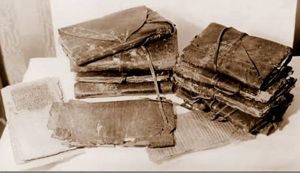
In many ways the Gnostics were the original purveyors of fan fiction. While the orthodox elements of the early church were trying to ensure certainty about what Jesus and the apostles did and didn’t say, the Gnostics just kept being inspired. It could be argued that even the canonical Gospels of the New Testament (especially John) are perhaps some of the greatest pieces of fan fiction known to history. Whatever one makes of the historicity of Jesus Christ, the idea of his life and mission were hugely inspiring and generated an avalanche of literary responses.

For those with an interest in trying to prevent heresy and innovation, the Gnostic approach to hermeneutics was highly disconcerting. The God of the Old Testament was generally viewed as an inadequate megalomaniac and Jesus; well frankly he just wouldn’t shut up. While his earliest core sayings may have been brilliant, his inspiration kept igniting the imaginations of those not content with the answers of orthodoxy. While holding a position of profound respect for both Christ and his Apostles, the inspirational torrent of the Nag Hammadi library represents a form of innovation and adaptation that is in keeping with the best of fan fiction.

Holy Fan Fiction!

Holy Fan Fiction!

Those of us who love and produce fan fiction would rarely claim to have reached the levels of creative genius that are present in the primary texts that inspire us. For me fan fiction entails a process of playful investigation as to how these heroic figures of art can fuel my own development and creativity. Imitation can be the greatest form of flattery and also an expression of gratitude for how the great work of others make our lives more doable.  

SD