Dreadful Magic

Many of us long for the divine and the mysterious, but what is it like to actually gain a glimpse of these things?

In his masterwork The Idea of the Holy Rudolf Otto, valiantly sought to map out those shared human experiences that lay at the heart of religious seeking. For Otto when we view the vastness and mystery of the Universe, we are met with both Dread and Awe. Dread and Awe act as two sides of a coin in which the vastness of time, space and the magnitude of life erode our sense of control and understanding. Just when we think we might be getting it, it’s that “oh shit” moment when we realize that barely have a clue.
otto

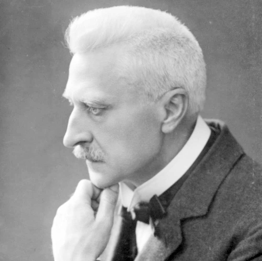
Rudolf Otto supporting his planet-sized brain

A couple of years ago I wrote this and for me it captured something of my own encounter with mystery and what Otto describes as “the numinous”:

“As I gaze out at the night sky, I find myself unable to find lasting meaning in any prevailing metaphysical position, be it a theistic one or that of the strict rationalist. The mystery and expansiveness of space seems to empty me of the trite and obvious. My sense of awe seems to both induce a sense of mild panic as I glimpse the limits of my control and understanding, while at the same time beckoning me onward into the depths of the unknown.”

stars

The more time I spend working with the Dread and Awe the more I am struck but the powerful parallels that exist with both existential philosophy and its application within existential psychotherapy.

The origins of both of these movements lie with Søren Kierkegaard and the way in which his own radical reading of Christianity led him to grapple with the uncertainty connected to the experience of existence. As is well documented these ideas were taken on by Jean-Paul Satre who, in being inspired by his reading of Heidegger, gave the lecture in 1945 “Existentialism is a Humanism”. Existentialism as a philosophical school sought to centralize the experience of the individual in the face of a Universe within which the Judeo-Christian God had been declared dead.

In facing a Universal vastness that had no apparent meaning, how were we as humans supposed to find authenticity and a sense of our true essence? What lies at the heart of being beyond the superficial roles and labels that society may want to hand to us? These questions were a major preoccupation for the early Existentialists. Thinkers such as Sartre, De Beauvoir and Camus were relentless in their pursuit of making choices congruent with authentic being (i.e. in “Good Faith”). When faced with absurdity, the existentialists were stark in their assessment that such insights triggered both Dread and an underlying sense of despair.

The impact of the existentialists was profound and they not only spawned weird adventures in art, literature and theatre, but they also inspired radical forms of psychotherapy.

Building upon the insights of existential philosophy, existential psychotherapy sought to explore the way in which these ideas regarding meaning, freedom and impermanence could be explored within the healing context of a therapeutic relationship. Therapists such as Otto Rank (who broke with Freud in the 1920’s), Viktor Frankl and Rollo May were central to the development of an understanding of our shared human experiences that was less focused medical diagnosis.

In contrast to Freud and his focus on pathology, existential psychotherapy tends to view experiences of anxiety, alienation and even depression as part of a normal maturation that most humans will experience in response to the disconnect experienced between our experience of self and the world we inhabit. More contemporary thinker/therapists such as Irvin Yalom believe that psychological dysfunction arises when we try to avoid these givens of life. While current schools of so-called “positive psychology” may view such perspectives as being doom-laden or negativistic, an existential approach maintains that in confronting such realities, the true value of life and consciousness comes into sharper definition.

For me as a Magician seeking to work with ideas of Dread and Awe, the insights of existentialism provide helpful keys to unlocking the process via which my own initiation is deepened. In truly looking at the world’s vastness and impermanence so I create the possibility of seeing with a Zen-like “Shoshin” or beginners mind. In experiencing Dread I recognize the limits of what I can know and yet the sense of awe I encounter also helps me pursue what Viktor Frankl called “The Will to Meaning”.

Magic asks us to see with new eyes and what we see is often not comfortable Magic accelerates and intensifies our experience of dread, but in doing this so the possibility of activating our will becomes both more necessary and thus possible.

“Know Thyself, Create Thyself!”

Steve Dee

Check out Steve’s review of Asexual Erotics on Phil Hine’s blog.

Pieces of the Witch

In my most recent book The Heretic’s Journey: Spiritual Freethinking for Difficult Times, I spent time exploring how the Surrealist movement embodied a radical form of self-exploration in their philosophy and the artistic expression for which they became so famed. What follows in a short excerpt and ritual exercise from the book for you to play with:

Whichever media the Surrealists worked in (Painting, poetry, drawing) one of the consistent themes that runs throughout the School, is their desire to work more overtly with the unconscious aspects of self. We have already considered the prevalence of dreams and dream-like states in the work of occult inspired artists such as Ernst and Carrington and the way that their work often used the juxtaposition of strange, jarring images as a way of articulating often pre-verbal themes that emerge from the deepest dimensions of being.

The Surrealists were renowned for their inventiveness in developing a vast range of artistic techniques and strategies for seeking access to the creative dimensions of the unconscious self. This involved everything from relief rubbings (“frottage”), automatic painting, the creation of dream resume and the artistic use of old parlour games such as Exquisite Corpse. One of these techniques that the surrealists utilised to great effect was that of collage.

Collage (from the French coller, “to glue”) is a technique of assemblage in which the artist brings together a number of different media and pulls them out of their original context in order to create a new reality in which radically different ideas and textures can overlap, contrast and interact in the eye of the viewer. Historically while examples of collage can be found in 10th century Japan and in the Cathedrals of Medieval Europe, in relation to its use in Modern art, it is generally agreed that it was primarily developed in the works of Georges Braque and Pablo Picasso from 1912 onwards.

Max Ernst’s artistic expression was hugely innovative. He is credited with the invention of the frottage technique and also made use of other approaches such as decalcomania (pressing paint between two surfaces). While Ernst worked in a wide range of media his work with collage is especially inspiring. In works such as his surrealist novel Une Semaine De Bonte: A Surrealist Novel in Collage (1934) we witness his exploration of the jarring and animalistic dimensions of self.  As Ernst himself observed regarding his often absurd combination of images, objects and text, they “provoked a sudden intensification of the visionary faculties in me and brought forth an elusive succession of contradictory images… piling up on each other with the persistence and rapidity which are peculiar to love memories and visions of half sleep.” (Quoted in Ernst by Ian Turpin pg. 7)

max1

Cutting things up with Uncle Max

Within his collage and his work more generally, Ernst repeatedly utilizes the symbol of the bird as a representation of himself. He named this avian manifestation of himself “Loplop” who he saw as the “superior of the birds”. When viewed through a more occult lens, I am struck by the potential parallels between these images and the concept of the Witch’s familiar or the animal aspect of the self, referred to as the “fetch” in Norse soul lore.  Via its window into the darker, unconscious aspects of self, collage provides a means through which strange and even macabre images can provide insight to our own process of self-understanding.

Exercise: The Witch’s Collage

I will state at the outset that there are a myriad of ways of working magically with collage, and I offer this exercise as but one example (albeit a creative and tested one!) for intrepid explorers to utilise. Unlike their more randomized Postmodern cousin Cut-ups, collages seek to work more deliberately with aspects of the unconscious from the outset of the artist’s project of creation. Hopefully having begun a process of reflection regarding your heretical inspirations, as we begin this activity, the images, symbols and colour associations will begin to bubble to the surface!

To provide you with a bit of structure you might want to follow some of the following steps:

  1. Find the images and symbols that you feel capture the essence of your journey into heretical freethinking. Don’t be weighed down by the expectations of others! If cartoon heroes or industrial noise musicians do it for you include them alongside more standard spiritual symbology.
  2. Assemble art stuff. At a minimum you will need scissors, glue, pens and pencils. Coloured paper of differing textures work and you may want to incorporate pieces of text. Your imagination is the only real limit here! Make sure you have a large piece of paper or card (A3 or bigger) so that you have enough space to stick your stuff onto.
  3. Find a space that you feel comfortable in. Ideally you should be able to spread your images and materials out so that you can see the possible directs that your collage can take. Personally I like having some music on to inspire me and I usually need a minimum of 45 minutes to an hour to let the collage take shape. Having a time limit can also be helpful for this specific exercise in that provides an end point rather than having to struggle with that sense of not knowing when you’ve done enough.
  4. Like the approach of sleep, light hypnosis and some meditative states this work will be best approached with a sense of playfulness and a desire to not take it too seriously. Let your eyes move over your assembled materials and images and simply begin. You can’t get this wrong and your images and textures will build up during the duration of the work.
  5. Often our results can surprise us. What I love about collage is the way in which it can have various pockets of activity and interest. Our eyes may be drawn to one thematic cluster only to realize that there’s something really interesting in another part of our work.
  6. When our collage is completed, we can put it to any number of ritual uses. I often place mine in the corner of the house where I meditate and do ritual work. This allows me to come back to it repeatedly and spot emerging themes.
  7. Given the connection between collage, the unconscious and the realm of dreams, one interesting practice could involve placing your collage under your bed or pillow prior to sleep. Spend some time before sleep meditating on your collage and let the interplay of images and textures enhance your nocturnal journeying!
max2

Here’s one I made earlier 🙂

Steve Dee


Events update…

  • There are still a few places available for Julian’s workshop on Sigil Magic in London on the 27th of July at Treadwell’s Books.
  • You can also join Julian for a Magical Words workshop at The Museum of Witchcraft & Magic in Boscastle, Cornwall on Saturday 31st of August.

Details of both workshops can be found HERE.


Breaking Convention: 16-18 August 2019, London, UK

Nikki and Julian will be at Breaking Convention, Europe’s largest conference on psychedelic consciousness. This is set to be an epic event. As ever Breaking Convention brings together under one roof scientists, medics, artists, shamans, and many more at one of the most intellectually rich and inspirational gatherings in the world. Highly recommended! Book your tickets HERE.


deep title 1

Nikki and Julian will be running Deep Magic camps and retreats in 2020, bringing together freestyle shamanic techniques and wisdom from indigenous medicine traditions. To find out more please ping us a message letting us know a little about your spiritual practice and experience with altered states of awareness. These will be intimate, powerful, accessible and transformation events. We hope you will join us as we go deep into the magic! Ahoy!

heretics